


Cities commonly run warmer than surrounding areas because materials like asphalt, concrete, and brick absorb solar heat during the day and release it slowly at night, creating an urban heat island. Multiple outlets report that city temperatures can be roughly 1–3°C higher than nearby countryside, and in some cases up to about 7°C hotter. New research discussed in one source indicates that urban trees provide cooling benefits that are stronger than previously understood, helping to reduce heat in metropolitan areas. However, the same reporting stresses that trees are not a complete solution on their own. Cooling from vegetation depends on factors such as tree coverage, placement, and local climate conditions, and there are limits to how much temperature reduction can be achieved solely through trees. As a result, efforts to manage urban heat also need complementary approaches beyond planting and maintaining trees. The combined takeaway is that urban trees can meaningfully reduce temperatures and improve thermal comfort, but they must be part of broader strategies to address heat island conditions across cities.
Research finds urban trees cool cities more than expected, but heat island effects persist
Cities commonly run warmer than surrounding areas because materials like asphalt, concrete, and brick absorb solar heat during the day and release it slowly at night, creating an urban heat island. Mu...

- Cities are typically warmer than nearby countryside due to the urban heat island effect.
- Urban heat islands are commonly about 1–3°C hotter than surrounding areas, sometimes reaching around 7°C.
- Heat is driven by sun-absorbing materials such as asphalt, concrete, and brick that release heat slowly.
- New research indicates urban trees cool cities more effectively than previously thought.
- Urban trees alone are not sufficient; additional measures are needed to manage city heat.
Cities and towns are usually 1–3°C hotter than the surrounding countryside, because asphalt, concrete and brick absorb heat from the sun and radiate it slowly. Some cities can be as much as 7°C hotter. This effect is known as the urban heat island.
3 months agoCities around the world rely on trees to keep temperatures lower. New research shows trees are remarkably effective – but can’t do it all
3 months ago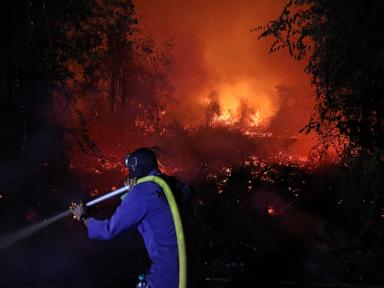
Indonesia steps up firefighting as forest and peat fires spread haze across Southeast Asia
Indonesia escalates ground and aerial firefighting operations to tackle major forest and peatland fires, with smoke and...

Residents in sinking mining village told to leave as homes face demolition
Residents in Coalsnaughton, Clackmannanshire, are being told to leave because their homes may be at risk of collapse, an...

King Harald V of Norway dies aged 89
Norway’s King Harald V has died at the age of 89, the Norwegian royal palace announces. Multiple outlets report he dies...