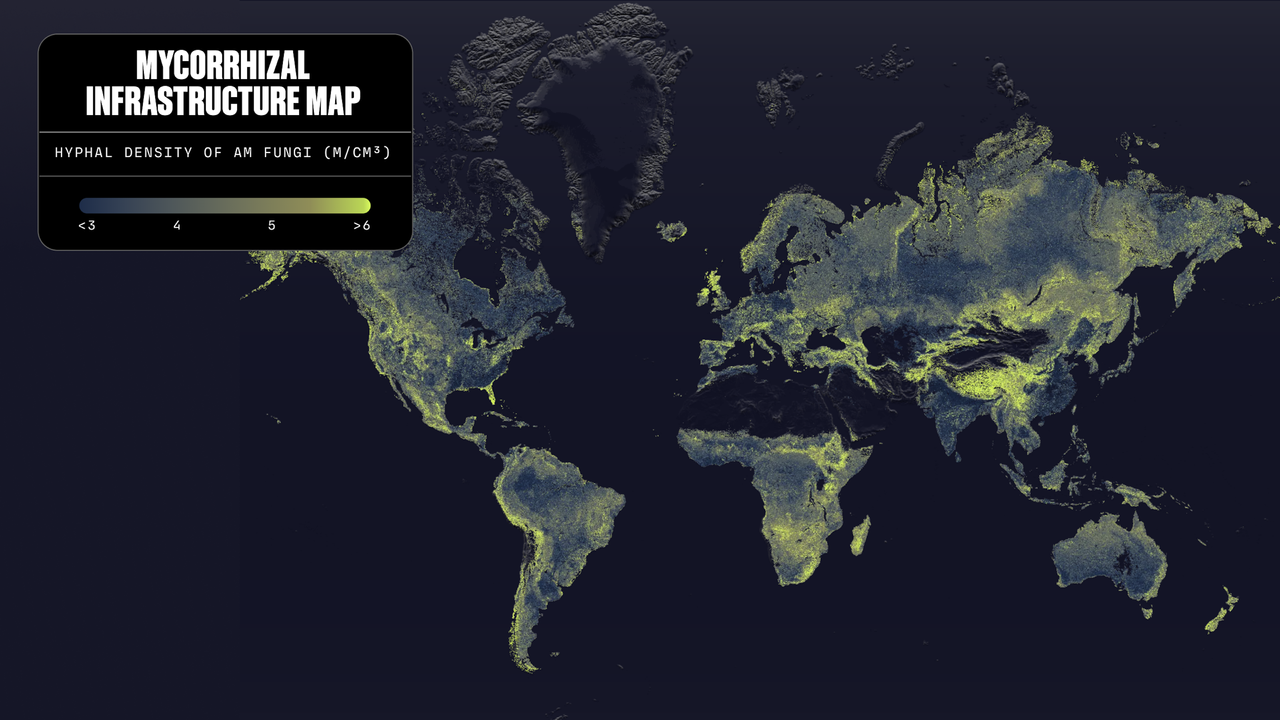
A study publishes the first global map of Earth’s underground fungal networks, focusing on mycorrhizal fungi that form extensive threads (hyphae) through soils. Multiple outlets report that researchers estimate the living fungal network totals about 110 quadrillion kilometers (roughly 68 quadrillion miles, depending on unit conversions) when laid end to end, a scale so large it would span vastly beyond the Earth–Sun distance. The mapping effort is described as showing where these fungal networks are located across the planet and how dense they are in different regions.
Science-related coverage also links the networks to major ecological functions. Fungi are described as playing a key role in supporting plants and exchanging nutrients with roots, while also affecting carbon cycling in soils. One report states the networks help move billions of tons of carbon dioxide into soils each year, contributing to broader climate-related processes.
Coverage emphasizes both the magnitude of the underground “superhighway” and the potential use of the map for understanding what threatens these networks, including environmental pressures that could affect soil ecosystems.