


In a TED Talk featured by TED Talks Daily, political psychologist Cindy Kam examines how disgust shapes political thinking and behavior. Using everyday examples—such as deciding whether to eat a bug or whether chocolate shaped like feces is acceptable—she argues that people’s reactions depend not only on the emotion of disgust itself, but also on whether they choose to act on it. Kam describes disgust as a response to potential contamination, which can be triggered by both real threats and imagined ones. She connects this psychological mechanism to political outcomes, suggesting that disgust can be a force that links people who share similar sensitivities, while also dividing groups when their perceptions of contamination or social risk differ. The talk positions disgust as relevant across a range of contexts, from day-to-day decisions to political alliances and stances. Overall, Kam presents disgust as an emotion that can influence how individuals interpret others, assess what feels safe or unacceptable, and respond socially and politically.
Cindy Kam explains how disgust influences political views
In a TED Talk featured by TED Talks Daily, political psychologist Cindy Kam examines how disgust shapes political thinking and behavior. Using everyday examples—such as deciding whether to eat a bug o...
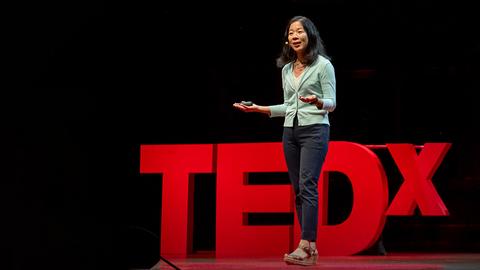
- Political psychologist Cindy Kam says disgust influences political thinking and behavior.
- Kam uses everyday examples, including eating a bug and eating chocolate shaped like feces, to illustrate disgust-driven decisions.
- She argues that responses depend on both experiencing disgust and choosing whether to act on it.
- Kam describes disgust as linked to perceived contamination, including threats that may be real or imagined.
- The talk connects disgust to how people can form alliances or become divided politically.
Would you eat a bug? How about fine-crafted chocolate — shaped like poo? Your answer depends on both your disgust at the prospect and whether you choose to act on that emotion, says political psychologist Cindy Kam. She dives into how the feeling of disgust — whether motivated by real or imagined contamination — can connect or divide us, from everyday decisions to political alliances. Hosted on Acast. See acast.com/privacy for more information.
1 year agoWould you eat a bug? How about fine-crafted chocolate — shaped like poo? Your answer depends on both your disgust at the prospect and whether you choose to act on that emotion, says political psychologist Cindy Kam. She dives into how the feeling of disgust — whether motivated by real or imagined contamination — can connect or divide us, from everyday decisions to political alliances.
1 year ago
ICE plans to buy electric-shock gloves for officers, drawing civil liberties concerns
Immigration and Customs Enforcement (ICE) is moving to procure electric-shock gloves that it says are meant to help offi...

Trump signs order to rename Lake Ontario as “Lake America” in US–Canada trade row
Donald Trump says the United States is considering changing the name of Lake Ontario to “Lake America,” and an executive...

Tony Romo hit with three additional Milwaukee citations after July OWI arrest
Former NFL quarterback and CBS broadcaster Tony Romo receives three additional citations tied to a July OWI-related arre...