


NASA’s Hubble Space Telescope captures an image of the galaxy cluster MACS0329-0211, which appears in the sky like a “swarm of bees” due to many surrounding galaxies and elongated features. Multiple sources describe the cluster as an important signpost for understanding how large-scale cosmic structure forms and evolves over time. The cluster acts as a gravitational lens: its strong mass distribution bends and magnifies the light from more distant galaxies. As a result, galaxies from the early universe are visible in the form of lensed arcs and other distorted shapes. By using these magnified views of very distant objects, researchers can study galaxies from earlier epochs that would otherwise be too faint or small to observe clearly. The image highlights how massive galaxy clusters can function as natural telescopes, bringing early-universe galaxies into observational reach and supporting efforts to map the universe’s evolution from its early stages to the present day.
Hubble Images Galaxy Cluster MACS0329-0211 with Gravitationally Lensed Arcs
NASA’s Hubble Space Telescope captures an image of the galaxy cluster MACS0329-0211, which appears in the sky like a “swarm of bees” due to many surrounding galaxies and elongated features. Multiple s...
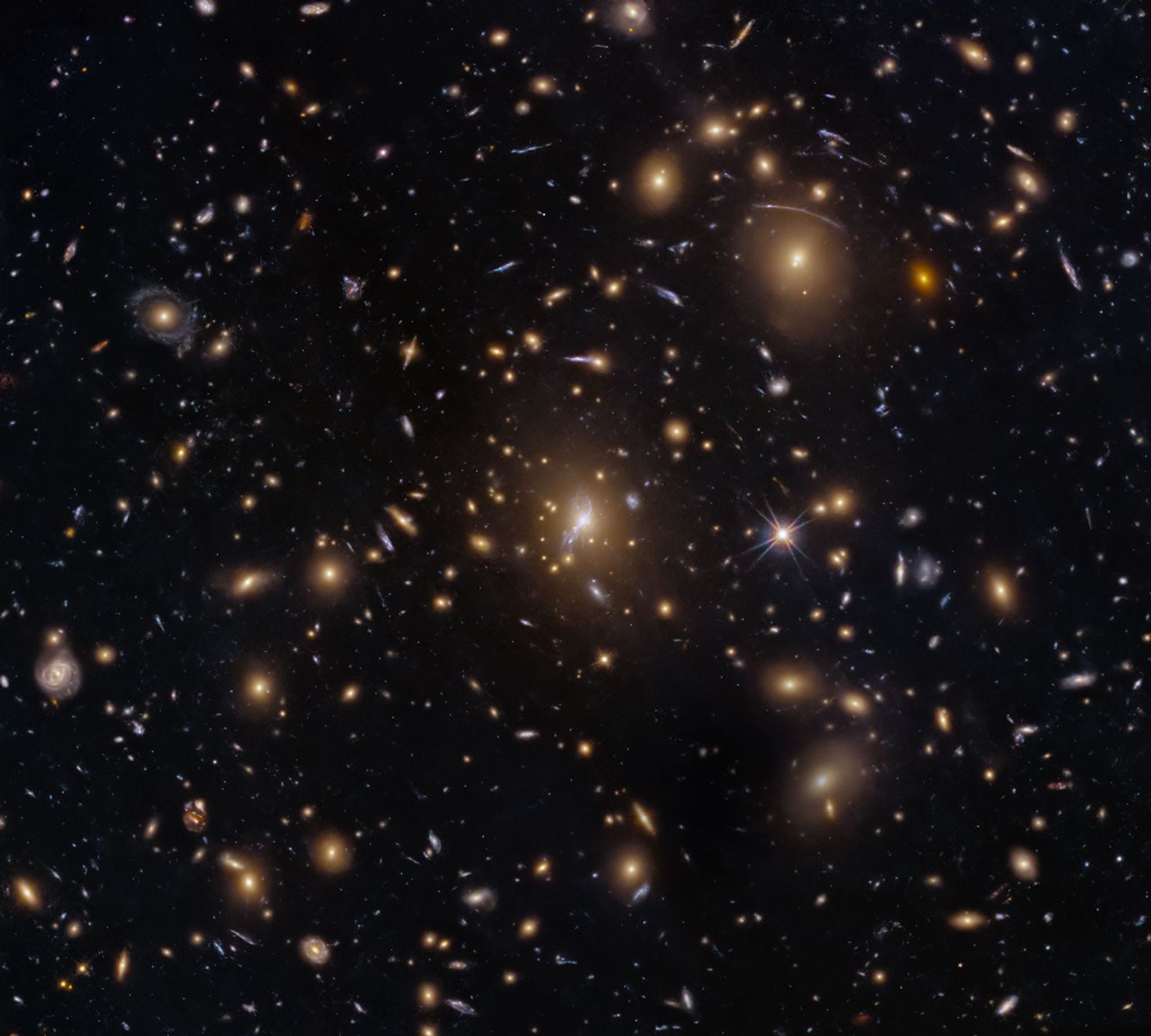
- Hubble’s image shows the galaxy cluster MACS0329-0211.
- The cluster’s gravitational mass lenses light from more distant galaxies.
- Lensed galaxies appear as arcs and other distorted features in the image.
- MACS0329-0211 is described as a key signpost for understanding how the universe’s structure evolves.
- The lensed targets include galaxies from very early stages of the universe.
Looking somewhat like a swarm of bees returning to their hive, this NASA Hubble Space Telescope image features the galaxy cluster MACS0329-0211. Galaxy clusters like MACS0329-0211 are important signposts in the story of how the structure of the universe evolved, and are the ultimate telescopic lenses, placing gravitationally lensed galaxies from the earliest stages of the universe into our view.
2 months agoLooking somewhat like a swarm of bees returning to their hive, this NASA Hubble Space Telescope image features the galaxy cluster MACS0329-0211.
2 months ago
Iran links Strait of Hormuz reopening to U.S. sanctions relief and compensation demands
Iran’s top security officials say the Strait of Hormuz will remain blocked unless the United States accepts conditions s...

2026 “Blood Moon” partial lunar eclipse set to be visible across the UK
A partial lunar eclipse, often described as a “Blood Moon” because of the Moon’s reddish appearance, is due to be visibl...

Bob Myers says trading Andre Iguodala was his hardest decision as Warriors GM
Former Golden State Warriors general manager Bob Myers says his hardest decision during his tenure was trading Andre Igu...