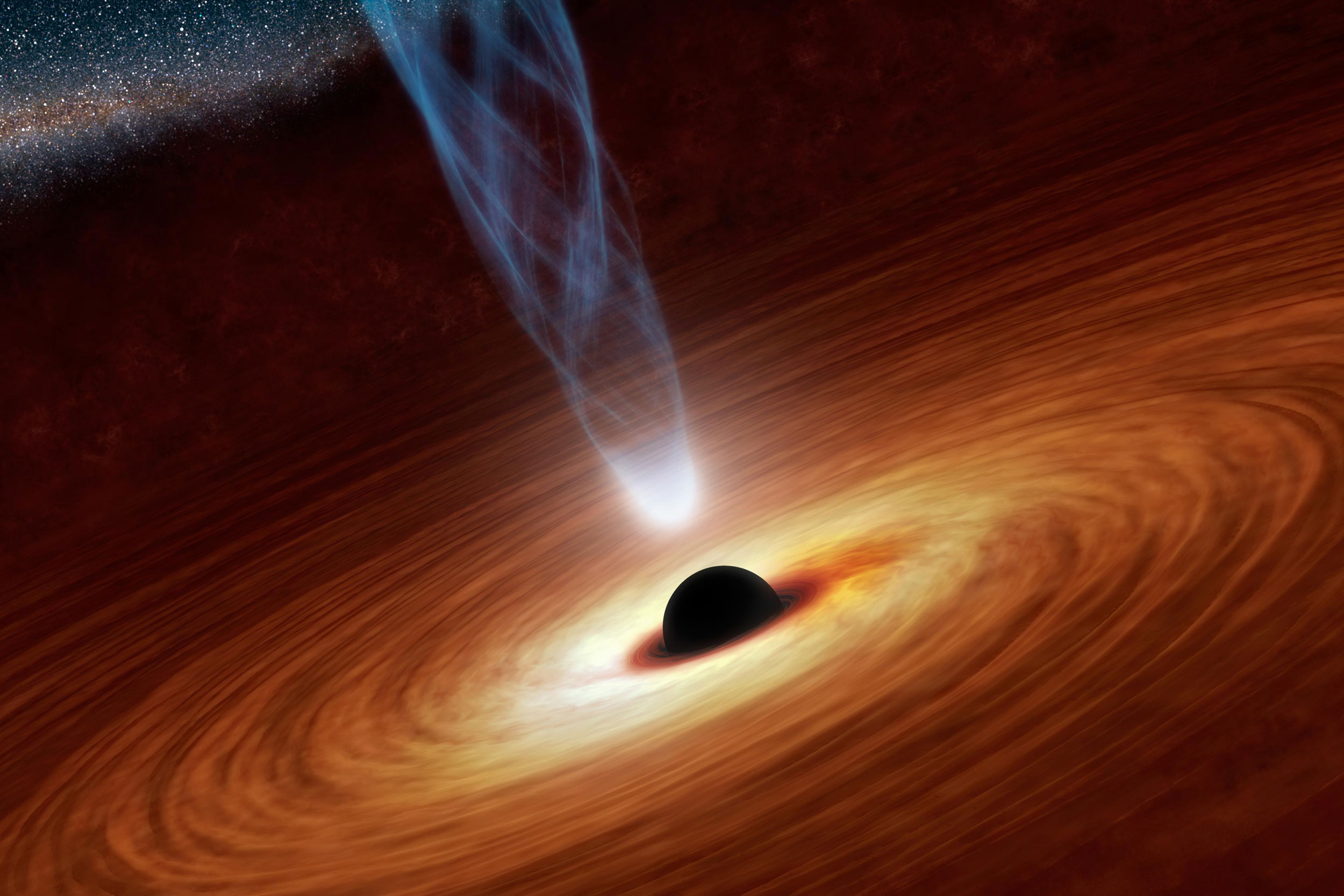
Astronomers report the detection of the earliest known “flickering” quasar, designated J0439+1634, seen as it existed about 850 million years after the Big Bang. Multiple outlets describe the finding as the first clear observation of quasar variability at such an early time, with the quasar’s light changing over time. The observations are also linked to signatures from the quasar’s accretion disk, the region of gas and dust feeding the central black hole. According to the reports, the accretion disk appears unusually mature or established for this epoch, showing a relatively flat, “pancake-shaped” structure similar to that seen in many more recent quasars.
The discovery adds new constraints to models of how supermassive black holes form and become active so early in cosmic history. It also motivates questions about how quickly the structure and behavior of accretion disks settle from potentially more chaotic early conditions into the steadier configuration typical of later quasars. Researchers say the results may help clarify whether black hole growth transitions in the early universe from turbulent to more regular states.