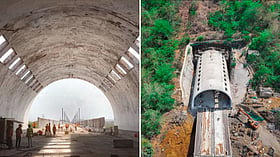
India’s first high-speed rail project, the Mumbai–Ahmedabad bullet train, is introducing tunnel hood technology for the first time, with installations planned at the entrances of mountain tunnels along the corridor. Multiple reports say the technology is designed to manage the sudden air-pressure changes that occur as very high-speed trains—operating at above 300 kmph—enter and exit tunnels. The tunnel hoods create a transition zone between open air and the tunnel interior, helping reduce abrupt pressure waves that can produce loud “tunnel boom” noise.
The system uses pressure-relief openings or vents, which allow compressed air to escape gradually as the train passes, smoothing airflow and aiming to lower noise levels for passengers and communities near the track. Project officials describe the measure as part of modern high-speed rail infrastructure and note that tunnel hoods are used on bullet train networks internationally.
The route includes several mountain tunnels across Maharashtra and one in Gujarat, and the technology is being installed at both ends of the mountain tunnels, reflecting the project’s adoption of engineering standards intended to improve comfort, safety, and environmental impact.