


Measuring an asteroid’s mass is difficult, yet it is central to assessing potential impact consequences and estimating available resources. Current approaches typically rely on optical observations and then infer density from spectral characteristics, which introduces uncertainty. Two outlets report on a new concept that aims to address this by repurposing ideas from the Laser Interferometer Space Antenna (LISA) flagship mission. The proposal suggests that LISA’s laser-based sensing could be used to derive highly accurate mass estimates for nearby asteroids without changing LISA’s hardware. The core idea is to use laser interferometry in a way that links the asteroid’s gravitational effect (or related interaction with the measurement) to its mass, providing a more direct measurement than density inferred from spectra. As described in the reports, the method would apply to comparatively close asteroids, where the signal effect on LISA measurements could be detectable. The proposal focuses on asteroid characterization and emphasizes that it would leverage LISA technology rather than requiring additional instruments or modifications to the mission.
LISA mission concept proposed to estimate nearby asteroids’ mass using laser signals
Measuring an asteroid’s mass is difficult, yet it is central to assessing potential impact consequences and estimating available resources. Current approaches typically rely on optical observations an...

- Asteroid mass is difficult to measure but is important for impact risk and resource estimates.
- Typical methods use optical observations and infer density from spectral profiles, which can be uncertain.
- A new paper proposes using the Laser Interferometer Space Antenna (LISA) to estimate nearby asteroids’ mass.
- The concept aims to provide high-accuracy mass calculations without changing LISA hardware.
- The approach is intended for asteroids that are close enough for LISA measurements to detect relevant effects.
One of the hardest things to calculate for an asteroid is its mass—but it is such a critical feature. It determines how much of an impact it would have if it hits something, or how many resources are potentially available on it. But to accurately measure it, we typically use optical sensing and a guesstimate of its density based on its spectral profile.
2 months agoOne of the hardest things to calculate for an asteroid is its mass - but it is such a critical feature. It determines how much of an impact it would have if it hits something, or how many resources are potentially available on it. But to accurately measure it we typically use optical sensing and a guesstimate of its density based on its spectral profile. A new paper suggests a completely novel way to use the Laser Interferometer Space Antenna (LISA) flagship mission to potentially provide highly accurate mass calculations for nearby asteroids without any change in hardware.
2 months ago
Landslide-triggered glacier outburst suspected in Nepal’s deadly flood
A sudden, fast-moving surge in Nepal is widely reported as a “glacial flood” that behaves like a wave of ice, water, roc...

USGS says Nepal flash floods were triggered by glacial collapse, not an earthquake
The U.S. Geological Survey (USGS) says the catastrophic flash floods in Nepal are caused by a glacial collapse and subse...
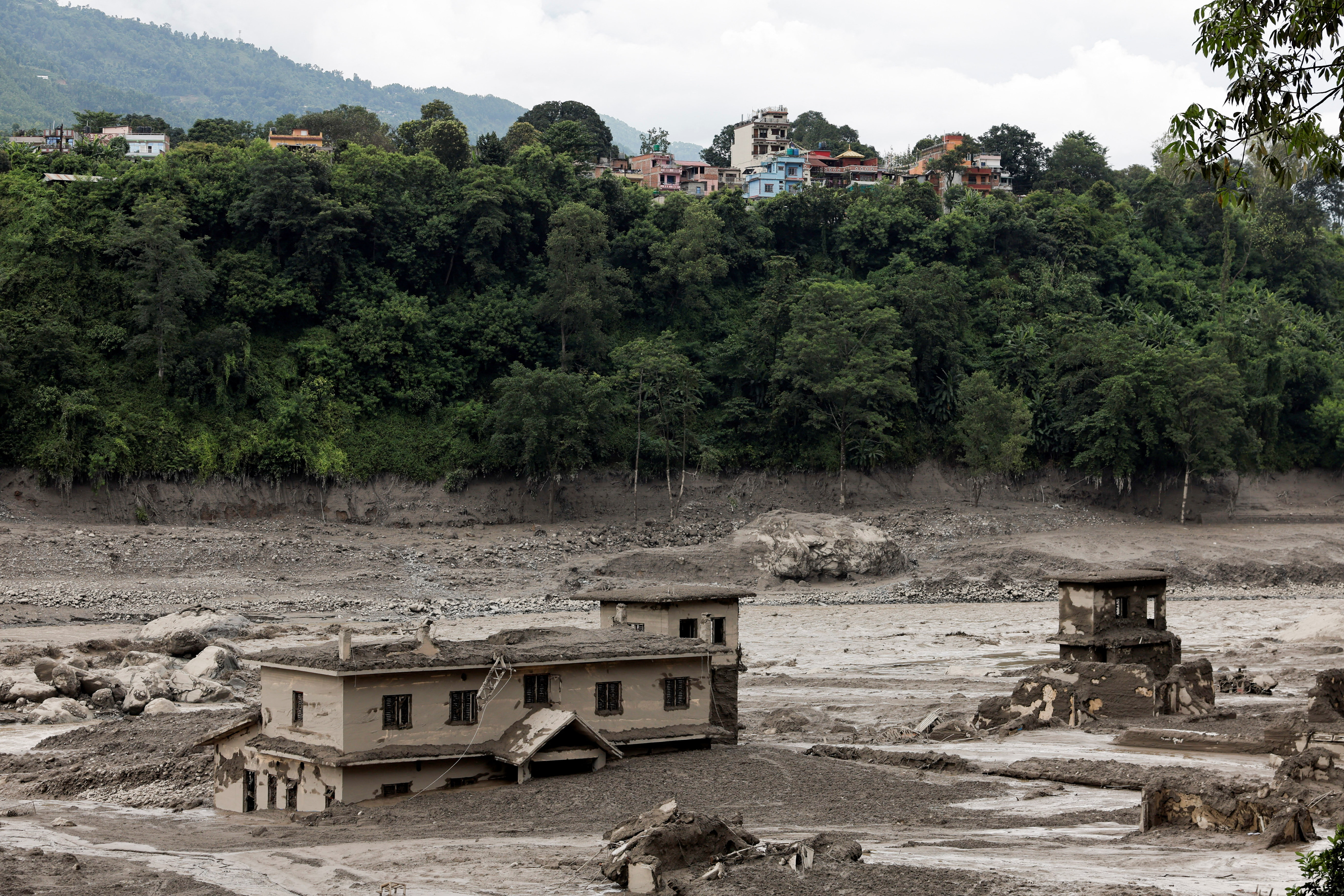
Experts cite glacier collapse as likely trigger of Nepal flash flood near Tibet border
A deadly flash flood near Nepal’s border with Tibet on Wednesday is widely assessed by experts as having been triggered...