


Multiple reports say Africa’s pledged clean-energy investment is not translating into enough projects due to financing barriers linked to credit rating rules and related borrowing costs. They describe how investors and lenders often demand higher returns and stricter terms when projects or counterparties face weaker credit assessments. The resulting higher financing costs can make many renewable and other clean-energy developments harder to structure and fund at scale, even when governments, development partners, and companies have pledged support for the energy transition. The coverage focuses on the gap between commitments and implementation, citing investor caution and the challenge of accessing affordable capital. While the sources differ only in emphasis, they converge on the idea that credit-related constraints and the financial risk costs they drive deter investment and delay projects. As a result, clean-energy funds that are available in principle may not reach on-the-ground construction and deployment, limiting progress in expanding generation capacity and related infrastructure.
Credit rating rules and high costs hinder financing for Africa’s clean energy projects
Multiple reports say Africa’s pledged clean-energy investment is not translating into enough projects due to financing barriers linked to credit rating rules and related borrowing costs. They describe...
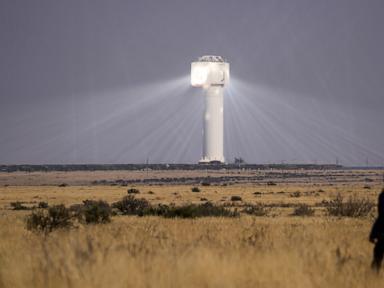
- Africa’s clean-energy investment commitments are not consistently resulting in projects on the ground.
- Credit rating rules contribute to higher financing costs for clean-energy projects.
- Higher borrowing costs deter investors and lenders from funding projects.
- Financing barriers slow or limit the scaling of clean-energy development across African markets.
- The reporting describes a gap between pledged funds and actual project delivery.
Billions pledged for Africa’s clean energy transition are failing to translate into projects on the ground as high financing costs deter investors
2 months agoBillions pledged for Africa’s clean energy transition are failing to translate into projects on the ground as high financing costs deter investors
2 months ago
Secret report into NBL owner Larry Kestelman finds he made ‘mistakes’ despite clearing him
Basketball Australia releases findings from a secret report into NBL billionaire owner Larry Kestelman after months of q...

Security guard killed in suspected cult attack at Royale Estate in Lagos
A security guard, identified as Stanley, is shot dead during a night attack at Royale Estate in Sangotedo, Lagos. Report...
Teen spared jail under Victoria’s new ‘adult time’ laws after carjacking charge
A teenager charged with a violent carjacking in Victoria is spared jail under the state’s new “Adult Crime, Adult Time”...