


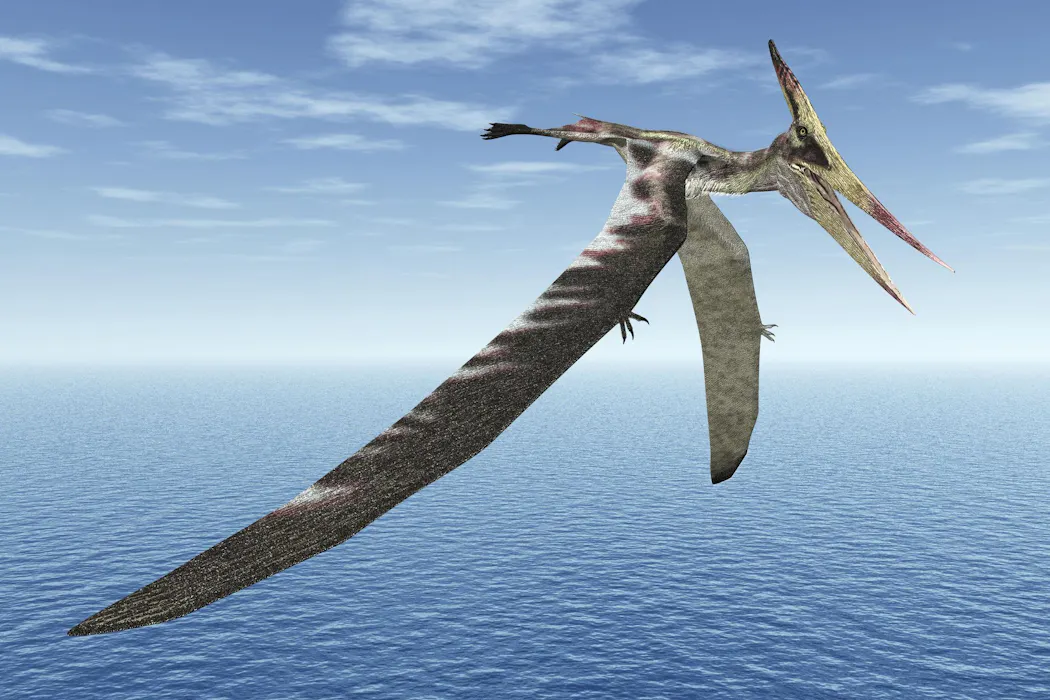
Scientists report that microbial activity played a two-part role in the preservation of a pterosaur wing bone from more than 100 million years ago. The research describes how microbes initially damage or degrade parts of the bone after the animal dies, affecting the original tissue structure. Rather than destroying the specimen entirely, microbial processes also help stabilize mineral components and create conditions that allow the remaining material to endure through deep time.
The study frames the preserved bone as a record of both biological activity after death and the type of environment in which the fossil formed. By examining what microbes do to the bone and how long the material remains preserved, the work connects fossil chemistry and taphonomy to broader questions about pterosaur biology. The sources also note that the preserved wing bone can provide indirect information about the animal’s diet, because aspects of feeding and physiology can influence bone composition.
Overall, the findings suggest that fossil preservation can be shaped by complex interactions between decay processes and mineral stabilization, highlighting how microbial ecosystems can influence what survives in the fossil record.


