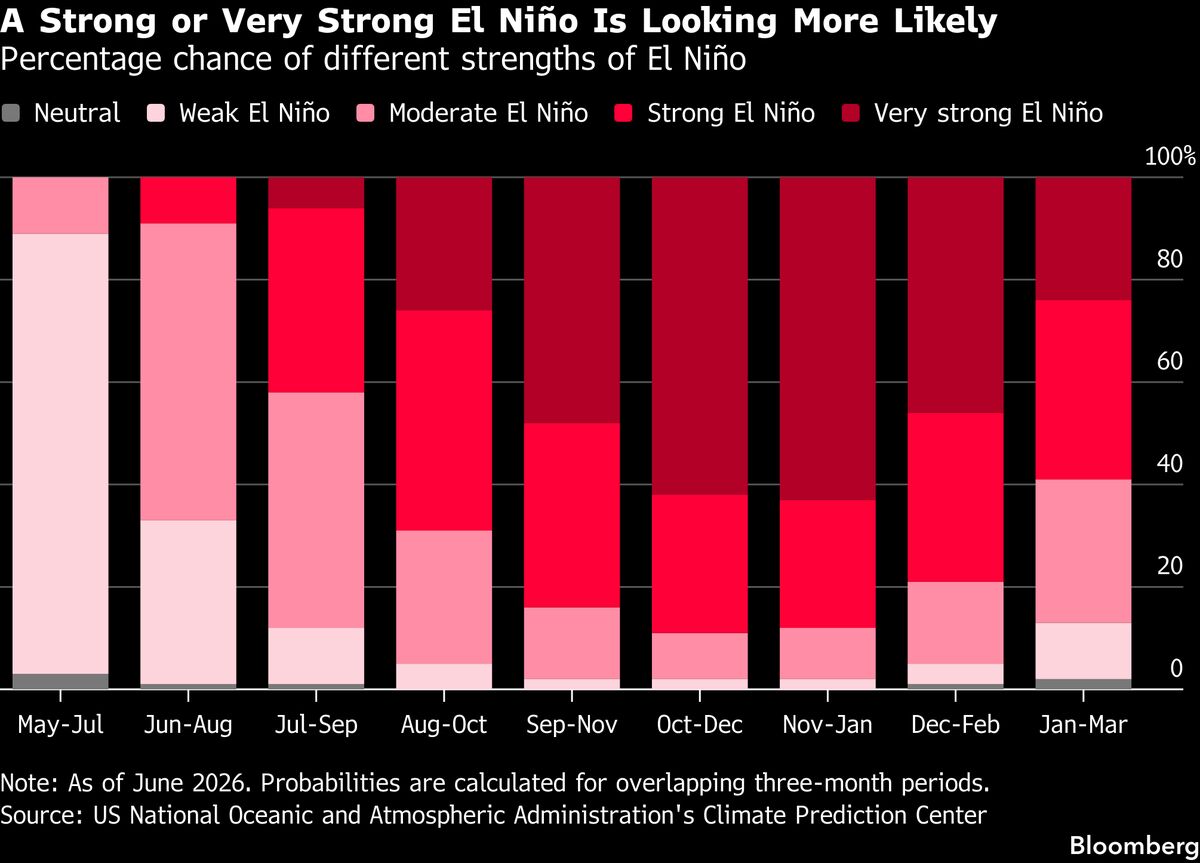
Multiple outlets report that as fears tied to an Iran conflict ease, market participants are shifting attention to climate-related risk, including the potential emergence of a rare “Super El Niño.” The event is described as a possible driver of extreme weather, with implications that extend beyond direct environmental impacts. Sources say it could affect agriculture through changes in crop conditions and food security, and influence energy markets via altered weather patterns that can affect demand and supply. The potential fallout is also framed as relevant to inflation trends, as weather shocks can feed into prices for food and other goods.
In addition, the reports highlight knock-on effects for corporate earnings and broader sector outlooks. Companies in insurance and financial services are cited as areas where heightened climate risks may change pricing, underwriting assumptions, and investment strategies. One outlet also notes that the risk is being discussed in relation to 2027, suggesting investors are considering how future weather volatility could translate into market and economic consequences. Overall, the coverage focuses on portfolio recalibration across sectors rather than specific asset moves or outcomes.