


Multiple reports describe the Caspian Sea as shrinking rather than undergoing a temporary natural cycle. The sea is becoming warmer and shallower, trends that are associated with harmful environmental and economic impacts. The Caspian Sea is the world’s largest inland body of water, and sources state that it has lost a substantial area—described as nearly the size of Sicily—indicating a large-scale reduction in surface extent. The reporting emphasizes that the change is not presented as a normal fluctuation or part of a longer-term natural pattern. Instead, the accounts attribute the ongoing shrinkage to human activities that influence factors such as water balance and local environmental conditions. Together, the sources frame the situation as a continuing, measurable decline with consequences for ecosystems and for communities that depend on the sea and its resources. While specific mechanisms are discussed at a general level across the summaries provided, the shared conclusion is that the Caspian Sea’s current retreat is driven largely by human influence rather than natural cycling.
Caspian Sea shrinks significantly, with human activities cited as a major factor
Multiple reports describe the Caspian Sea as shrinking rather than undergoing a temporary natural cycle. The sea is becoming warmer and shallower, trends that are associated with harmful environmental...
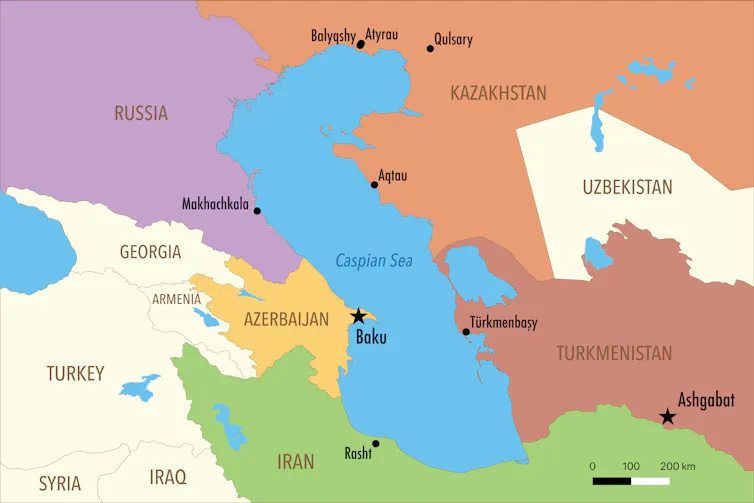
- The Caspian Sea is shrinking and becoming shallower.
- Reports describe the shrinkage as not explained by normal natural fluctuations.
- Sources cite human activities as a major reason for the decline.
- The sea is also warming, alongside the reduction in area.
- Large-scale environmental and economic effects are reported as resulting from the changes.
The Caspian Sea, the largest inland body of water on Earth, is shrinking. Not fluctuating, not entering another natural cycle, but shrinking.
2 months agoThe Caspian Sea is becoming warmer and shallower, with damaging economic and environmental effects.
2 months ago
Trump announces U.S. agreement with Venezuela for control of 65 billion barrels of oil reserves
U.S. President Donald Trump says the United States has entered an agreement with Venezuela to secure control of oil rese...

ClearWay Mobility Unveils Obstacle Detection Device for the Standard White Cane
ClearWay Mobility introduces an obstacle detection device designed to be added to the standard white cane used by people...

SF Holding reports solid first-half 2026 results, highlighting international growth and returns
SF Holding reports solid financial results for the first half of 2026, stating that performance is supported by continue...