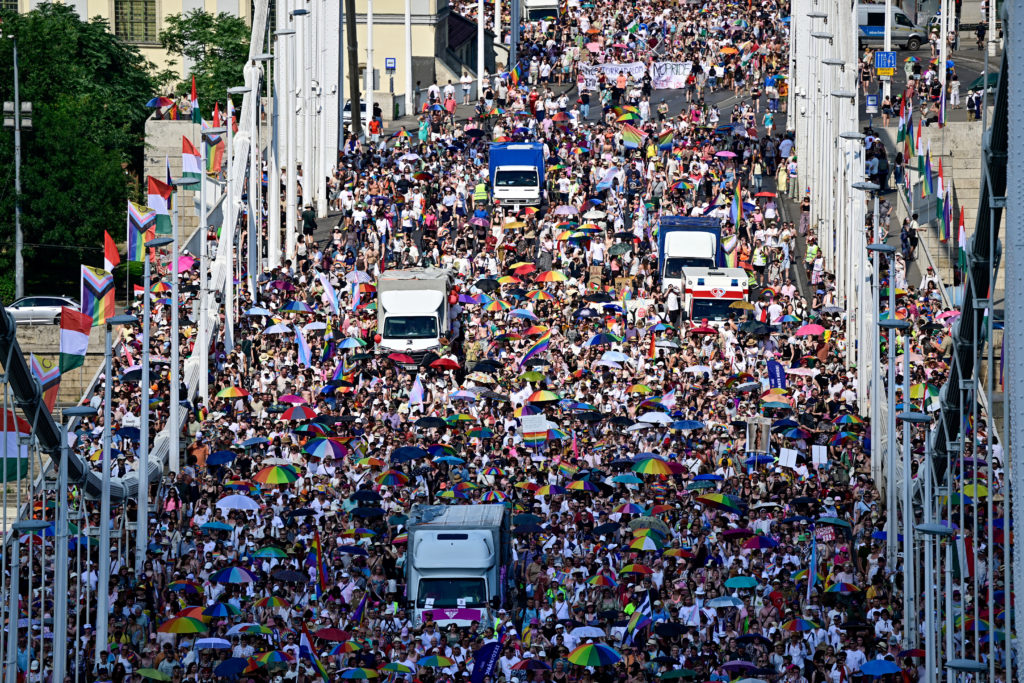
Thousands of people take part in the 31st annual Budapest Pride march in Hungary’s capital, described by multiple outlets as the first Pride held since former prime minister Viktor Orbán leaves power following an April election defeat. Reporting notes that the event draws large crowds in hot weather and includes members of Hungary’s LGBTQ+ community, supporters, and participants waving rainbow flags and dancing to music.
Several sources link the timing to changes in Hungary’s political environment after Orbán’s government. PBS NewsHour and BBC News report that Orbán’s nationalist-populist administration had previously passed legislation and a constitutional amendment to prevent or outlaw the Pride event, prompting criticism from human rights groups and some politicians in other European Union countries. With Orbán now out of office, the Pride march proceeds and is marked as a milestone for the local LGBTQ+ community.
While outlets emphasize turnout and the celebration, they also consistently frame the march as occurring in the wake of prior government efforts to block Pride, making this year’s event both a public gathering and a symbolic shift in Hungary’s approach to LGBTQ+ visibility.