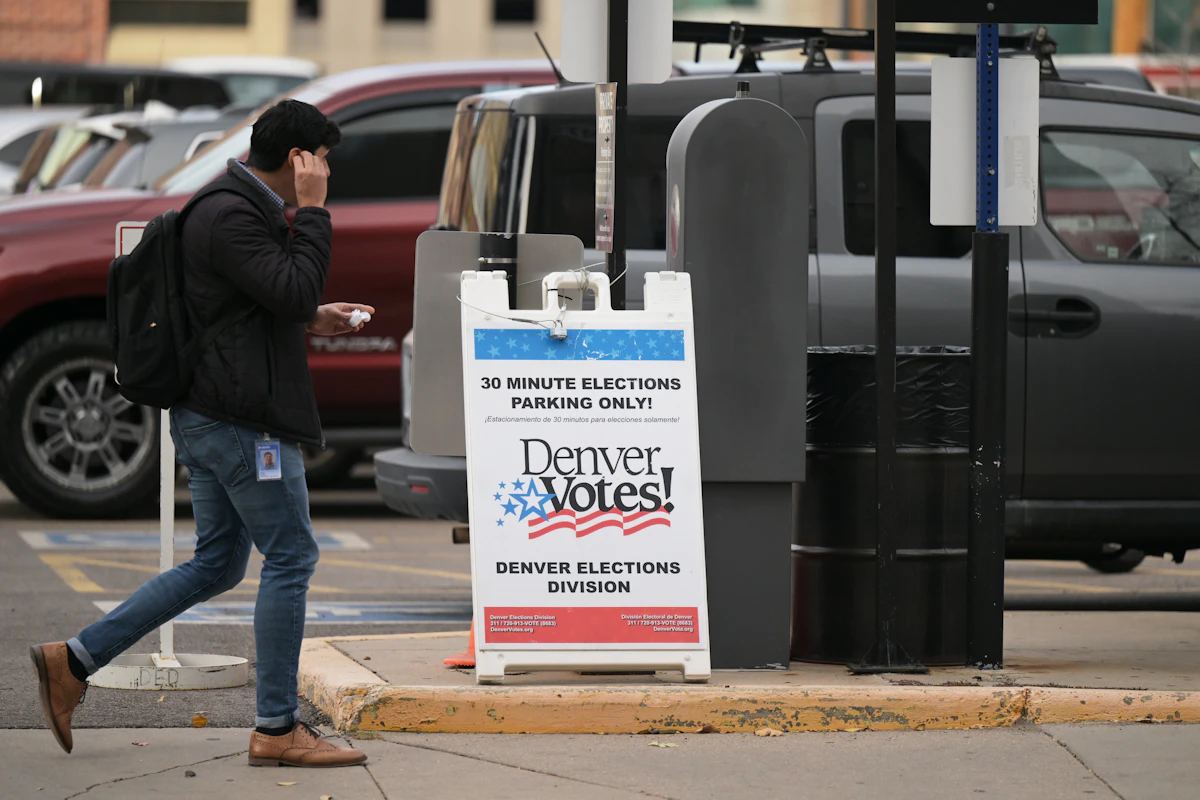
The Colorado Supreme Court rejects three ballot measures backed by Democrats that sought to change state law to enable a new congressional redistricting map ahead of the 2028 election, according to multiple reports. The court’s decision bars the proposed initiatives, finding that the measures violate Colorado law. One outlet reports the court concludes that ballot initiatives intended to install a newly drawn, gerrymandered map are not permissible under state legal requirements. The ruling is described as a significant setback for Democratic efforts to prepare a new congressional district map before the 2028 cycle. The sources do not describe in detail alternative timelines or methods for creating a new map following the court’s action, but the rejection means the measures cannot move forward to the ballot in their current form. The decision reflects the court’s view that the approach using voter initiatives to implement changes to state law for redistricting does not comply with applicable restrictions. Overall, the reports characterize the outcome as a blow to the Democratic redistricting strategy and a stop to the specific initiatives the court evaluated.
Colorado Supreme Court rejects Democratic-backed ballot measures for redistricting
The Colorado Supreme Court rejects three ballot measures backed by Democrats that sought to change state law to enable a new congressional redistricting map ahead of the 2028 election, according to mu...
- Colorado’s Supreme Court rejects three Democratic-backed ballot measures tied to congressional redistricting.
- The measures are intended to change state law to allow a new congressional map for the 2028 election.
- The court rules the initiatives violate Colorado law.
- Reports describe the proposed map as newly drawn and characterized as gerrymandered.
- The court’s ruling prevents the measures from advancing in their proposed form.
The state’s high court found that ballot initiatives designed to change state law to install a newly gerrymandered map violated Colorado law.
2 hours agoThe Colorado Supreme Court on Monday unanimously rejected three ballot measures that would have allowed Democrats to redraw the district map in their favor before the 2028 elections, dealing a blow to national party efforts in the gerrymandering race kick-started by President Donald Trump.The decision blocks Democrats from securing a map that would have likely given them three more seats in the House of Representatives. Under the proposed new map, the only safe Republican district would be that of Representative Lauren Boebert.The Supreme Court rejected the ballot measures on the basis of the state’s constitutionally mandated “single subject” policy, which requires measures to only handle a single issue.“Changing long-settled law by modifying the timing, frequency, criteria, and entity responsible for congressional redistricting represents a significant change beyond the proponents’ stated central purposes [of] … congressional redistricting by adopting a new temporary map,” Chief Justice Monica Márquez said in one of her opinions.Now, Colorado is out of the redistricting wars. So far, the only blue states that have approved a redistricting measure are California and Utah. But the groundwork has been laid for other states to do the same before 2028.
2 hours agoThe Colorado Supreme Court on Monday rejected three proposed ballot measures supported by Democrats that were designed to pave the way for a new congressional map ahead of the 2028 election.
3 hours ago
French parliament passes fast-fashion law targeting Shein and Temu
France’s parliament passes a bill aimed at curbing the growth of fast fashion, with a focus on large Asian e-commerce pl...
Green algae returns to Lincoln Memorial Reflecting Pool days after $14 million renovation
The Lincoln Memorial Reflecting Pool in Washington, D.C. turns green again only days after a $14 million renovation. Mul...
Supreme Court sends geofence warrant case back after ruling on privacy for phone location data
The U.S. Supreme Court rules that people have a reasonable expectation of privacy in their cellphone location data, send...