


Bangladesh ride-share drivers say disruptions tied to the war in Iran are worsening fuel availability and increasing costs, reducing their income. Tariqul Islam, who works as a ride-share driver, reports longer waits at fuel stations as supply becomes less reliable. Sources describe fuel lines growing, with drivers spending more time obtaining petrol and diesel and paying higher prices. The resulting impact is lower take-home earnings because drivers can complete fewer trips per day and must spend additional money on transport and operating costs. While the reporting focuses on individual experiences, the accounts point to broader economic effects in Bangladesh, where fuel price pressures and intermittent supply affect daily work for transport workers. The situation is presented as part of wider regional disruptions linked to the Iran conflict, which contribute to volatility in supply chains and commodity availability. The stories describe drivers’ day-to-day challenges—waiting for fuel, adjusting routes and schedules, and absorbing higher operating expenses—rather than political or military developments directly.
Iran-linked disruptions raise fuel costs and cut earnings for ride-share drivers in Bangladesh
Bangladesh ride-share drivers say disruptions tied to the war in Iran are worsening fuel availability and increasing costs, reducing their income. Tariqul Islam, who works as a ride-share driver, repo...
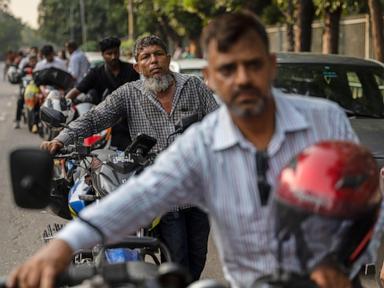
- Ride-share drivers in Bangladesh, including Tariqul Islam, report longer fuel lines and delays.
- Fuel supply disruptions are linked to wider shortages attributed to the war in Iran.
- Drivers face higher fuel-related costs, including higher prices when fuel is available.
- The time spent obtaining fuel reduces the number of trips drivers can complete, lowering income.
- The accounts describe practical impacts on transport workers’ day-to-day earnings rather than policy changes.
Tariqul Islam, a ride-share driver in Bangladesh, faces long fuel lines due to supply disruptions linked to the war in Iran
3 months agoTariqul Islam, a ride-share driver in Bangladesh, faces long fuel lines due to supply disruptions linked to the war in Iran
3 months ago
Liquefied petroleum gas tanker pays record fare for priority Panama Canal transit
A liquefied petroleum gas (LPG) tanker pays a record transit fee for priority passage through the Panama Canal, accordin...
Trump announces U.S. agreement for majority control of Venezuela’s 65 billion barrels of oil reserves
President Donald Trump says the United States has entered an agreement with Venezuela that would give the U.S. majority...

Two police officers named after fatal A66 crash near Middlesbrough
Two police officers, PCs Matthew Blades, 37, and Tom Clough, 38, are killed in a crash on the A66 near Middlesbrough. Th...