


Antarctica’s “Blood Falls,” a rust-red cascade emerging at the terminus of the Taylor Glacier, has puzzled scientists for more than a century because of its bloodlike appearance. Reports describe the phenomenon as not involving blood or contamination. Instead, the red color comes from iron-rich, salty water that flows upward through cracks from a reservoir trapped beneath the glacier for an estimated 1.5 million years. Once the water reaches the surface, it mixes with oxygen in the air. The iron then oxidizes, producing iron oxides that create a reddish-brown hue resembling flowing blood against the ice. The event is studied to improve understanding of glacial and subglacial history, and some research also uses it to explore how life could persist in extreme, low-energy environments, including environments similar to those on icy moons. Overall, sources converge on the same scientific explanation: ancient briny meltwater, driven through the ice and altered by oxidation at the surface, produces the waterfall’s distinctive color.
Scientists explain Antarctica’s “Blood Falls” red meltwater from an ancient subglacial reservoir
Antarctica’s “Blood Falls,” a rust-red cascade emerging at the terminus of the Taylor Glacier, has puzzled scientists for more than a century because of its bloodlike appearance. Reports describe the...
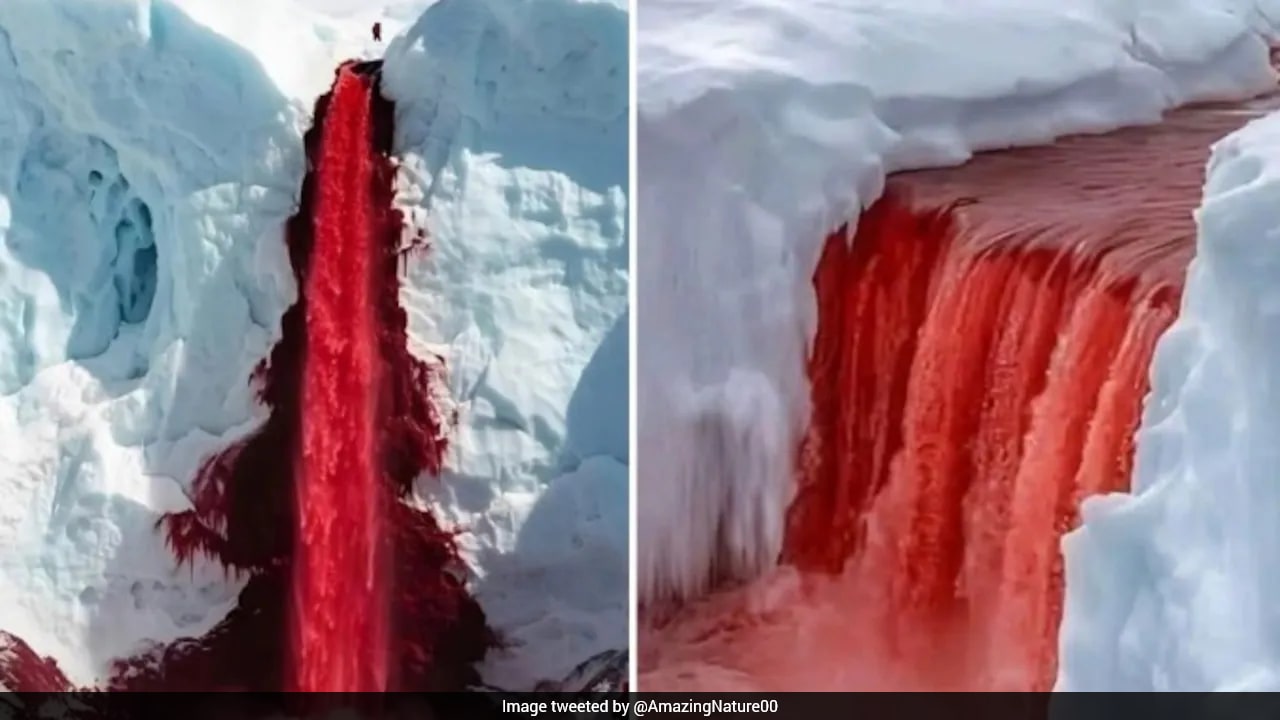
- Blood Falls is a red, waterfall-like flow at the terminus of Antarctica’s Taylor Glacier.
- The red color is attributed to iron-rich, salty water from beneath the glacier, not blood.
- Scientists say the water originates from an ancient subglacial reservoir trapped under the ice for roughly 1.5 million years.
- When the water reaches the surface, it contacts oxygen and iron oxidizes, producing iron oxides that create the reddish hue.
- Researchers study the phenomenon to understand glacial/subglacial history and how extreme environments may support life.
Antarctica is Earth's southernmost continent, situated almost entirely south of the Antarctic Circle. It is surrounded by the Southern Ocean, which is also known as the Antarctic Ocean. The White Desert (Antarctica is the fifth-largest continent on the blue planet and is about 40 per cent larger than Europe. It has an area of 14,200,000 km². Antarctica is the coldest, windiest, and least populated of the world's continents. As vast as the landscape of Antarctica in the South Pole region is, it contains many mysteries.But did you know that the frozen continent is also home to Blood Falls? Keep reading to know more.Nature is awesome."Blood Falls" in Antarctica. pic.twitter.com/Us9BXO4jBY— Fascinating History (@Fascinate_Hist) December 22, 2025 Unlocking the mystery behind Blood FallsAntarctica is home to some of the world's most extraordinary natural wonders, and one of its most fascinating is Blood Falls. Located at the terminus of the Taylor Glacier in East Antarctica's McMurdo Dry Valleys, the waterfall has intrigued scientists and explorers for more than a century due to its unusual deep red colour, which resembles flowing blood against the stark white ice. Daily Quick Fact;tau ga, pada tahun 1911 ada seorang ahli geologi Australia bernama Griffith Taylor menemukan fenomena menarik di Antartika.namanya, Blood Falls atau Air Terjun Darah.tapi, kok bisa ya warnanya merah begitu? ada apa ya?[thread belajar bareng] pic.twitter.com/6LdJrZJnky— Arcana lagi Open Order | Asta Ebrahim (@jellypastaa) January 28, 2025 The fall has nothing to do with bloodDespite its dramatic appearance, Blood Falls has nothing to do with blood or any form of biological contamination. The striking red colour is caused by iron-rich salty water that emerges from beneath the glacier. This briny water originates from an ancient subglacial reservoir that has remained trapped beneath the ice for millions of years.German Scientists Accidentally Discover Hidden Antarctic Island, Once Known As 'Danger Zone'Oxidation process When the iron-rich water reaches the surface, it comes into contact with oxygen in the air. The iron then undergoes the process of oxidation. It is the same chemical process that causes iron to rust. This reaction produces iron oxides and gives the water its distinctive reddish-brown hue, creating the illusion of blood flowing from the glacier.What makes it even more fascinating is that the water hosts unique microbes that survive without sunlight, offering clues about life in extreme conditions on Earth and possibly beyond.
1 month agoAntarctica's 'Blood Falls' is a striking natural wonder, not of blood, but of iron-rich water from a 1.5-million-year-old sub-glacial lake. This ancient, super-salty reservoir, trapped beneath the Taylor Glacier, flows to the surface through tiny cracks. Upon contact with oxygen, the iron oxidizes, creating the dramatic red hue. Scientists are studying this phenomenon to understand glacial history and the potential for life on icy moons.
1 month agoKnown as Blood Falls, the rust-red cascade flows from the Taylor Glacier and has puzzled scientists for more than a century.
1 month agoKnown as Blood Falls, the rust-red cascade flows from the Taylor Glacier and has puzzled scientists for more than a century.
1 month ago
Victorian premier moves to scrap secret $8 billion public transport fare levy
The new Victorian premier moves to scrap a secret public transport fare levy worth $8 billion after it is revealed by th...

Qantas unveils lie-flat business class suites for A321XLR and 787 aircraft
Qantas unveils lie-flat business class suites for its next aircraft types, bringing a feature more commonly seen on larg...

UK plug-in solar panels set for sale, with advice on suitability and savings
Plug-in solar panels are expected to go on sale in the UK, offering households a new way to generate electricity at home...