


A new study uses data from the CAVITY survey to investigate whether galaxy groups exist within the universe’s largest, sparsest regions—cosmic voids. Although these voids make up most of space and appear “empty,” researchers aim to test how often galaxies cluster even when surrounding regions are rarefied. The work applies a “friends of friends” approach to identify and map galaxy groupings among nearby galaxies. According to the study’s reported findings, most galaxies located in voids do not form associations and instead appear to be largely solitary. Where galaxy groups do emerge inside voids, they tend to be small and loosely bound, and their existence does not strongly depend on how empty the immediate void environment is. In other words, the analysis suggests a broad preference for isolation among void galaxies, with limited and relatively indifferent clustering when group-scale structures do occur. The study therefore frames a key question about what drives some galaxies in low-density regions to gather while most remain alone.
Study searches for galaxy groups inside the universe’s largest voids
A new study uses data from the CAVITY survey to investigate whether galaxy groups exist within the universe’s largest, sparsest regions—cosmic voids. Although these voids make up most of space and app...

- The study uses the CAVITY survey to examine galaxy clustering inside cosmic voids.
- It applies a “friends of friends” technique to identify galaxy groups.
- Most void galaxies are found to be mostly solitary rather than grouped.
- Galaxy groups that do form in voids are generally small and loosely connected.
- The results suggest void emptiness does not strongly determine whether groups exist.
Imagine standing in the emptiest place the universe has to offer, a stretch of cosmic ocean so vast that light takes tens of millions of years to cross it, and yet still finding company. That is the puzzle behind a new study built on the Calar Alto Void Integral field Treasury surveY, or CAVITY, posted to the arXiv preprint server.
1 month agoEven the universe’s emptiest regions, the vast voids that make up most of the volume of space, are not entirely empty. A new study using the CAVITY survey hunts for galaxy groups hiding within these voids, applying a friends of friends technique to chart how nearby galaxies cluster together despite the surrounding emptiness. The results paint a striking picture that most void galaxies actually live entirely solitary lives, yet where groups do form, they are small, loose and curiously indifferent to just how empty their void actually is. It raises a deceptively simple question that turns out to be anything but: in the universe’s quietest neighbourhoods, what makes some galaxies choose company while most remain alone?
1 month ago
Trump signs order creating U.S. Space Academy for military and civilian space workforce
President Donald Trump signs an executive order creating the U.S. Space Academy, setting up a new institution focused on...
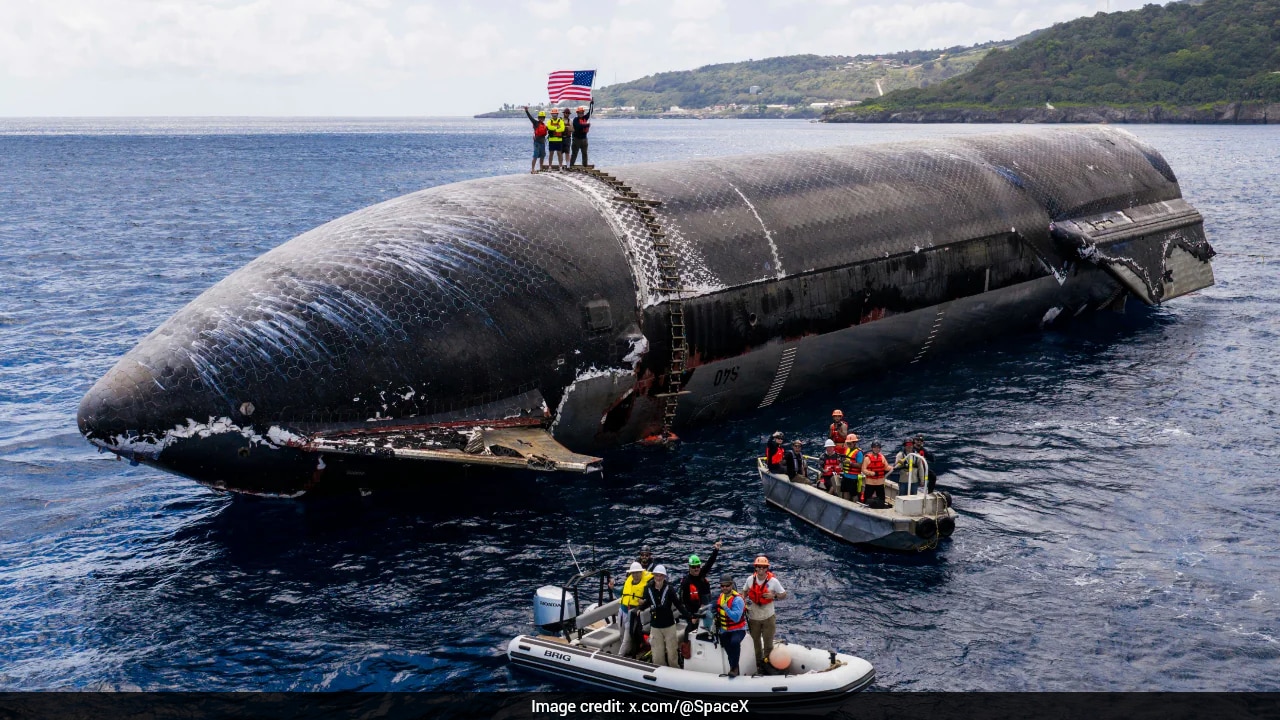
SpaceX recovers Starship from Indian Ocean and ships it back to Texas
SpaceX recovers its most recently launched Starship from the Indian Ocean about a month after launch, marking a major sa...

CBC reverses guidance on describing 9/11 as “terrorist attacks” after backlash
The Canadian Broadcasting Corporation (CBC) tells journalists not to describe the Sept. 11, 2001, attacks as “terrorist...