


Iranian authorities begin a days-long funeral and commemoration for former Supreme Leader Ali Khamenei, with huge crowds gathering in Tehran and plans for ceremonies in multiple cities. Several outlets report that officials expect extremely large attendance, including estimates of 15 to 20 million people in Tehran alone over the coming days. International media describe Tehran road closures, public preparations, and mourners arriving at major venues including the Grand Mosalla as the ceremonies get under way. A farewell ceremony and earlier event near Khamenei’s compound in Tehran are also reported, with state-linked media showing the casket displayed and symbolic religious and memorial elements accompanying the proceedings. The coverage also says the funeral programme extends beyond Tehran, with the body to be transported to other locations in Iran and neighboring Iraq, and concludes with burial in Mashhad on July 9, according to multiple reports. Across the accounts, the scale and organization of the commemorations are presented as a major public event, while the international reporting focuses primarily on the expected participation and the timing and locations of the ceremonies.
Millions expected in Tehran for start of Ali Khamenei funeral ceremonies
Iranian authorities begin a days-long funeral and commemoration for former Supreme Leader Ali Khamenei, with huge crowds gathering in Tehran and plans for ceremonies in multiple cities. Several outlet...
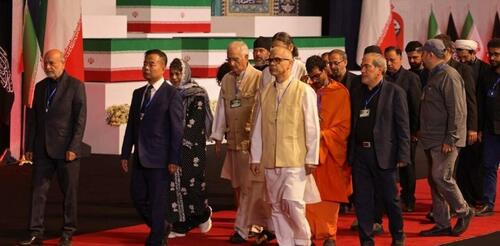
- Iranian authorities hold the first days of funeral ceremonies for Supreme Leader Ali Khamenei in Tehran.
- Crowd estimates cited for Tehran range from about 15 to 20 million people over the next three days.
- The programme includes ceremonies across multiple cities, with the burial in Mashhad on July 9.
- The body is transported to other locations in Iran and neighboring Iraq as part of the funeral schedule.
- Mourners gather at major venues in Tehran, including the Grand Mosalla, with authorities preparing streets and public areas for large attendance.
Tens of thousands attend Tehran procession as Iran begins week-long state mourning for slain supreme leader amid heightened US-Israel tensions.
Inside Khamenei's funeral: Revealing moments from a week of mourning Iran's late supreme leader, Ayatollah Ali Khamenei, was laid to rest on 9 July after a week-long funeral procession following his assassination in a US-Israeli strike in February. The 86-year-old leader, who ruled Iran for more than three decades, was succeeded by his 56-year-old son, Mojtaba Khamenei. The funeral ceremonies, held across several cities in Iran and Iraq, drew millions of mourners, according to state figures. Beyond the official displays of mourning, however, the events also revealed political messages and internal power dynamics. Read more: Inside Khamenei's funeral: Revealing moments from a week of mourning Mourners react next to the coffin of Iran's late Supreme Leader Ayatollah Ali Khamenei, who was killed on 28 February in Israeli and US air strikes, and coffins of his family members, on the day of his burial, in Mashhad, Iran, 9 July 2026 (Alkis Konstantinidis/Reuters)
1 month agoInside Khamenei's funeral: Revealing moments from a week of mourning Submitted by MEE correspondent on Thu, 07/16/2026 - 09:26 Political signals and power dynamics emerge from Iran’s elaborate farewell ceremonies Mourners react next to the coffin of Iran's late Supreme Leader Ayatollah Ali Khamenei, who was killed on 28 February in Israeli and US air strikes, and coffins of his family members, on the day of his burial, in Mashhad, Iran, 9 July 2026 (Alkis Konstantinidis/Reuters) Off Iran's late supreme leader, Ayatollah Ali Khamenei, was laid to rest on 9 July after a week-long funeral procession following his assassination in a US-Israeli strike in February. The 86-year-old leader, who ruled Iran for more than three decades, was succeeded by his 56-year-old son, Mojtaba Khamenei. The funeral ceremonies, held across several cities in Iran and Iraq, drew millions of mourners, according to state figures. Beyond the official displays of mourning, however, the events also revealed political messages and internal power dynamics. Middle East Eye looks at some of the key moments: A Quranic verse that sparked controversy On the first day of the funeral procession, as foreign diplomatic delegations stood before Khamenei's coffin, Quranic verses were recited at different stages of the ceremony. When Saudi and Qatari delegations were present, organisers selected a verse that many observers interpreted as carrying a political message. As the Saudi delegation paid its respects, Verse 13 of Surah Al Imran was recited: Is Iran the new regional superpower? Read More » "Indeed, there was a sign for you in the two groups that met in battle: one group fighting in the cause of Allah and the other disbelieving. They saw them with their own eyes as twice their number. And Allah supports with His victory whom He wills. Surely in this is a lesson for those who have insight." The verse refers to the Battle of Badr, the first major battle between Prophet Muhammad's followers and the Quraysh of Mecca. Islamic tradition holds that the Muslims prevailed despite being heavily outnumbered and having fewer resources. A political source told MEE that government officials were unhappy with what they viewed as a “deliberate selection” of the verse. The source said the choice had been orchestrated by the hard-line Islamic Ideology Dissemination Organisation. The episode also sparked criticism on Iranian social media. A reformist politician told MEE that directing such a message at foreign guests was inappropriate, arguing that inviting diplomatic delegations requires showing respect rather than sending implicit warnings. Hassan Khomeini's recitation Hassan Khomeini, the grandson of Islamic Republic founder Ayatollah Ruhollah Khomeini, attended the funeral alongside other members of the Khomeini family to pay tribute to Khamenei. Khomeini left the funeral as Verse 95 of Surah An-Nisa was being recited for him. The verse contrasts believers who held back from fighting Allah's cause without legitimate reason with those who strive in God's cause, saying that the latter are granted a higher status and greater reward. According to a source who spoke to MEE on condition of anonymity, Khomeini, who had long been rumoured as a possible successor to Khamenei, was unhappy with the Quranic recitation directed at him and left the ceremony earlier than expected. However, Khomeini and his brothers later attended funeral ceremonies in Mashhad and Qom. Mojtaba Khamenei's health and the message from his brothers Khamenei's three other sons – Mostafa, Masoud and Meysam – appeared at most of the funeral ceremonies. Their appearances appeared intended to send a broader message. All three looked healthy, with no visible bruises or scars on their faces or hands. Together with other signals from the ceremonies, their public presence appeared designed to reassure both the Iranian public and the outside world that Mojtaba Khamenei is alive, in good health and capable of carrying out his duties. Speculation over Mojtaba's condition has persisted since his appointment in early March, fuelled by rumours that he was wounded in the same US-Israeli air strikes that killed his father and other family members. A senior source told MEE that Mojtaba is in good health and that reports about his condition had been exaggerated. The source said he had sustained injuries only to his feet, along with some facial scarring, both of which were recovering well. Mostafa Khamenei's unexpected public role Mostafa Khamenei, the eldest son, maintained a prominent public profile throughout the ceremonies, including events in Iraq. He also led the funeral prayer before Khamenei's burial at the shrine of Imam Reza in Mashhad. During the ceremonies in Iraq, Mostafa met the sons of Grand Ayatollah Ali al-Sistani, the leading Iraqi Shia cleric, further raising his public profile. His increased visibility has fuelled speculation that he may assume a larger political role in the future. A senior cleric told MEE that Mostafa had studied extensively in Qom's seminaries but had stayed out of politics during his father's lifetime because he had little interest in entering public life. Javadi Amoli's eulogy Grand Ayatollah Abdollah Javadi Amoli, one of Iran's most senior clerics, used unusually elevated language during the funeral prayer for Khamenei in Qom, going beyond the customary expressions typically reserved for the deceased. His remarks drew widespread attention from both the media and social media users. According to a cleric who spoke to MEE, Javadi Amoli was conveying not merely that he had "seen nothing but goodness" in Khamenei, but that the late leader had attained a higher spiritual status in God's eyes and had died as a martyr in the path of Islam. Ali Asghar Hejazi finally emerges The presence of Ali Asghar Hejazi, widely regarded as the second most influential figure in Khamenei's office, also attracted significant attention. Hejazi appeared healthy despite earlier reports claiming that he had either been killed or seriously wounded. Obituary: Ayatollah Ali Khamenei, Iran's supreme leader and dominant political figure for decades Read More » Following the succession process, speculation emerged that Hejazi did not have a close relationship with Mojtaba Khamenei and had instead favoured other candidates for the leadership. Mohammad Reza Bahonar, a member of the Expediency Council, told local media that shortly after Khamenei's death, Hejazi attended a session of the Assembly of Experts and conveyed the late leader's views on the involvement of his children in politics. "The late Imam never held any negative view toward Mr Mojtaba, but he emphasized that, according to both law and Islamic jurisprudence, the supreme leader does not choose his own successor. This is the religious and legal responsibility of the Assembly of Experts,” Bahonar said. A source told MEE that Hejazi's appearance at the funeral was likely intended to project unity and dispel speculation about internal divisions. The source added that Mojtaba had offered Hejazi a senior position, but that he declined, saying he wanted time away after decades of service. Principlists target Iran's negotiators Parliament Speaker Mohammad Bagher Ghalibaf, Foreign Minister Abbas Araghchi and President Masoud Pezeshkian all faced hostility from principlist supporters during the funeral events. Some participants chanted slogans condemning the officials over negotiations with the US. In one incident, they reportedly confronted Araghchi, shouting "scumbag" and throwing stones at him. War on Iran Tehran News Post Date Override 0 Update Date Mon, 05/04/2020 - 21:19 Update Date Override 0
1 month agoAbout 43 million people attended Khamenei's week-long funeral, Iranian state media says Around 43 million people attended Iran’s slain Supreme Leader Ayatollah Ali Khamenei's nearly week-long funeral , Iranian state media reported. The funeral procession took place across five cities in Iraq and Iran, including Tehran, Qom, Najaf, Karbala and Mashhad - where he was buried.
1 month agoThe funeral prayers for assassinated supreme leader Ali Khamenei were offered late on Thursday as hundreds of thousands of mourners, braving sweltering heat and calling for revenge, massed in his hometown of Mashhad. An Israeli strike assassinated Khamenei in late February on the first day of the Middle East war. Following the funeral prayers, the late supreme leader was laid to rest at the Shrine of Imam Reza, one of the holiest sites in Shia Islam. Earlier, Khamenei’s body was carried by truck slowly through the crammed streets of Mashhad in northeastern Iran towards the gilt dome and minarets of the shrine. Thousands of people filled the streets of the eastern city. Footage posted by IRNA showed the procession en route to the shrine , where the assassinated leader was buried. With new hostilities breaking out with the United States even after an accord last month to end the war, at least one fighter jet escorted the plane carrying the late Iranian leader’s coffin to Mashhad. The burial was the final act in a marathon six days of funeral ceremonies, which have allowed people to pay tribute in Tehran, the clerical hub of Qom and also in Iraq. Men wore black shirts while women were clad in black chadors, many waving the red flags that symbolise vengeance, AFP correspondents said. “People here all seek revenge,” said Mohammad Afsharian, 41, a shop owner. “I don’t know what’s the story with diplomacy and what’s the policy to continue diplomacy but all the people are carrying red flags in a sign of seeking revenge,” he said. Mourners attend the burial ceremony for Iran’s late Supreme Leader Ayatollah Ali Khamenei, who was killed on February 28 in Israeli and US airstrikes, in Mashhad, Iran, July 9. — Reuters ‘There will be blood’ Observers have been watching closely for any signs of Khamenei’s son and successor, Mojtaba Khamenei, who has yet to make any public appearances and was said to have been injured in the same strike that killed his father. Mashhad governor Hassan Hosseini was quoted on state television as saying he “expects 15 million people” to attend Khamenei’s funeral. Near the mausoleum, many children were present. Many have come with their families, wearing caps in the colours of the Islamic Republic. With temperatures hitting 35°C, water sprinklers were used to keep the faithful cool. At the foot of a hotel called Miami, a giant banner showed a caricature of US President Donald Trump with a bounty on his head. Another sign showed Israeli Prime Minister Benjamin Netanyahu with a message in English: “There will be blood.” The funeral was originally set to begin on Thursday at 6am (7:30am PKT), but local media later cited organisers as saying it would begin at 2pm (3:30pm PKT) because ceremonies in Iraq had run late. Meanwhile, the eruption of fighting forced the closure of the rail link between Tehran and Mashhad, a city located some 800 kilometres east of the capital, although road transport was being organised for stranded passengers, the state rail company said. ‘Here for our martyred leader’ According to the official IRNA news agency, Khamenei is to be buried on Thursday evening in the Shrine of Imam Reza — Iran’s most revered place of worship. Imam Reza is the only one of the 12 Shia imams buried in Iran. The prayer will be led by Hossein Noori Hamedani, a 101-year-old ayatollah in the Islamic Republic. Khamenei’s funeral ceremonies included a series of locations that reflect the religious, political and ideological pillars of Iran. His chief of staff, Mohammad Mohammadi-Golpaygani, had previously said on state television that Khamenei himself had wished to be buried in Mashhad. Several notable figures have been buried in the shrine over the centuries, including several former Iranian shahs, as well as former Ebrahim Raisi, who died in a helicopter crash in 2024. “We are here for the sake of our martyred leader, Seyyed Ali Khamenei, for Iran, or my country, for my beliefs, for Seyyed Mojtaba Khamenei, for the existence of Iran that ages for millennia and had thousands of years of civilisation,” said shop owner Afsharian. Khamenei will be buried with his infant granddaughter, son-in-law, daughter and Mojtaba Khamenei’s wife Zahra Haddad Adel, who were all killed in the February 28 strikes.
1 month agoBraving sweltering heat and calling for revenge, Iranians massed on Thursday for the burial of assassinated supreme leader Ali Khamenei in his hometown of Mashhad. An Israeli strike assassinated Khamenei in late February on the first day of the Middle East war. Thousands of people filled the streets of the eastern city of Mashhad, home to one of the holiest sites of Shia Islam. Footage posted by IRNA showed the procession en route to the Shrine of Imam Reza, where the assassinated leader will be buried. With new hostilities breaking out with the United States even after an accord last month to end the war, at least one fighter jet escorted the plane carrying the late Iranian leader’s coffin to Mashhad. State TV reported that a helicopter would transport the body across the final stretch to the shrine because the main avenue was expected to be crammed with people. The burial will be the final act in a marathon six days of funeral ceremonies, which have allowed people to pay tribute in Tehran, the clerical hub of Qom and also in Iraq. Men wore black shirts while women were clad in black chadors, many waving the red flags that symbolise vengeance, AFP correspondents said. “People here all seek revenge,” said Mohammad Afsharian, 41, a shop owner. “I don’t know what’s the story with diplomacy and what’s the policy to continue diplomacy but all the people are carrying red flags in a sign of seeking revenge,” he said. Mourners attend the burial ceremony for Iran’s late Supreme Leader Ayatollah Ali Khamenei, who was killed on February 28 in Israeli and US airstrikes, in Mashhad, Iran, July 9. — Reuters ‘There will be blood’ Observers have been watching closely for any signs of Khamenei’s son and successor, Mojtaba Khamenei, who has yet to make any public appearances and was said to have been injured in the same strike that killed his father. Mashhad governor Hassan Hosseini was quoted on state television as saying he “expects 15 million people” to attend Khamenei’s funeral. Near the mausoleum, many children were present. Many have come with their families, wearing caps in the colours of the Islamic Republic. With temperatures hitting 35°C, water sprinklers were used to keep the faithful cool. At the foot of a hotel called Miami, a giant banner showed a caricature of US President Donald Trump with a bounty on his head. Another sign showed Israeli Prime Minister Benjamin Netanyahu with a message in English: “There will be blood.” The funeral was originally set to begin on Thursday at 6am (7:30am PKT), but local media later cited organisers as saying it would begin at 2pm (3:30pm PKT) because ceremonies in Iraq had run late. Meanwhile, the eruption of fighting forced the closure of the rail link between Tehran and Mashhad, a city located some 800 kilometres east of the capital, although road transport was being organised for stranded passengers, the state rail company said. ‘Here for our martyred leader’ According to the official IRNA news agency, Khamenei is to be buried on Thursday evening in the Shrine of Imam Reza — Iran’s most revered place of worship. Imam Reza is the only one of the 12 Shia imams buried in Iran. The prayer will be led by Hossein Noori Hamedani, a 101-year-old ayatollah in the Islamic Republic. Khamenei’s funeral ceremonies included a series of locations that reflect the religious, political and ideological pillars of Iran. His chief of staff, Mohammad Mohammadi-Golpaygani, had previously said on state television that Khamenei himself had wished to be buried in Mashhad. Several notable figures have been buried in the shrine over the centuries, including several former Iranian shahs, as well as former Ebrahim Raisi, who died in a helicopter crash in 2024. Iran hopes the ceremony will project strength and unity following the Middle East war, and six months after a crackdown on anti-government protests. “We are here for the sake of our martyred leader, Seyyed Ali Khamenei, for Iran, or my country, for my beliefs, for Seyyed Mojtaba Khamenei, for the existence of Iran that ages for millennia and had thousands of years of civilisation,” said shop owner Afsharian. Khamenei will be buried with his infant granddaughter, son-in-law, daughter and Mojtaba Khamenei’s wife Zahra Haddad Adel, who were all killed in the February 28 strikes.
1 month ago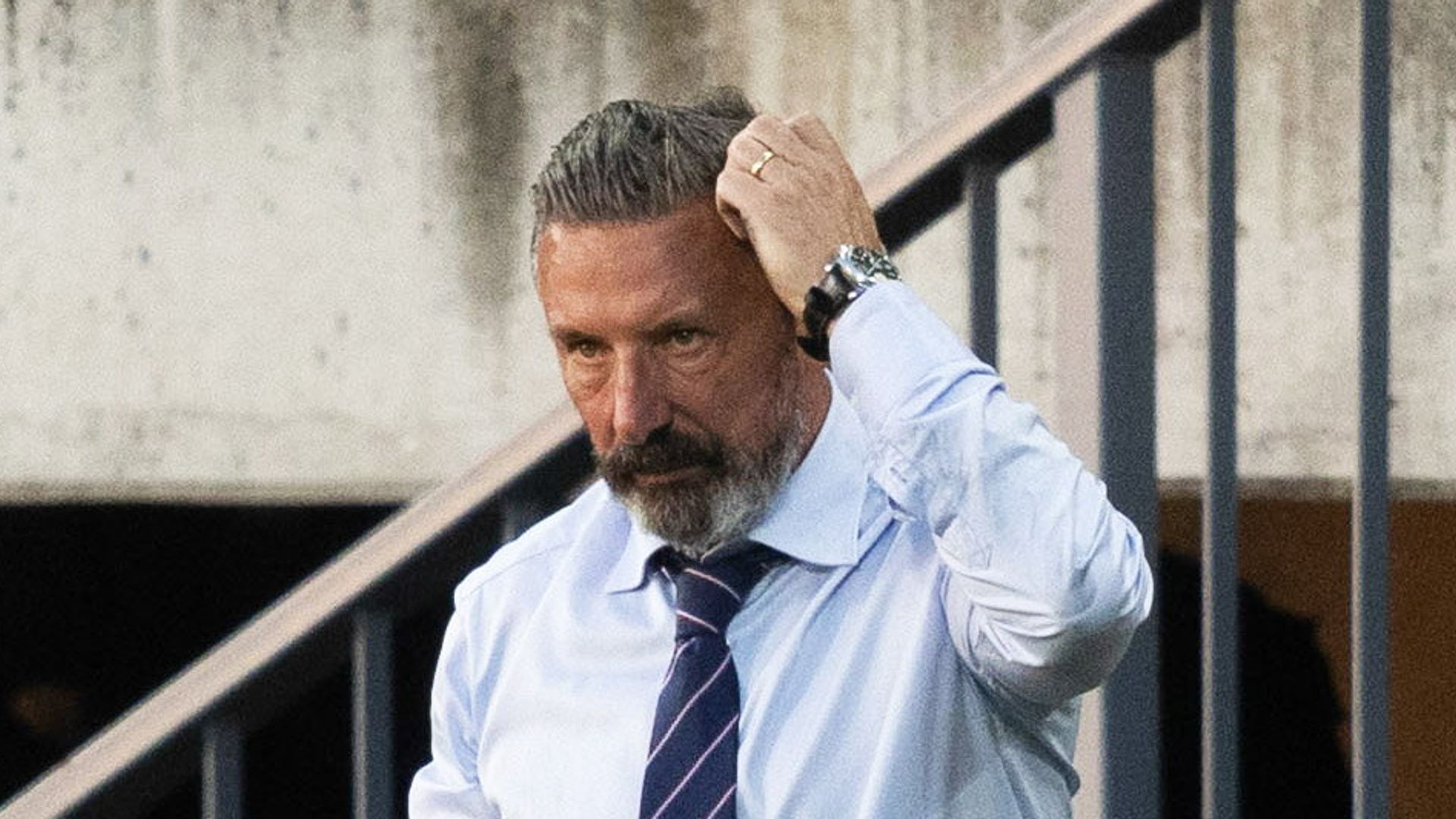
Derek McInnes backs himself to deliver Rangers success despite admitting squad is some way off
Rangers manager Derek McInnes says he backs himself to bring success to the club, describing himself as “a good manager....
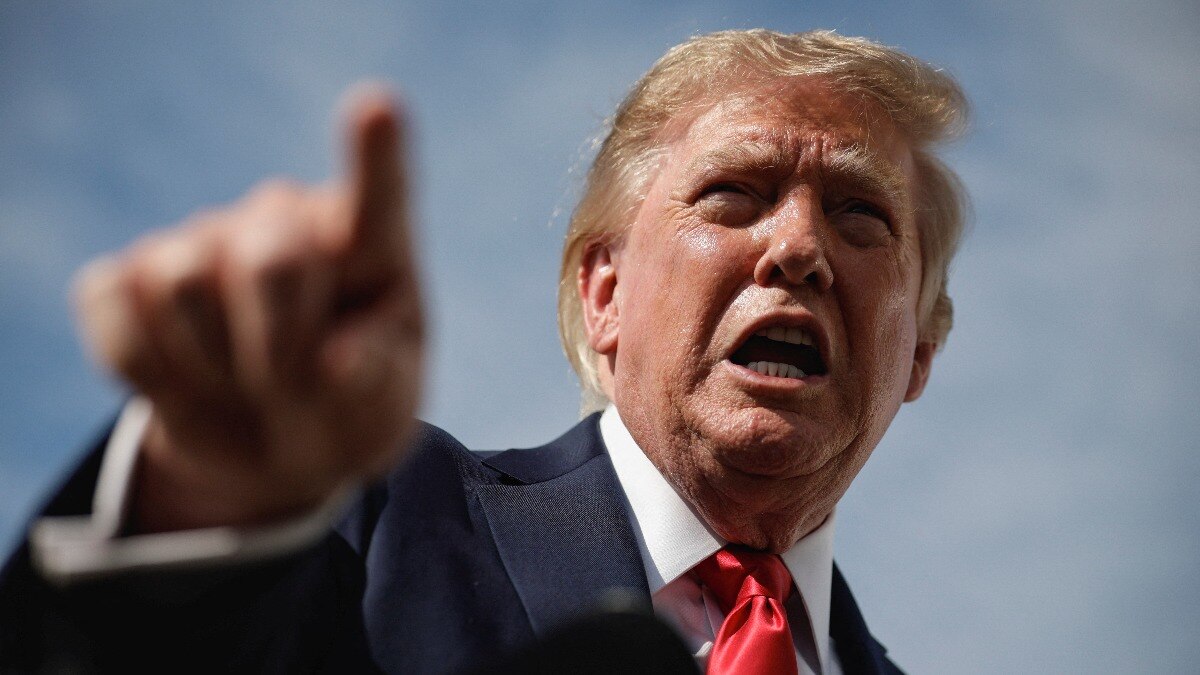
Judge rejects Trump’s bid to move hush-money conviction to federal court
A federal judge rejects Donald Trump’s latest attempt to overturn his New York hush-money conviction by moving the case...
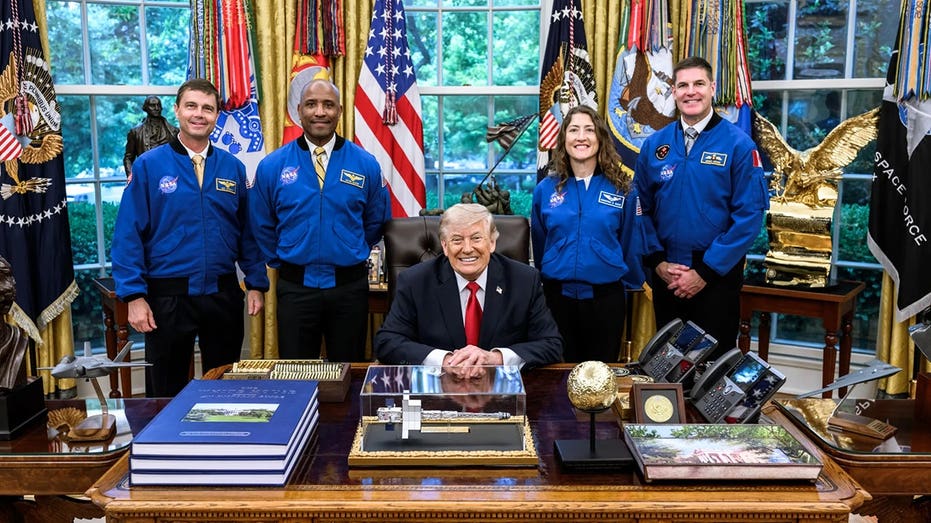
Trump to award Congressional Space Medal of Honor to Artemis II crew on Aug. 28
President Donald Trump will award the Congressional Space Medal of Honor to the Artemis II crew in a ceremony on Friday,...