Middle East Eye
Nato summit: How a fractured alliance is fuelling a permanent war economy
Nato summit: How a fractured alliance is fuelling a permanent war economy
Submitted by
Anas Altikriti
on
Fri, 07/10/2026 - 15:42
Massive surge in arms spending is justified through the language of collective defence, and sustained by threats that are partly constructed
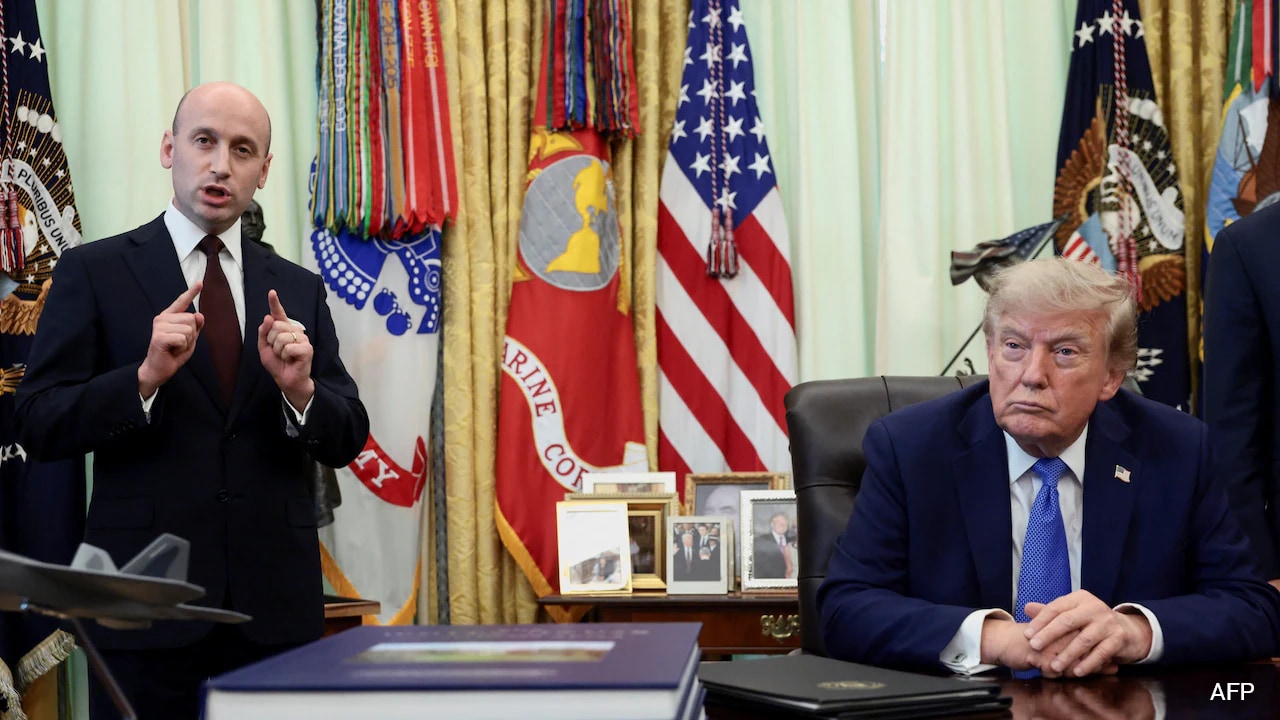
US President Donald Trump attends the Nato summit in Ankara on 8 July 2026 (Saul Loeb/AFP)
Off
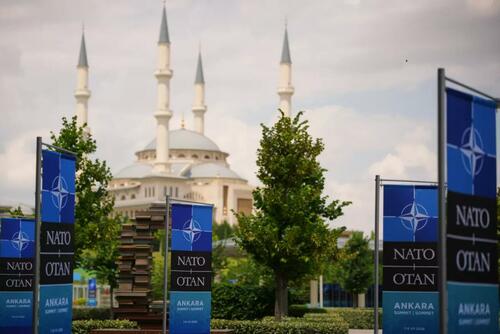
The Nato summit held in Ankara this week was, by any measure, a gathering of an alliance under profound and perhaps irreversible strain.
Hosted by Turkey, the summit took place against the backdrop of an active US-Israeli war on Iran, a grinding conflict in Ukraine, a rupturing transatlantic relationship, and a European defence establishment determined to turn crisis into cash.
Whatever unity was performed for the cameras, the fissures running through Nato have never been deeper.
Let’s begin with the most fundamental question: what is Nato’s purpose, and who does it serve? The alliance has long papered over a basic contradiction - that it is simultaneously a collective defence pact, and an instrument of American strategic will.
That contradiction became impossible to ignore when, on 28 February, the US and Israel launched a unilateral war on Iran without consulting a single European ally. US President Donald Trump was furious when his partners declined to join.
“I’m very upset with Nato,” he declared in Ankara.
For their part, European leaders watched a war being conducted in their neighbourhood - one that sent energy prices soaring by up to 60 percent and throttled global shipping through the Strait of Hormuz - that they had no hand in starting and no power to stop.
Outgoing British Prime Minister Keir Starmer spoke for much of the continent when he told the nation: “This is not our war.” It was an honest statement that also happened to be a confession of strategic impotence.
Who benefits?
The Iran conflict has crystallised something that observers of transatlantic relations have long suspected: the US under Trump does not regard its European allies as partners, but as subordinates expected to follow without question and pay without complaint. When France refused to allow Israeli arms flights over its airspace, Trump branded it “very unhelpful”.
When the UK declined to join the offensive campaign, he suggested that fuel shortages were the appropriate punishment. The bond of Nato, as one European analyst put it, “weakens further”.
And yet in Ankara, this same alliance pledged €70 billion ($80bn) in military assistance to Ukraine for 2026 and announced more than $50bn in new weapons procurements. Nato members have also committed to spending five percent of GDP on defence by 2035. But who really benefits from all this money being spent, and how?
This is where the growing power of the arms and defence lobby demands scrutiny. The Ankara summit was not merely a diplomatic event; in parallel, it was the venue for the Nato Summit Defence Industry Forum, gathering the continent’s arms manufacturers alongside heads of government to discuss “production, investment and innovation”.
How Europeans are saying no to rearmament and conscription
Read More »
Lord George Robertson, the former Nato secretary general who authored the UK’s Strategic Defence Review, has spoken of the nation’s security being “in peril” and accused the Treasury of “vandalism” for hesitating to accelerate spending. His review paved the way for a UK defence budget set to rise from £62.2 billion ($83bn) to £73.5 billion by 2028/29.
Across Europe, the pattern is the same: defence budgets expanding year on year, often at the direct expense of welfare, development and public services. One should ask who, precisely, is manufacturing the urgency.
The answer, in part, lies in the perpetual invocation of the Russian threat. Since 2022, western governments and their military establishments have insisted that Russia poses an existential danger to Europe - a threat that demands unlimited rearmament. Nato Secretary General Mark Rutte warned in Ankara that Russia could be “ready to use military force against Nato by 2030”.
Such statements, endlessly repeated, serve a political function that extends well beyond genuine strategic assessment. Russia’s war in Ukraine, in all its horror, can be understood at least in part as a reaction to the eastward expansion of an alliance that Russia had warned for decades it regarded as an existential threat to its own security.
Russia has displayed no military hostility towards any western European nation, with the partial exception of its targeting of Polish energy infrastructure, and made no territorial claims beyond the contested borderlands of Ukraine.
To present this as the opening move in a campaign of continental conquest is to take a position, not to report a fact. And that position conveniently justifies defence budgets at near-Cold War levels, and the enrichment of an industrial complex that is now embedded at the heart of the western political process.
Stoking fears
Adding to this picture, consider the host nation’s own strategic calculations.
Turkey’s presence at the summit was not merely ceremonial. President Recep Tayyip Erdogan’s Turkey is simultaneously a Nato member, a major arms exporter, an active military actor in Libya and Sudan, a mediator in the Ukraine conflict, and a country that has deepened its drone diplomacy across Africa and the Middle East.
Turkish Bayraktar drones have operated in Sudan’s catastrophic civil war. In Libya, Turkey is pursuing a “One Libya, One Army” strategy that serves Ankara’s Mediterranean ambitions as much as it serves Libyan stability.
Erdogan has cultivated a position of indispensable leverage: too important to marginalise, too autonomous to control. Hosting the summit was itself an act of strategic communication - a signal that Turkey intends to be at the centre of whatever Nato becomes next, while never being entirely bound by it.
Fear of Russia, of Iran, of instability - this is the lubricant of this machine, and the Ankara summit generated enormous quantities of it
And what does Nato become next? The Iran war has moved Europe measurably towards strategic autonomy. The realisation that Washington can drag the region into conflict - disrupting energy supplies, threatening shipping lanes and provoking Iranian strikes on US bases across the Gulf - without so much as a consultation is now at the forefront of European minds.
Several member states have begun asking, with an urgency they once lacked, what it would mean to be able to say no to Washington not merely rhetorically, but practically.
The tragedy is that the answer being offered is more weapons, more spending and more integration with an industrial complex whose interests are not the same as those of the publics it claims to protect. Fear of Russia, of Iran, of instability - this is the lubricant of this machine, and the Ankara summit generated enormous quantities of it.
The challenge for those who believe in a genuinely rules-based, diplomatically grounded international order is to name what is happening.
It is a legitimate security response, yes, but it is also something else: a permanent war economy dressed in the language of collective defence, sustained by threats that are partly real, partly constructed and enormously profitable for those who have made the manufacture of insecurity their business.
The views expressed in this article belong to the author and do not necessarily reflect the editorial policy of Middle East Eye.
Nato
Opinion
Post Date Override
0
Update Date
Mon, 05/04/2020 - 21:29
Update Date Override
0
1 month ago