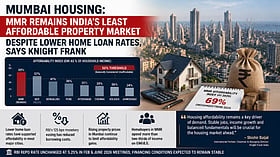
Mumbai Metropolitan Region (MMR) remains India’s least affordable residential market even as home loan interest rates fall, according to Knight Frank India’s Affordability Index cited by multiple outlets. The index measures the share of household income required to pay monthly equated monthly instalments (EMIs) for a standard home. In the first half of 2026, buyers in MMR need about 69% of their household income for EMI payments, leaving the affordability index unchanged from 2025. This level is well above a commonly used threshold of 50%, which indicates unaffordability.
Across other major cities, the report finds affordability improves in early 2026 as monetary easing reduces borrowing costs. Knight Frank links broader stability in affordability to the Reserve Bank of India’s cumulative monetary easing over the past year, which offsets rising residential prices and supports housing demand. However, in MMR—and also in the National Capital Region (NCR)—high property prices continue to limit the benefit of cheaper financing. The report also notes recent RBI policy decisions, including holding the repo rate at 5.25% at meetings in February and June 2026.