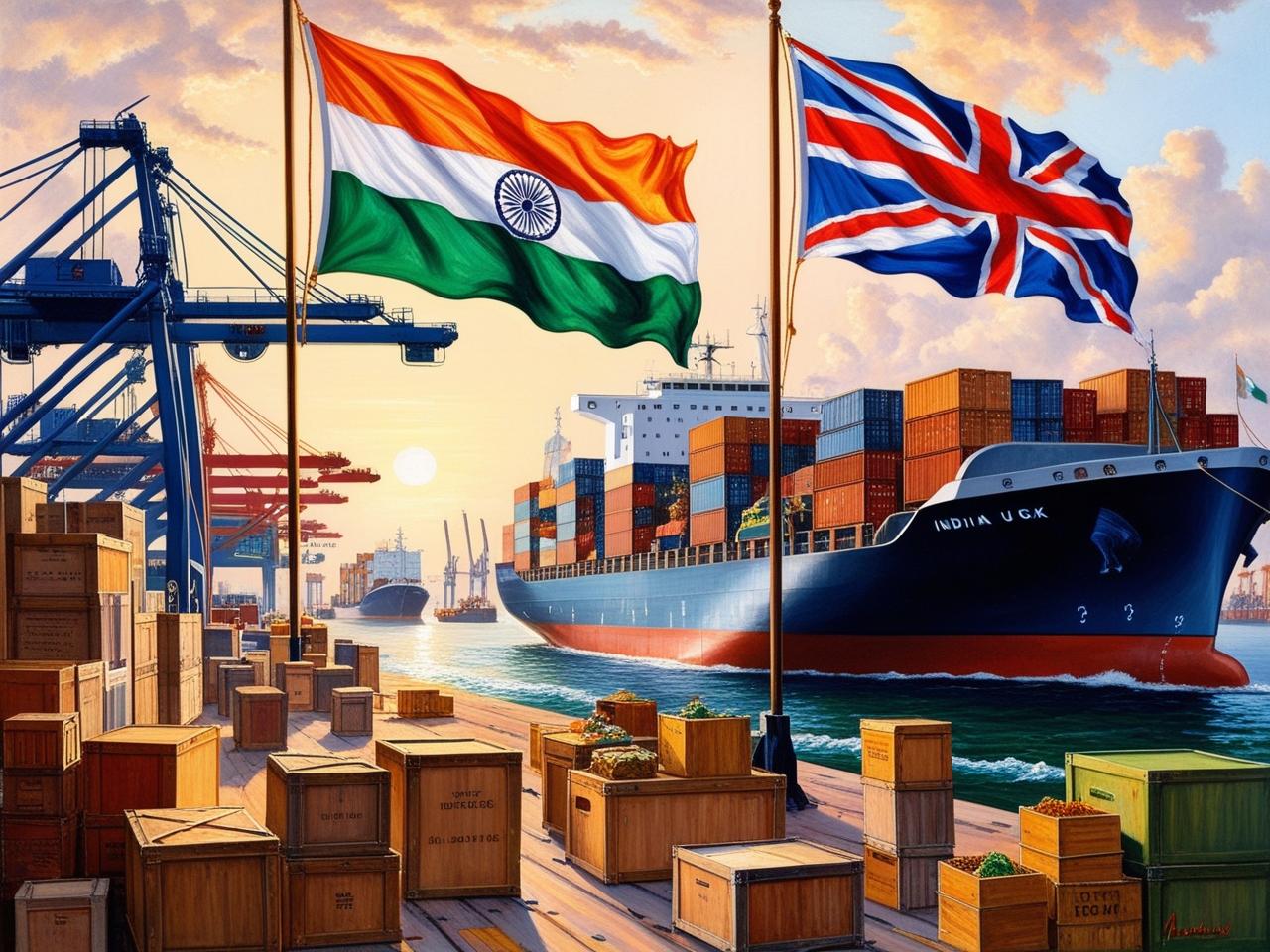
India’s Finance Ministry notifies rules for determining the origin of goods eligible for benefits under the India–UK Comprehensive Economic and Trade Agreement (CETA), according to reporting across outlets. The rules set out how exporters must establish that imported or exported items qualify under the pact’s framework before tariff preferences apply. The notified process is tied to the start of the agreement’s operational phase on July 15. Under CETA, India receives duty-free access for about 99% of its exports to the United Kingdom, covering nearly the entire trade basket, as described by sources. To claim tariff advantages, exporters are required to provide a certificate of origin for eligible goods. The notification also aims to support the integrity of the trade preferences by helping prevent misuse and ensuring that benefits go to qualifying products that meet the agreed origin criteria. The pact is expected to affect sectors such as textiles and engineering, where exporters can seek the tariff concessions once the origin documentation requirements are met.
India notifies rules to determine goods’ origin under India-UK trade pact
India’s Finance Ministry notifies rules for determining the origin of goods eligible for benefits under the India–UK Comprehensive Economic and Trade Agreement (CETA), according to reporting across ou...
- India’s Finance Ministry notifies rules for determining the origin of goods under the India–UK CETA.
- The rules take effect as CETA benefits are set to begin on July 15.
- CETA provides duty-free access for about 99% of India’s exports to the UK.
- Exporters must provide a certificate of origin to claim tariff preferences.
- The origin rules are intended to ensure the pact’s integrity and reduce misuse of benefits.
CETA secures duty-free access for 99% of India’s exports to the U.K., covering nearly the entire trade basket
2 hours agoIndia's Finance Ministry has finalized rules for goods eligible for benefits under the India-UK trade pact, set to begin July 15. This Comprehensive Economic and Trade Agreement (CETA) will grant duty-free access to 99% of Indian exports, boosting sectors like textiles and engineering. Exporters must now provide a certificate of origin to claim these tariff advantages, ensuring the pact's integrity and preventing misuse.
3 hours agoDietitian Alexandra Flood reframes new mums’ snack choice with “joyful” biscuits
Across three outlets, dietitian Alexandra Flood discusses how a new mother can approach a “joyful snack” while still mee...
Dermatologist Cara McDonald highlights affordable skincare products she recommends
Brisbane Times, The Age, and the Sydney Morning Herald all publish the same feature about dermatologist Cara McDonald an...
World Bank: Nigeria’s main fiscal challenge is low revenue, not high debt
The World Bank says Nigeria’s fiscal problem is primarily weak revenue mobilisation rather than excessive borrowing. Spe...