


Multiple reports say a potential super El Niño is likely to affect India’s power system by reducing generation from renewables and hydropower, while increasing overall electricity demand. Bloomberg and other outlets cite a study from the Centre for Research on Energy and Clean Air (CREA) that warns El Niño could strain India’s electricity grid more than other power networks globally. The study links El Niño conditions—typically lower rainfall and wind—to weaker wind and hydropower output, creating a generation shortfall. Bloomberg, Financial Post, and summaries referencing the CREA analysis say the gap could be about 18 TWh over roughly the next year, largely offset by higher coal-fired generation. Business Standard adds that weak monsoon rains associated with El Niño have kept India’s hydropower generation low through July, with reservoir levels falling and increasing reliance on coal to meet rising demand. Business Standard also notes that while India forecasts coal’s share in its generation mix will decline (to 64% by 2027 and 50% over the longer term), coal still remains at above 70% in recent performance levels despite reductions in thermal power output. Overall, the reporting emphasizes potential disruption to India’s clean-energy transition timeline and continued dependence on coal for reliability.
Super El Niño could strain India’s grid and increase reliance on coal power
Multiple reports say a potential super El Niño is likely to affect India’s power system by reducing generation from renewables and hydropower, while increasing overall electricity demand. Bloomberg an...
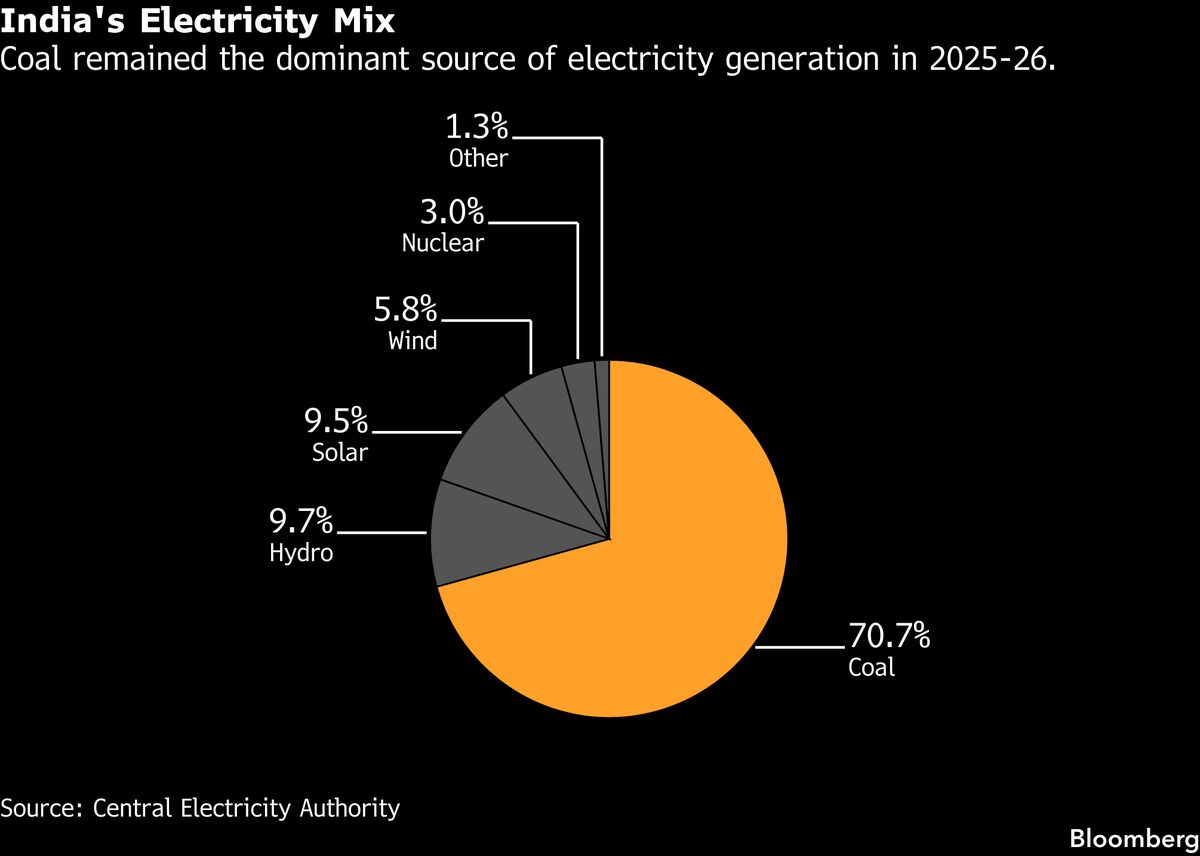
- A study by CREA warns that a super El Niño could strain India’s power grid and slow the shift away from coal.
- El Niño conditions are expected to reduce renewable generation, including wind and hydropower, due to lower rainfall and wind.
- The CREA analysis projects a generation gap of about 18 TWh, which would be mostly met by increased coal-fired power.
- Business Standard reports El Niño-linked weak monsoon rains keep hydropower generation weak through July, lowering reservoir levels.
- India expects coal’s share of power generation to decline over time, but it remains a majority source in the near term and is still relied on to avoid supply shortfalls.
Weak monsoon rains linked to El Niño have lowered reservoir levels, curbing hydropower generation and increasing India's reliance on coal to meet rising electricity demand
1 month agoSuper El Niño Could Trigger Major Coal Boom In India Authored by Tsvetana Paraskova via OilPrice.com, The super El Niño weather phenomenon this year will significantly boost India's demand for coal-fired power generation over the next 12 months, as a generation gap could occur with higher temperatures, the Finland-based think tank Centre for Research on Energy and Clean Air (CREA) said in a report on Monday. The El Niño, the recurrent weather pattern driving global temperatures higher, would affect most energy systems globally, but none would be as affected as India's, according to CREA. The El Niño, typically associated with lower wind speeds and less rainfall, could reduce India's power generation from wind and hydropower. This will open a gap in generation, CREA warns, adding that the gap will be mostly bridged by a surge in coal power generation. "Combine the lost output from renewables and the increased demand for power, and India could face a generation gap of nearly 18 TWh," CREA's analysts said in the report. "Super El Niño Could Trigger Major Coal Boom In India, which would release an estimated 17 million tonnes of CO2." India, the world's second-biggest coal importer and user after China, continues to rely on coal despite a booming renewable energy sector. The Super El Niño could vindicate India's approach not to give up on coal. Overall, coal-fired power generation and capacity installations in India continue to rise, and coal remains a key pillar of India's electricity mix, with about a 60% share of total power output. Despite booming renewable capacity additions, India continues to rely on coal to meet most of its power demand as authorities also look to avoid blackouts in cases of severe heat waves. Coal will still be a key part of India's power system for the next two decades, Rajnath Ram, adviser for energy at the government policy think tank, NITI Aayog, said at the end of last year. "We cannot be subjective about coal. The question is how sustainably we can use it," the official noted. Tyler Durden Tue, 07/07/2026 - 19:15
1 month agoIndia forecasts coal's share in nation's generation mix will fall to 64% by 2027 and 50% over next decade, but it remains at more than 70% even after drop in thermal power production last year
1 month agoA super El Niño risks straining India’s power grid more than any other electricity network globally and would slow the country’s shift away from coal, according to a new study.
1 month agoA super El Niño risks straining India’s power grid more than any other electricity network globally and would slow the country’s shift away from coal, according to a new study.
1 month ago
Nepal warns of more floods as Bhote Koshi water levels rise
Nepal issues fresh flood warnings as water levels rise in the Bhotekoshi (also spelled Bhote Koshi) River, urging reside...

Top 10 Indian firms’ market valuations diverge, with Bajaj Finance gains and HDFC Bank losses
India’s most-valued listed companies see wide swings in market capitalisation over the past week, with results varying s...

Warsh says Fed may need further action to counter persistent above-target inflation
Multiple outlets report that former Federal Reserve governor Kevin Warsh says the Fed still has work to do to fight infl...