


Researchers continue to pursue ways to produce extremely low-reflectance “black” materials, often described as the “blackest black.” Reporting across sources frames the challenge as longstanding and technically complex: achieving very high light absorption requires more than just dark dyes, and instead involves controlling how surfaces interact with light across different scales. One line of work draws inspiration from nature, where organisms produce remarkably dark appearances through structures and pigments evolved over time. Another line of work uses nanotechnology to engineer materials designed to trap incident light, typically by creating surfaces with engineered micro- and nanoscale features that reduce reflection. Together, the sources present the pursuit of ultra-black materials as an intersection of biology-inspired design and advanced fabrication methods. While motivations vary—from historical associations with status to modern applications—the common theme is that researchers seek measurable reductions in reflectance by combining lessons from natural systems with engineered materials. The effort is presented as ongoing, with continued refinement of techniques to approach lower reflectance limits.
Researchers explore methods to create the “blackest black,” from natural pigments to nanomaterials
Researchers continue to pursue ways to produce extremely low-reflectance “black” materials, often described as the “blackest black.” Reporting across sources frames the challenge as longstanding and t...
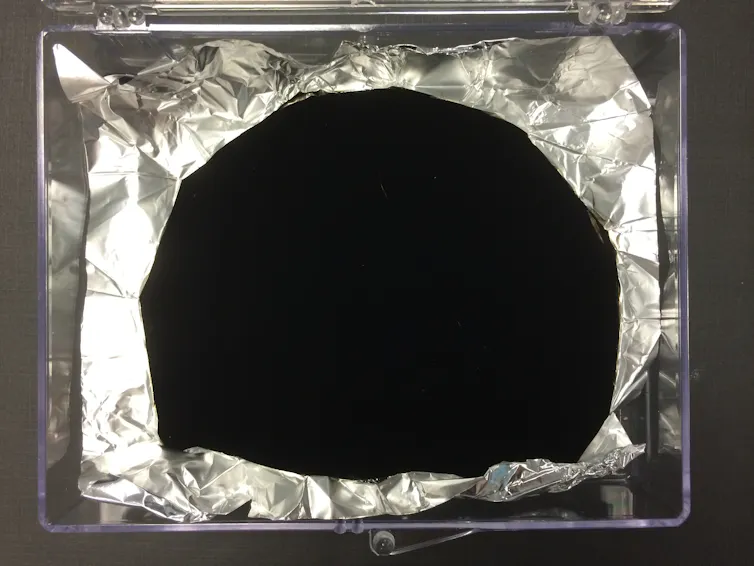
- Researchers aim to create ultra-low-reflectance “black” materials often described as the “blackest black.”
- Methods discussed include inspiration from natural systems that produce very dark appearances.
- Nanotechnology is used to engineer surfaces and structures to increase light absorption and reduce reflection.
- The work combines ideas from biology and engineered materials to control light–surface interaction.
- The challenge is presented as complex and ongoing, with multiple approaches under study.
Achieving the blackest of blacks has been one of humanity's enduring challenges. It is a frontier that unites modern nanotechnologists with nature's ancient color palette.
1 month agoWhat began as a symbol of status has become a complex technological challenge.
1 month ago
Police rescue two Colombian women held captive in Lagos after alleged trafficking plot
Nigeria Police Force operatives rescue two Colombian women held captive in Lagos, after authorities say the women were l...

TestMu AI’s 2026 TestMu Conference highlights progress in agentic engineering and quality
TestMu AI hosts its 2026 TestMu Conference, presented as the company’s flagship event and a milestone for the field of a...

SF Holding reports solid first-half 2026 results, citing international growth and returns
SF Holding reports solid financial performance for the first half of 2026, highlighting progress in international operat...