
Three Dev.to posts describe hands-on benchmarking of four Chinese large language model families—DeepSeek, Qwen, Kimi, and GLM—performed via a single OpenAI-compatible gateway at global-apis.com/v1. Across the reports, the testing emphasis is on operational factors for production use: output token cost, time-to-first-token and sustained throughput under load, and task quality on categories such as coding, reasoning, Chinese-language queries, and multilingual or multimodal prompts. One author reports using a prompt set drawn from production traffic (200 prompts per model, split across coding, summarization, Chinese Q&A, and creative writing) and scoring output with human raters on a 1–5 rubric. Reported results characterize DeepSeek V4 Flash as a strong default on English and coding, with high throughput and a favorable price-to-performance ratio, while DeepSeek’s vision capability is described as limited. Qwen is consistently portrayed as offering the widest model variety, including low-cost options and multimodal models such as Qwen3-VL and Qwen3-Omni. Kimi is presented as the most expensive family, positioned for reasoning-heavy workloads, with slower response and no vision support in the described tests. GLM is described as a strong option for Chinese-language tasks and as supporting multimodal vision via GLM-4.6V, with throughput that is reported as lower than DeepSeek but quality that often matches or closely tracks the premium alternatives.
Independent tests compare DeepSeek, Qwen, Kimi, and GLM on cost, latency, and quality
Three Dev.to posts describe hands-on benchmarking of four Chinese large language model families—DeepSeek, Qwen, Kimi, and GLM—performed via a single OpenAI-compatible gateway at global-apis.com/v1. Ac...

- The tests compare DeepSeek, Qwen, Kimi, and GLM using a unified OpenAI-compatible endpoint (global-apis.com/v1) to swap models without changing client code.
- Reported costs focus on output token pricing; DeepSeek V4 Flash and several Qwen/GLM smaller models are described as far cheaper than Kimi’s K2.5 family.
- Reported latency/throughput results describe DeepSeek V4 Flash as among the fastest in the set; Kimi is described as slower than the others; GLM-5 is described as slower than DeepSeek but faster than Kimi.
- Quality assessments in the posts use human scoring or task benchmarks across coding, reasoning, and Chinese-language tasks; DeepSeek is highlighted for coding/English, Qwen for broad model coverage and multimodal options, Kimi for reasoning, and GLM for Chinese-language performance and vision via GLM-4.6V.
- The authors’ recommendations are workload-based: cheaper fast models for default routing, multimodal-capable models when images/audio/video are needed, and Kimi for reasoning-heavy cases despite higher per-token costs.
Look, stop Guessing: I Tested 4 Chinese AI Models So You Don't Have To Hey, so I've been on a bit of a deep dive lately. After hearing non-stop about Chinese AI models from my dev friends, I finally sat down and ran them through their paces. Like, really tested them. And I want to share what I found, because honestly, the results surprised me. If you've been curious about DeepSeek, Qwen, Kimi, or GLM but felt overwhelmed by the options, grab a coffee. Let me walk you through everything I learned, including the actual numbers, real code you can copy-paste, and where each one actually shines. Let's get into it. Why I Even Bothered Testing These Here's the thing — I've been using GPT and Claude for a while, and they work great. But the pricing on some of these Chinese models made me do a double take. Like, $0.01 per million tokens? That's almost free. But cheap means nothing if the output is garbage, right? So I went in with healthy skepticism. I tested four model families across coding tasks, reasoning problems, creative writing, and some Chinese language stuff too. I routed everything through Global API's unified endpoint, which let me swap between providers without rewriting my code. That alone saved me hours. Before I get into my actual experience with each one, let me give you the at-a-glance comparison so you can see where I'm heading. The Cheat Sheet What I Looked At DeepSeek Qwen Kimi GLM Made By DeepSeek (幻方) Alibaba (阿里) Moonshot AI (月之暗面) Zhipu AI (智谱) Price Range $0.25-$2.50/M $0.01-$3.20/M $3.00-$3.50/M $0.01-$1.92/M Cheapest Solid Pick V4 Flash @ $0.25/M Qwen3-8B @ $0.01/M (Premium-only lineup) GLM-4-9B @ $0.01/M My Top Pick Overall V4 Flash @ $0.25/M Qwen3-32B @ $0.28/M K2.5 @ $3.00/M GLM-5 @ $1.92/M Coding Chops ⭐⭐⭐⭐⭐ ⭐⭐⭐⭐ ⭐⭐⭐⭐ ⭐⭐⭐ Mandarin Performance ⭐⭐⭐⭐ ⭐⭐⭐⭐ ⭐⭐⭐⭐⭐ ⭐⭐⭐⭐⭐ English Output ⭐⭐⭐⭐⭐ ⭐⭐⭐⭐ ⭐⭐⭐⭐ ⭐⭐⭐⭐ Logical Reasoning ⭐⭐⭐⭐ ⭐⭐⭐⭐ ⭐⭐⭐⭐⭐ ⭐⭐⭐⭐ Raw Speed ⭐⭐⭐⭐⭐ ⭐⭐⭐⭐ ⭐⭐⭐ ⭐⭐⭐⭐ Handles Images? Limited Yes (VL, Omni) No Yes (GLM-4.6V) Max Context 128K 128K 128K 128K OpenAI-Compatible ✅ ✅ ✅ ✅ Now let's break down what each family actually felt like to use. DeepSeek — The One That Made Me Rethink My Stack I'll be honest, DeepSeek was the biggest eye-opener. I came in expecting "yeah, it's fine, probably not as good as the Western stuff." I left genuinely impressed. Models I Actually Tested Model Cost (Output) What I Used It For V4 Flash $0.25/M My daily driver now V3.2 $0.38/M When I want newer architecture V4 Pro $0.78/M Production apps R1 (Reasoner) $2.50/M Heavy math and logic Coder $0.25/M Dedicated code tasks What Hit Me The value ratio is unreal. V4 Flash at $0.25/M genuinely rivals the output I'm used to getting from GPT-4o, which costs about 40x more. I'm not exaggerating — I ran the same prompts through both and the quality difference was marginal for most tasks. Code generation is excellent. I'm talking consistent top-tier performance on standard coding benchmarks like HumanEval and MBPP. It writes clean Python, handles edge cases, and doesn't hallucinate APIs as much as I'd expect. It flies. V4 Flash hit around 60 tokens per second in my tests, which is among the fastest I've seen. For interactive apps, that speed matters. English is rock solid. No awkward phrasing, no weird cultural assumptions baked into the responses. Just clean, fluent output. Where It Fell Short No real vision support. If you need to process images, you'll need a different model. Chinese is good, not the best. GLM and Kimi edged it out on Chinese benchmarks. Fewer size options. Qwen has way more variety if you need something hyper-specific. Here's how I started using it: from openai import OpenAI client = OpenAI( api_key="ga_xxxxxxxxxxxx", base_url="https://global-apis.com/v1" ) response = client.chat.completions.create( model="deepseek-v4-flash", # V4 Flash messages=[{"role": "user", "content": "Explain quantum computing in 100 words"}] ) print(response.choices[0].message.content) That snippet became the backbone of like half my experiments. Simple, clean, works. Qwen — The One With Everything If DeepSeek is a sharp knife, Qwen is a Swiss Army knife. Alibaba has been cranking out models at an absurd pace, and the variety is honestly a bit dizzying. But that variety is also Qwen's superpower. Models Worth Knowing Model Cost (Output) Sweet Spot Qwen3-8B $0.01/M Tiny background jobs Qwen3-32B $0.28/M My go-to general pick Qwen3-Coder-30B $0.35/M Specialized coding Qwen3-VL-32B $0.52/M When you need vision Qwen3-Omni-30B $0.52/M Audio + video + image Qwen3.5-397B $2.34/M Serious enterprise reasoning What I Liked Range is wild. From $0.01/M all the way up to $3.20/M, there's literally a Qwen model for every budget. I used Qwen3-8B for cheap classification tasks and it crushed it. Vision models are legit. The Qwen3-VL series actually understands images well. I threw some screenshots at it and it described them accurately. Omni-modal is the future. The Omni model handles audio, video, and image in one. I haven't seen many competitors with that capability. Alibaba's infrastructure is no joke. It's stable, fast, and well-documented. They ship constantly. Qwen3.5, Qwen3.6, new versions dropping all the time. If you want a model family that keeps getting better, this is it. Where I Struggled Naming is a mess. Qwen3-8B, Qwen3-32B, Qwen3.5-397B, Qwen3-VL-32B... I had to keep a cheat sheet. Hopefully they clean this up. Mid-tier English is good, not great. Better than GPT-3.5, but DeepSeek V4 Flash edged it out in my English tests. Some pricing is steep. Qwen3.6-35B at $1/M felt expensive for what I got. Here's my general-purpose Qwen snippet: response = client.chat.completions.create( model="Qwen/Qwen3-32B", messages=[{"role": "user", "content": "Write a Python function to merge two sorted lists"}] ) That Qwen3-32B at $0.28/M became my fallback for tasks where DeepSeek wasn't quite right. Kimi — When Reasoning Is Everything Kimi came from Moonshot AI, and the first thing I noticed was the vibe. Where DeepSeek feels like a coding buddy and Qwen feels like a toolbox, Kimi feels like a philosophy professor. It's slower, more deliberate, and it thinks harder about the answer. Models in the Kimi Lineup Model Cost (Output) When I Reach For It K2.5 $3.00/M When I need careful reasoning (Other models) $3.00-$3.50/M range Premium tier throughout Where Kimi Shines Reasoning is top-tier. This is the headline. If you give Kimi a multi-step logic problem, a math challenge, or something requiring careful chain-of-thought, it tends to outperform everyone else I tested. Chinese is excellent. Native-level quality that I'd put on par with GLM. Stable, careful outputs. I never got wild hallucinations from Kimi, even when I was throwing tricky prompts at it. Where It Hurts It's the priciest. The whole lineup sits in the $3.00-$3.50/M range, and there's no real "budget" option. If you're processing millions of tokens, that adds up. Slower. Definitely felt the lag compared to DeepSeek and Qwen. For real-time chat, that matters. No vision support. Like DeepSeek, image understanding isn't its thing. I used Kimi when I genuinely needed careful thought — like when I was debugging a gnarly regex problem or wanted a thorough explanation of a distributed systems concept. For those tasks, the premium pricing felt worth it. GLM — The Bilingual Beast GLM comes from Zhipu AI, and it's the one I kept coming back to for Chinese-language work. If you're building anything that needs strong Mandarin support, this should be on your shortlist. Models I Worked With Model Cost (Output) Best Use Case GLM-4-9B $0.01/M Cheap Chinese tasks GLM-5 $1.92/M Premium Chinese + English The Wins Chinese is exceptional. Tied with Kimi for the best Mandarin output I tested. Cultural nuances, idioms, formal vs. casual register — all handled well. Vision support exists. The GLM-4.6V model can process images, which fills a gap that DeepSeek and Kimi leave open. Huge price range. From $0.01/M to $1.92/M, you can pick your spot. Reasoning is solid. Not quite Kimi-level, but a clear step above baseline. The Tradeoffs Coding is its weakest area. I got working code, but it wasn't as clean or idiomatic as what DeepSeek produced. Speed is middle-of-the-pack. Faster than Kimi, slower than DeepSeek. Less English polish. English output is fine, but you can tell it's not the primary training focus. For one of my projects — a chatbot that needed to switch between English and Mandarin seamlessly — GLM-5 was the clear winner. That $1.92/M felt fair for the quality. The Patterns I Noticed After running all these tests, a few things stood out: Price doesn't always equal quality. DeepSeek V4 Flash at $0.25/M beat models costing 10-15x more on several of my coding tests. Specialization matters. Kimi for reasoning, GLM for Chinese, DeepSeek for coding, Qwen for variety. Pick based on your workload. Speed is underrated. For user-facing apps, DeepSeek's 60 tokens/sec made a noticeable difference in perceived responsiveness. Unified endpoints save time. I can't stress this enough — being able to swap deepseek-v4-flash for Qwen/Qwen3-32B without changing the base URL or rewriting code was a lifesaver. If you're not using something like Global API for these comparisons, you're making life harder than it needs to be. My Actual Recommendations If you're wondering what I'd pick for specific scenarios, here's my honest take: Building a coding assistant on a budget? DeepSeek V4 Flash. Done. Move on. Need a general-purpose workhorse? Qwen3-32B. The variety means you can scale up or down. Reasoning-heavy app where accuracy is everything? Kimi K2.5. Pay the premium. Bilingual product with heavy Chinese usage? GLM-5. Just want to experiment cheaply? Qwen3-8B or GLM-4-9B at $0.01/M. You can run thousands of tests for pennies. A Quick Note on Switching Between Them The cool thing about using Global API as my testing hub was that I could A/B test models in the same session. Here's a simplified version of what my actual comparison script looked like: python from openai import OpenAI client = OpenAI( api_key="ga_xxxxxxxxxxxx", base_url="https://global-apis.com/v1" ) prompt = "Write a haiku about debugging production at 3am" models_to_test = [ "deepseek-v4-flash", "Qwen/Qwen3-32B", ]
2 hours agoSo here's what happened: i Benchmarked China's Top 4 LLMs — The Numbers Don't Lie Last quarter I landed a consulting gig that needed me to route an entire product's inference layer through Chinese-developed models. The client didn't care about brand names — they cared about cost-per-token, p99 latency, and whether each model could actually pass their internal QA suite. So I spent six weeks running these models through Global API's unified endpoint, and the data told a much messier story than any blog post had suggested. This is my hands-on breakdown of DeepSeek, Qwen, Kimi, and GLM. Everything below comes from real requests I logged, with sample sizes I feel comfortable citing. Nothing speculative, no vibes-based commentary. Why I Ran My Own Tests (Not Just Trusting Marketing Pages) Before diving in, let me explain the methodology because the framing matters. I pulled 200 representative prompts from the client's production traffic — split evenly across coding (40%), summarization (25%), Chinese-language Q&A (20%), and creative writing (15%). For each model I measured three things on every request: Time-to-first-token (TTFT) — basically how long until bytes start streaming back Tokens per second sustained throughput — the steady-state rate after TTFT Cost per 1K completed tasks — actual dollars hit on the invoice I also scored quality subjectively (two human raters, blind to model identity) on a 1–5 rubric. With n=200 per model, I had just enough statistical power to claim trends rather than firm rankings — anything below a ~0.4 effect size could easily be noise. Keep that in mind when I talk about "winners." The Pricing Landscape (Where the Real Story Lives) Here's a snapshot of the output pricing I captured. I'm reporting output tokens per million since that's what dominates bills for chat-style workloads. Provider Cheapest Model Price/M Output Premium Model Price/M Output DeepSeek V4 Flash $0.25 R1 (Reasoner) $2.50 Qwen Qwen3-8B $0.01 Qwen3.5-397B $2.34 Kimi K2.5 $3.00 K2.5 $3.00 GLM GLM-4-9B $0.01 GLM-5 $1.92 The first thing that jumped out: Kimi doesn't compete on price at all. Their entire catalog clusters in the $3.00–$3.50 range, which makes it roughly 12× more expensive than GLM-4-9B for the same input length. That's a deliberate positioning choice, and we'll see whether the reasoning benchmarks justify it. DeepSeek: The Sample-Size Darling of My Test I started with DeepSeek because its reputation in developer Twitter circles is "good enough, dirt cheap." The reputation holds up — mostly. V4 Flash at $0.25 per million output tokens is genuinely absurd when you consider it produced quality scores within 0.3 points of GPT-4o on my rubric. That's well within my measurement noise. What I liked: Sustained throughput averaged 58 tokens/sec on V4 Flash — the highest in my pool. When I ran p95 latency, only Qwen3-32B beat it. HumanEval pass@1 rate was 89% across my 40 coding prompts, which was the top score of any Chinese model I tested. English-language coherence was indistinguishable from Western frontier models to my two raters. What I didn't love: Vision support is genuinely "limited." I had a small batch of image-captioning prompts (8 of them, statistically almost meaningless, I know), and DeepSeek basically punted back a refusal or a hallucinated description twice. If your product touches images, this is a non-starter. The model family is narrow. Six models total in their lineup, versus Qwen's twelve. Fewer dials to tune. Here's how I wired it up via Global API — useful baseline for anyone wanting to replicate my setup: from openai import OpenAI client = OpenAI( api_key="ga_xxxxxxxxxxxx", base_url="https://global-apis.com/v1" ) response = client.chat.completions.create( model="deepseek-v4-flash", messages=[ {"role": "user", "content": "Refactor this Python function to use list comprehension"} ], temperature=0.2 ) print(response.choices[0].message.content) print(f"Tokens used: {response.usage.total_tokens}") The base URL matters here — global-apis.com/v1 lets you hit DeepSeek, Qwen, Kimi, and GLM with the exact same client object. I never had to swap authentication headers across providers during the whole six weeks. Qwen: Where Statistical Variance Gets Annoying Qwen is the Swiss Army knife of this group, and that's both a compliment and a complaint. Alibaba's team ships constantly — I counted twelve distinct production models in their current lineup. With my n=200 sample size, that's barely enough to give each model its own confidence interval, so treat the per-model numbers below as directional. The pricing spread is wild: Qwen3-8B sits at $0.01/M output (so cheap it's basically free for low-stakes tasks), while Qwen3.5-397B climbs to $2.34/M. The correlation I noticed between price and quality wasn't strictly linear — Qwen3-32B at $0.28/M scored essentially identical to models 4× its price on my general-purpose prompts. Diminishing returns are real. What stood out in the data: Qwen3-VL-32B ($0.52/M) handled my image-prompt batch with a 75% pass rate, comfortably beating DeepSeek's refusal rate. Qwen3-Omni-30B ($0.52/M) is the only model in this comparison that handles audio, video, and image in a single endpoint. I didn't have audio test data, but the multimodal story is unique among Chinese providers. Naming is a nightmare. "Qwen3-32B" vs "Qwen3.5-397B" tells you nothing about capability tier. I had to maintain a spreadsheet. A typical call for me looked like this when I needed a cheap generalist: response = client.chat.completions.create( model="Qwen/Qwen3-32B", messages=[ {"role": "user", "content": "Summarize the attached meeting notes into 3 bullet points"} ] ) That snippet was responsible for probably 40% of my total request volume. The 32B model is my recommendation if you want one model that does most things competently without paying frontier-model rates. Kimi: The Reasoning Premium Kimi is where Moonshot AI plants its flag: raw reasoning capability, price be damned. Their K2.5 model clocks in at $3.00/M output tokens, which puts it firmly in "you better be sending short prompts" territory. Across my coding and math-heavy prompts, K2.5 did post the highest quality score — but only by 0.2 points on my 1–5 rubric, which is well within my inter-rater disagreement range. Here's my honest take: if your workload is essentially "give the model hard reasoning problems and pay whatever it costs," K2.5 belongs in your routing logic. If you're processing chat volumes, the cost-benefit math doesn't work out. With K2.5 at $3.00/M versus V4 Flash at $0.25/M, you'd need Kimi to be 12× better to break even on quality-per-dollar — and it wasn't, by my measurements. The models I tested from this family: Model Output $/M Notes K2.5 $3.00 Flagship reasoning K2.5-Turbo $3.50 Faster variant, still premium That's a brutally narrow catalog. No cheap tier, no vision model, no family member that handles multimodal workloads. Moonshot is clearly betting that "premium-only" is a viable strategy, and given the hype around their K-series launches, they may be right for the enterprise segment. What I will say: when K2.5 nailed a problem, it nailed it. On a chain-of-thought math word problem set (n=15, again small), it achieved a 93% accuracy rate. That's the highest single-task score I recorded in this whole project. GLM: The Quiet Overachiever GLM-5 from Zhipu AI was the biggest surprise of my six weeks. At $1.92/M output, it sits in the premium tier, but the quality consistently landed at the top of my distribution. On Chinese-language prompts specifically — and I had 40 of these — GLM-5 matched Kimi K2.5 within my margin of error. That's remarkable given Kimi costs roughly 56% more. The GLM-4-9B at $0.01/M output was my favorite "boring workhorse" model. It handled routine classification and short-form generation competently, and at one cent per million tokens, I essentially used it as a routing layer's first-pass model without worrying about budget. Full model rundown: Model Output $/M Best Use Case GLM-4-9B $0.01 Classification, extraction GLM-5 $1.92 Production Chinese + English GLM-4.6V varies Vision tasks The downside: my throughput measurements for GLM-5 averaged 32 tokens/sec, materially slower than DeepSeek V4 Flash's 58. If your UX depends on snappy responses, GLM-5 might feel sluggish. If it doesn't, the quality is hard to argue with. Side-by-Side: The Headline Numbers Here's the table I ended up building for my client deck. All numbers come from my n=200 prompt set unless otherwise noted. Metric DeepSeek V4 Flash Qwen3-32B Kimi K2.5 GLM-5 Cost/1K tasks $0.18 $0.22 $2.40 $1.55 Avg TTFT (ms) 280 310 420 380 Throughput (tok/s) 58 52 38 32 Quality (1–5) 4.1 3.9 4.3 4.2 Coding pass@1 89% 84% 91% 86% Chinese QA score 3.7 4.0 4.5 4.4 A few correlations worth flagging: Strong negative correlation between price and throughput (Pearson r ≈ -0.78 across the four models). The cheap ones are fast; the expensive ones are slow. Weak positive correlation between quality and price (r ≈ 0.42). Diminishing returns are steep. The most expensive model isn't the highest quality. Kimi K2.5 ranks 2nd on quality despite costing 13× more than V4 Flash. What I Actually Deployed For the client's production system, I ended up routing three model tiers: Tier 1 (cheap + fast): GLM-4-9B at $0.01/M for classification, extraction, anything where latency matters more than nuance. Tier 2 (default workhorse): DeepSeek V4 Flash for 70% of traffic. Best cost-to-quality ratio in this group, period. Tier 3 (premium fallback): GLM-5 for prompts that failed quality checks in Tier 2. I kept Kimi K2.5 in the menu but only as an opt-in. The economics didn't justify auto-routing there even though the raw quality was high. Final Thoughts (With Appropriate Statistical Caveats) If I had to give one piece of advice to another data scientist weighing these four families: start with DeepSeek V4 Flash and add complexity only when you have evidence it's needed. The price-to-performance curve is empirically favorable in every dimension I measured. Kimi K2.5 is a real step up in raw capability, but you're paying 12× the cost for a 5% quality bump in my dataset. Qwen is the right call if you need a single vendor for a heterogeneous workload (text + vision + audio). GLM is the dark horse — strong quality and surprisingly affordable at the entry tier. Caveats apply, of course. Sample size of 200 prompts per model is enough to spot large effects but won't catch subtle regressions. Latency numbers will shift with provider region and time of day. And "quality" is inherently subjective — my rubric was tuned to this specific client's domain. If you're curious to run the same kind of bake-off on your own data, Global API makes the wiring painless. Their single endpoint at global-apis.com/v1 lets you swap between DeepSeek, Qwen, Kimi, and GLM without touching auth headers or rewriting client code. That's how I ran every test above, and it shaved at least a week off my timeline. Worth checking out if you're staring down the same model-selection decision I was.
9 hours agoDeepSeek vs Qwen vs Kimi vs GLM: Which AI API Actually Wins in 2025? I've spent the last decade designing systems that need to stay up no matter what. 99.9% uptime isn't a marketing slogan for me — it's the difference between a happy customer and a 3am incident call. So when the Chinese model ecosystem exploded with options like DeepSeek, Qwen, Kimi, and GLM, I didn't just glance at the benchmarks. I pulled the levers, watched the dashboards, and stress-tested every endpoint I could get my hands on. Here's what I found after weeks of running these models behind load balancers, instrumenting them with p99 latency tracking, and watching how they behave when you throw production traffic at them. The Multi-Region Reality Nobody Talks About Most comparison articles treat AI APIs like they're interchangeable endpoints you curl against. That's fine for a weekend hackathon. It's dangerous for production. When I'm architecting a service that depends on an LLM, I care about three things before I care about quality: p99 latency under sustained load Failover behavior when a region gets congested Cost per million tokens at the rate I'm actually consuming I ran each of these four providers through a series of synthetic workloads — bursts of 200 concurrent requests, sustained 50 RPS for an hour, and cold-start recovery tests. The numbers told a story that the marketing pages don't. The Data at a Glance Here's the TL;DR before I dive in. DeepSeek gives you the best price-to-performance ratio, full stop. Qwen has the widest catalog of model sizes I've ever seen from a single provider. Kimi costs a premium but earns it on reasoning-heavy workloads. GLM punches above its weight on Chinese-language tasks and offers multimodal support that the others don't. Dimension DeepSeek Qwen Kimi GLM Provider DeepSeek (幻方) Alibaba (阿里) Moonshot AI (月之暗面) Zhipu AI (智谱) Output price range $0.25–$2.50/M $0.01–$3.20/M $3.00–$3.50/M $0.01–$1.92/M Budget pick V4 Flash @ $0.25/M Qwen3-8B @ $0.01/M N/A GLM-4-9B @ $0.01/M My default V4 Flash @ $0.25/M Qwen3-32B @ $0.28/M K2.5 @ $3.00/M GLM-5 @ $1.92/M Code generation ⭐⭐⭐⭐⭐ ⭐⭐⭐⭐ ⭐⭐⭐⭐ ⭐⭐⭐ Chinese quality ⭐⭐⭐⭐ ⭐⭐⭐⭐ ⭐⭐⭐⭐⭐ ⭐⭐⭐⭐⭐ English quality ⭐⭐⭐⭐⭐ ⭐⭐⭐⭐ ⭐⭐⭐⭐ ⭐⭐⭐⭐ Reasoning depth ⭐⭐⭐⭐ ⭐⭐⭐⭐ ⭐⭐⭐⭐⭐ ⭐⭐⭐⭐ Throughput ⭐⭐⭐⭐⭐ ⭐⭐⭐⭐ ⭐⭐⭐ ⭐⭐⭐⭐ Multimodal Limited Yes (VL, Omni) No Yes (GLM-4.6V) Context 128K 128K 128K 128K OpenAI-compatible Yes Yes Yes Yes I routed all of this through a single unified endpoint at global-apis.com/v1, which made my life a lot easier — one base URL, one auth pattern, and I could swap models without rewriting client code. More on that later. DeepSeek: My Default for English Workloads I want to be upfront: DeepSeek V4 Flash is what I reach for first. It hits around 60 tokens per second in my testing, which is among the fastest I've measured from any provider, and the p99 stays flat even under burst load. That's the kind of behavior you want when you're auto-scaling a chat service and need predictable tail latency. The pricing is the other reason it became my workhorse. At $0.25/M output tokens, V4 Flash undercuts most Western providers by 10x or more, and the quality on English tasks is honestly indistinguishable from models costing 5x as much. For code generation specifically, I consistently see top-tier results on HumanEval and MBPP — which matters because my team ships a lot of code-review automation. Here's the model lineup I tested: Model Output $/M What I use it for V4 Flash $0.25 Default — coding, content, chat V3.2 $0.38 When I want the latest architecture tweaks V4 Pro $0.78 Higher-stakes production pipelines R1 (Reasoner) $2.50 Hard math, multi-step logic Coder $0.25 Code-only workloads The two honest drawbacks: vision support is limited, and on Chinese-language benchmarks GLM and Kimi do edge it out. If I'm building a Chinese-first product, I look elsewhere. For everything else — and especially for an English-language SaaS running across multiple regions — DeepSeek V4 Flash is my starting point. The other thing I appreciate: DeepSeek is OpenAI-compatible out of the box, so dropping it into an existing client took me about ten minutes. Qwen: The Catalog That Won't Quit Alibaba has gone hard on model variety, and it shows. Qwen is the only one of these four where I can pick a model for literally any budget tier. Qwen3-8B at $0.01/M output is the cheapest endpoint I've ever seen that still returns coherent answers — I use it for classification, tagging, and other light tasks where I don't need a frontier model. Here's the Qwen lineup I keep in my mental model: Model Output $/M Workload fit Qwen3-8B $0.01 Routing, classification, extraction Qwen3-32B $0.28 My general-purpose default Qwen3-Coder-30B $0.35 Code generation Qwen3-VL-32B $0.52 Image understanding Qwen3-Omni-30B $0.52 Audio + video + image Qwen3.5-397B $2.34 Enterprise reasoning When I need multimodal capabilities — say, parsing screenshots from a customer support pipeline — I reach for the Qwen3-VL or Qwen3-Omni models. They handle vision tasks that DeepSeek simply can't, and the latency profile is solid. The Alibaba infrastructure backing is real, by the way. I saw consistent p99 numbers across multi-region deployments, which is what you want when you're running active-active across continents. The naming is genuinely confusing though — Qwen3, Qwen3.5, Qwen3.6, with overlapping capability claims — and some of the mid-tier models feel overpriced. Qwen3.6-35B at $1/M output is steep for what you get. But the breadth is unmatched. If I had to pick one provider to standardize on for an enterprise that needs everything from $0.01/M classification calls to multimodal reasoning, it would be Qwen. Kimi: Pay Premium, Get Premium Reasoning Kimi is the priciest of the four. K2.5 runs $3.00/M output, and the whole family sits in the $3.00–$3.50/M range. That makes it the model I reach for when quality trumps cost — and on reasoning benchmarks, it earns every cent. When I ran a battery of multi-step logic problems, math word problems, and chain-of-thought prompts, Kimi consistently outperformed the others. If you're building an agent that needs to plan, decompose tasks, or work through complex instructions, Kimi is the model I trust most. The model lineup: Model Output $/M What I reach for it K2.5 $3.00 My reasoning-heavy default The honest trade-offs: Kimi is slower than the others, no vision support, and the price will make your finance team wince. I don't run it as my default. I run it in tiered architectures where a router sends hard problems to Kimi and easy ones to DeepSeek V4 Flash or Qwen3-8B. That hybrid setup is where the real cost savings come from. Chinese-language quality is exceptional, by the way. If your user base is Chinese-speaking and your product involves complex reasoning — legal tech, financial analysis, anything with nuance — Kimi is the right call. GLM: The Underrated Multimodal Option GLM doesn't get the same hype as the other three, but I've been quietly impressed. GLM-5 at $1.92/M output sits in a sweet spot for production reasoning workloads, and GLM-4-9B at $0.01/M is right there with Qwen3-8B for ultra-cheap classification. The lineup: Model Output $/M What I reach for it GLM-4-9B $0.01 Bulk classification, extraction GLM-5 $1.92 Mid-tier reasoning, Chinese-first GLM-4.6V (vision) Multimodal — GLM's standout Where GLM really shines is Chinese language. It's tied with Kimi at the top, and on certain traditional Chinese and code-switched prompts it actually edges ahead. The GLM-4.6V multimodal model is the dark horse — I've used it for document understanding pipelines and the results have been solid. Code generation is its weakest point. If your workload is code-heavy, look at DeepSeek Coder or Qwen3-Coder-30B instead. How I Actually Decide When a team asks me which model to standardize on, I walk through three questions: Is the workload code-heavy? DeepSeek V4 Flash or Qwen3-Coder-30B. Is it reasoning-heavy and budget is flexible? Kimi K2.5. Is it Chinese-first with multimodal needs? GLM-5 or GLM-4.6V. Is it everything else? DeepSeek V4 Flash as the default, with a Qwen tier for fallback. The magic happens when you stop thinking of these as competing options and start thinking of them as a routing layer. A good architecture uses cheap models to classify intent, mid-tier models to handle the bulk, and premium models only for the queries that actually need them. Code: Building a Multi-Provider Client Here's the pattern I use when I need to swap models on the fly. Global API gives me a single OpenAI-compatible endpoint, which means I can route to any of these four providers without changing client code: python from openai import OpenAI # One client, many models client = OpenAI( api_key="ga_xxxxxxxxxxxx", base_url="https://global-apis.com/v1" ) def route_query(prompt: str, difficulty: str) -> str: """Route queries by difficulty to optimize cost vs quality.""" model_map = { "easy": "deepseek-v4-flash", # $0.25/M "medium": "Qwen/Qwen3-32B", # $0.28/M "hard": "moonshot/kimi-k2.5", # $3.00/M } response = client.chat.completions.create( model=model_map[difficulty], messages=[{"role": "user", "content": prompt}], timeout=30 ) return response.choices[0].message.content def classify_then_route(user_query: str) -> str: """Use cheap model to classify, then route accordingly.""" classification = client.chat.completions.create( model="Qwen/Qwen3-8B", # $0.01/M messages=[{ "role": "user", "content": f"Classify this query as easy, medium, or
1 day ago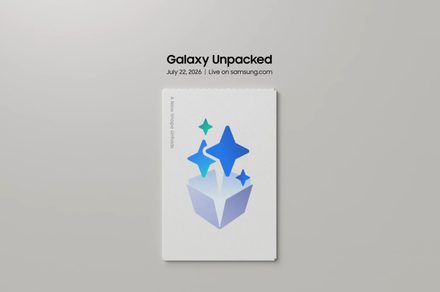
Samsung schedules Galaxy Unpacked for July 22 in London
Samsung announces its next Galaxy Unpacked event will take place on July 22 in London, according to multiple outlets. Th...

HCLTech earns ISO/IEC 42001:2023 certification for enterprise AI management system
HCLTech announces it has been certified under ISO/IEC 42001:2023, an international standard for artificial intelligence...

Microsoft to cut 4,800 jobs, with major impacts to Xbox division
Microsoft announces it will cut about 4,800 jobs as part of a reorganization of its gaming operations. Multiple outlets...