


Commercial shipping in the Strait of Hormuz faces renewed disruption after multiple attacks on tankers within hours and across a 24-hour period, according to maritime monitoring groups. The UK Maritime Trade Operations (UKMTO) reports that three vessels were hit, including one that catches fire after being struck by an “unknown projectile” while transiting near Oman. Another tanker is hit by a drone, and at least one additional vessel sustains damage; no injuries are reported, and some ships continue on their way. Iranian state media says a liquefied natural gas tanker was attacked after it ignored warnings, while Iran does not clearly confirm responsibility. Qatar, a key mediator in US-Iran efforts, condemns what it calls an unacceptable attack and says it holds Iran fully responsible, specifically citing the targeting of its LNG tanker “Al-Rekayyat.” The incidents revive concerns about freedom of navigation and proposed transit arrangements, including an Oman-linked coastal corridor that Iran opposes. Separately, multiple outlets report that Qatar pauses or slows efforts to ramp up LNG output at Ras Laffan following the attacks, citing safety and market implications. International maritime authorities and shipping monitors also condemn the attacks as potentially threatening global energy supply routes.
Three tankers struck near Strait of Hormuz as Qatar blames Iran
Commercial shipping in the Strait of Hormuz faces renewed disruption after multiple attacks on tankers within hours and across a 24-hour period, according to maritime monitoring groups. The UK Maritim...
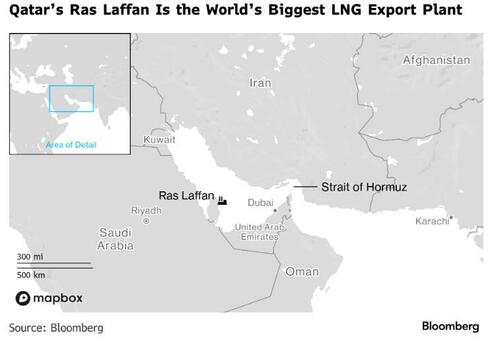
- UKMTO and other maritime monitors report three tanker incidents in the Strait of Hormuz within about 24 hours, with attacks occurring near Oman.
- Qatar says its LNG tanker Al-Rekayyat was targeted and attributes responsibility to Iran, calling the attack unacceptable.
- One tanker catches fire after being hit by a projectile; another is reportedly struck by a drone; no injuries are reported, and at least one vessel continues sailing.
- The attacks revive concerns about freedom of navigation and competing transit arrangements, including routes near Oman’s coastline that Iran opposes.
- Qatar pauses or slows LNG ramp-up plans at Ras Laffan after the tanker strikes, citing safety and risk to shipping through the strait.
Strait of Hormuz traffic plunges as US, Iran resume fighting Al JazeeraTanker traffic slows in Strait of Hormuz after US and Iran clashes ReutersQatar Pauses Push to Ramp Up LNG After Hormuz Tanker Attack BloombergIMO Secretary-General condemns new attacks on ships in the Strait of Hormuz International Maritime OrganizationUS-Iran strikes: Strait of Hormuz ship traffic falls steeply BBC
1 month agoQatar Halts Push To Ramp Up LNG Production After Hormuz Tanker Strikes Less than a month after Reuters reported that QatarEnergy was ready to resume LNG production at its Ras Laffan LNG plant "very quickly" and expected to reach within a month full output of facilities unaffected by Iranian strikes, this morning Bloomberg reports that Qatar is pausing efforts to rapidly revive production at the world’s largest LNG facility, after an attack on one of its tankers in the Strait of Hormuz raised fears that transit through the crucial waterway is still too risky. According to the report, QatarEnergy officials held a series of meetings following the attack on Tuesday, with CEO Saad Al-Kaabi deciding to cease plans to increase output at the Ras Laffan complex. Operations will be kept at a minimum for safety reasons and the number of vessels scheduled to dock at the plant in the coming days will be reduced/ The pause is one of the most high-profile fallouts to date of the heightened tensions this week with attacks on a number of ships near Hormuz and the US striking Iran for two consecutive days. President Trump on Wednesday even raised the prospect of a return to all-out war, a worst-case scenario for energy producers in the region who were gradually recovering from the impact of the conflict. Delaying the Ras Laffan’s ramp-up threatens to further tighten the global gas market, risking more intense competition between Asia and Europe for spare supply as they restock for the coming winter. According to analyst calculations, Europe is badly behind in its winter stockpiling, and absent new sources, it risks a major price surge should the European winter be cold. It also explains why Asian LNG spot prices are more than 80% higher than pre-war levels, highlighting anxiety surrounding the restart of Qatar, which supplied about a fifth of the world’s LNG last year. According to Bloomberg, since the US and Iran signed an interim peace deal in June, Qatar had been pushing ahead with plans to revive most of its LNG production within two months. It has been running some of Ras Laffan’s production trains at reduced capacity to be ready for a quickly ramp-up when the time was right. That’s likely to continue as the company still aims to boost exports as fast as possible following the safe opening of Hormuz. As part of its restart prep, Qatar had increased loadings and brought back empty tankers to take on more fuel. Eleven empty LNG vessels are currently sitting outside Ras Laffan, according to ship-tracking data. But those efforts will now be temporarily paused as the world’s second-largest LNG exporter waits for tensions to ease. The giant facility had been largely shut since early March after an Iranian drone attack, and about 17% of the plant’s production capacity was damaged in a separate missile strike weeks later. As we reported at the time, repairs to that part of the project is estimated to take at least three years. Last week, QatarEnergy extended force majeure notices on LNG supply for some of its Asian customers to August, causing some uncertainty in the market about when the company would restart production, Bloomberg reported. In Europe, Italian utility Edison SpA said the clause will now be in place until early September for its imports. The confusion about Qatar’s timelines heightened further after the country said its Al Rekayyat LNG tanker was struck by Iran on Tuesday. The ship was disabled, with the crew abandoning it shortly after, Bloomberg reported. This was the first time a Qatari LNG tanker was targeted since the war in Iran began in late February. Two other vessels were also attacked, and Iran has fired projectiles on some Gulf countries as it came under attack from the US this week. The tensions brought maritime traffic through the Strait of Hormuz to a near standstill on Thursday. Tyler Durden Thu, 07/09/2026 - 10:50
1 month agoDubai: The US military launched new strikes against Iran early Wednesday, hours after three merchant ships were struck in the Strait of Hormuz, in the latest exchange of fire to threaten the interim deal to end the fighting between the two countries.U.S. Central Command forces have begun launching a series of powerful strikes against Iran to impose heavy costs for targeting and attacking commercial shipping crewed by innocent civilians in an international waterway. The U.S. strikes are in response to Iranian attacks on three…— U.S. Central Command (@CENTCOM) July 7, 2026 The strikes were expected to hit a variety of military sites and port facilities, US officials said.The renewed attacks were sure to add to the difficulty of the negotiations aimed at fully reopening the strait, rolling back Tehran's disputed nuclear programme and reaching a permanent end to the war launched Feb 28.https://t.co/7YDsfu5x84— U.S. Central Command (@CENTCOM) July 8, 2026 In a statement posted to social media, US Central Command said American forces launched the strikes “to impose heavy costs for targeting and attacking commercial shipping crewed by innocent civilians in an international waterway.” One US official said the military is targeting Iranian air defence systems, coastal surveillance systems, ground-to-air missiles as well as launch sites for anti-ship cruise missiles and drones. Iranian port facilities are also being targeted, that official added. The Bandar Abbas footage points to the heaviest U.S. strikes since the ceasefire, and Iran may be about to shut the strait completely.-New scenes from Bandar Abbas port show what appear to be the most severe strikes on Iran since the initial ceasefire was signed… https://t.co/ITohcXAX7n pic.twitter.com/5S3yT6kmzc— Mario Nawfal (@MarioNawfal) July 7, 2026 The second official said the strikes would likely last for hours.Both officials spoke on condition of anonymity to discuss an ongoing military operation.Iranian state media reported the sound of explosions in Qeshm and Bandar Abbas. Flight data reveals the strike operation's scale: over a DOZEN U.S. military aircraft circling the Gulf as attacks continue...-At least 12 U.S. Air Force refueling planes and a Navy P-8 Poseidon reconnaissance aircraft were tracked circling off the UAE coast and in the… https://t.co/gbbCDABF0R pic.twitter.com/fC0S10XMNB— Mario Nawfal (@MarioNawfal) July 8, 2026 A similar spate of Iranian attacks on shipping and US retaliation occurred late last month, while the new strikes were notable for happening while President Donald Trump was in Turkey for a summit of the NATO military alliance.Hours after the three tankers were struck by projectiles, the United States revoked a licence that had authorised the sale of Iranian oil as part of the interim deal to end the fighting between the US and Iran. More footage keeps pouring out of Bandar Abbas, and the scale of the damage is coming into focus.The latest videos from the port show the aftermath of what appear to be the most severe American strikes since the ceasefire, fires burning at the facility that anchors… pic.twitter.com/29T55ywhQT— Mario Nawfal (@MarioNawfal) July 7, 2026 The new assaults in the fuel-shipping waterway were the most in a single day since late April, according to the UN International Maritime Organization. The fresh attacks threatened to choke off the flow of traffic in the strait just as countries hoped to restore normal shipping practices and ease the global economic strain of the war.A US official said the licence was revoked because Iran's actions in the strait were unacceptable and needed to be met with consequences. The official spoke with The Associated Press on the condition of anonymity to share insight into the reasoning behind the move.Statement by the Ministry of Foreign Affairs of the Islamic Republic of Iran on the United States' Explicit Violation of Article 10 of the Islamabad Memorandum of UnderstandingJuly 8, 2026(Unofficial Translation)The Ministry of Foreign Affairs of the Islamic Republic of Iran… pic.twitter.com/IaON7Cv65K— Iran in India (@Iran_in_India) July 7, 2026 The Iranian Foreign Ministry condemned the US move to revoke the licence, saying in a statement that it violates the interim deal and that “the US government bears responsibility for the consequences of this breach of commitment.” Iran's deputy foreign minister, Kazem Gharibabadi, also said in a post on X that the new attacks by the US are a violation of that agreement.One tanker caught fire after getting hit One tanker was travelling off the coast of Oman when it was hit and caught fire, the United Kingdom Maritime Trade Operations Centre said. Iranian state television said the liquefied natural gas tanker came under attack after ignoring warnings but did not directly claim the assault.آمریکا در سه هفته گذشته نیز بواسطه اقدامات رژیم صهیونیستی در لبنان و اظهارات تهدیدآمیز علیه ایران، بارها مرتکب نقض بندهای ۱ و ۲ یادداشت تفاهم شده است. ایران ضمن هشدار جدی نسبت به تبعات پیمانشکنی آمریکا، اقدامات قاطعی را در صیانت از منافع و امنیت ملی خود اتخاذ خواهد کرد. (۲)— Gharibabadi (@Gharibabadi) July 7, 2026 The other two ships sustained some damage, but no one was injured, and both continued on their way, the UK maritime agency said.Tehran, which has repeatedly declared that only its approved route through the strait is safe, is suspected of attacking other ships that have used another route close to the Omani shore.US-Iran Tensions: Three Tankers Hit in Strait Of Hormuz As Drone Attacks Escalate Location details provided by the UK agency showed that all three attacks occurred off the coast of Oman or the neighbouring United Arab Emirates, making it likely that the ships were using the route near Oman.In peacetime, a fifth of all traded oil and natural gas passed through the channel.Inclement Weather Drags 3 Seized Iran-Linked Oil Vessels Away From Anchorage, One Runs Aground; Crew Safe The licence issued by the US authorised the production, delivery and sale of Iranian oil through Aug 21. US Vice President JD Vance said at the time that lengthy talks with senior Iranian officials in Switzerland created a “good foundation for a successful final deal” to end the war.US sanctions on the purchase of Iranian oil had been in place since the 1979 Iranian Revolution. After the U.S. and Israel launched the war, and after the closure of the strait, the US had authorised the temporary sale of Iranian oil at least twice as an incentive toward a deal.'Remember Bin Laden Hid In Pakistan For A Decade': US Senator Rick Scott Slams PM Shehbaz Sharif Over Khamenei Praise Meanwhile, talks between Iran and the US appeared to be on hold until after the burial of Iran's Supreme Leader Ayatollah Ali Khamenei, who was killed at the beginning of the war.Qatar calls attack a violation of international law One tanker was carrying liquid natural gas south through the strait near Limah, Oman, when a projectile hit the left-side engine room and sparked a fire, the UK Maritime Trade Operations Centre said.President Trump Questions NATO Allies' Commitment, Says He Tested Support For US During Iran Conflict Majed Al-Ansari, a spokesperson for the Qatari Foreign Ministry, said the Qatari tanker Al Rekayyat was targeted in an “unacceptable attack” on international navigation and global energy security. He called it a “serious and explicit violation” of international law.In a post on X, he said Qatar holds Iran “fully legally responsible.” Later Tuesday, the UK maritime agency reported that an oil tanker was hit on its left side as it exited the strait near the Omani-Emirati border. A third tanker was struck by a drone off Oman, the agency said.The targeting of the Qatari vessel "Al-Rekayyat" while transiting near the Strait of Hormuz constitutes an unacceptable attack on the security & safety of international maritime navigation, the security of global energy supplies, & a grave & explicit violation of international…— د. ماجد محمد الأنصاري Dr. Majed Al Ansari (@majedalansari) July 7, 2026 The Joint Maritime Information Center, a multinational body overseen by the US Navy, told shippers Monday that the route around Oman “has been expanded and remains available for all traffic.” Ships going to the north on the Iranian route must register with Tehran. Those going south work with Oman and the US. (Except for the headline, this article has not been edited by FPJ's editorial team and is auto-generated from an agency feed.)
1 month agoThree tankers including a Qatari LNG vessel were struck within hours in the Strait of Hormuz, maritime monitors and Qatar said on Tuesday, with peace mediator Doha denouncing an “unacceptable” Iranian attack. An “unknown projectile” hit a tanker overnight, causing a fire, before two more were hit, at least one by a drone, British maritime security agency UKMTO said. The string of attacks after more than a week of respite revived concerns about freedom of navigation after Iran lifted its blockade of the vital waterway following a fragile ceasefire with the United States. All three vessels were struck close to Oman. Oman had proposed a temporary transit corridor hugging its coastline in an initiative opposed by Iran, which wants to charge ships using the narrow waterway. Qatar, which helped broker the truce, blamed Iran for the attack on its tanker and urged Tehran to “cease all practices that undermine regional security or threaten the safety of international maritime navigation”. “The targeting of the Qatari vessel ‘Al-Rekayyat’ while transiting near the Strait of Hormuz constitutes an unacceptable attack on the security and safety of international maritime navigation,” Doha’s foreign ministry spokesman Majed Al Ansari wrote on X. “We hold Iran fully legally responsible for this attack and for any resulting damages or repercussions,” he added. The attacks came despite the ceasefire between the US and Iran in the Middle East war, which began with US-Israeli strikes on Tehran in late February. The future of Hormuz, the main route for Gulf energy exports, has been a sticking point during talks between Tehran and Washington to permanently end the conflict. ‘Clear signal’ “We are now in a sensitive period where potential alternatives to an Iranian toll or fee system are being explored,” Andreas Krieg, a security expert at King’s College London, told AFP. “Iran is sending a clear signal that no alternative will be accepted. “Tankers trying to diverge through the Omani maritime corridor without registering with the Iranian authority will be punished,” Krieg added, calling it a “clear violation” of the ceasefire agreement and international law. US news outlet Axios reported late on Monday that Iran had “fired at least two missiles at commercial ships”, citing two unnamed US officials. The Pentagon did not immediately respond to an AFP request for comment. Maritime traffic had tentatively resumed after Washington and Tehran signed a memorandum of understanding last month aimed at ending the conflict and reopening the strategic route. However, Iran has insisted there will be no return to pre-war arrangements, under which vessels could pass freely through the strait. Under the 14-point US-Iran memorandum of understanding, Iran and Oman, which border Hormuz, must hold talks “to define the future administration and maritime services” in the key waterway with other Gulf states. Qatar had previously refused to enter into mediation under Iranian fire as Tehran launched an unprecedented aerial bombardment against Gulf states in retaliation for the US-Israeli strikes. However, Doha has played an increasingly active role in negotiations, hosting indirect talks between Iran and the US last week.
1 month agoCommercial tankers faced escalating attacks in the Strait of Hormuz recently. Qatar blamed Iran for an unacceptable assault on its liquefied natural gas vessel. The United Kingdom Maritime Trade Operations reported three tanker incidents within 24 hours. These attacks threaten regional stability and global energy security significantly. Diplomatic efforts continue to prevent further escalation of the conflict.
1 month agoThree tankers hit by projectiles in Strait of Hormuz Three tankers were struck by projectiles in the Strait of Hormuz on Tuesday, the British military said, in the latest attacks targeting vessels moving through the narrow mouth of the Gulf. The attacks threatened to choke off traffic through the strait just as countries had hoped to restore normal shipping practices and ease the global economic strain of the war between the US and Iran. One tanker was travelling off the coast of Oman and caught fire, according to the United Kingdom Maritime Trade Operations centre. Iranian state television said the liquefied natural gas tanker came under attack after ignoring warnings, but did not directly claim responsibility for the assault. Two other tankers were also hit, including one that was struck by a drone. It was not immediately clear where they were at the time of the attacks. Both ships sustained some damage, but no injuries were reported, the maritime agency said. At least one of the vessels continued on its way. Tehran, which has repeatedly declared that only its approved route through the strait is safe, is suspected of attacking other ships that have used another route close to the Omani shore.
1 month ago
Indonesia steps up firefighting as forest and peat fires spread haze across Southeast Asia
Indonesia escalates ground and aerial firefighting operations to tackle major forest and peatland fires, with smoke and...

Residents in sinking mining village told to leave as homes face demolition
Residents in Coalsnaughton, Clackmannanshire, are being told to leave because their homes may be at risk of collapse, an...
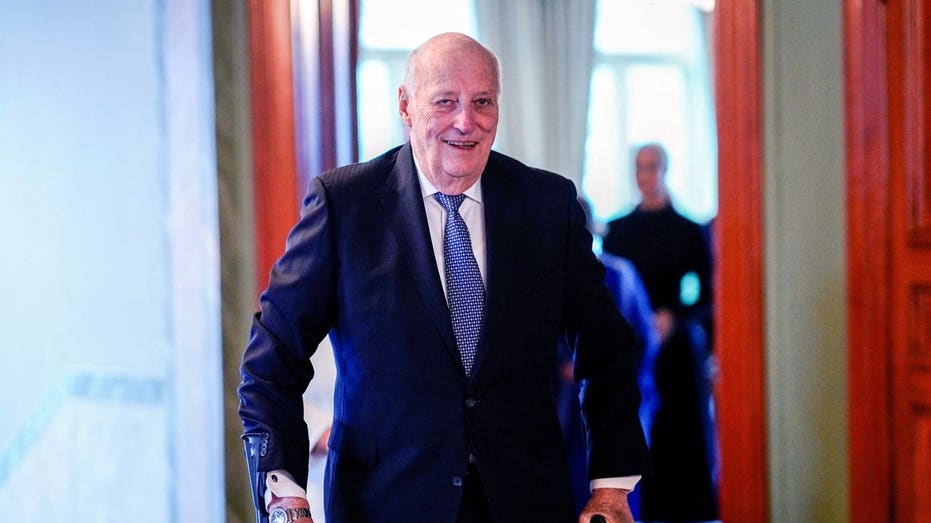
King Harald V of Norway dies aged 89
Norway’s King Harald V has died at the age of 89, the Norwegian royal palace announces. Multiple outlets report he dies...