


A UN report says falling fertility rates are not primarily driven by young people rejecting marriage, partnership, or parenthood. Instead, it points to economic and housing constraints that make it harder for young people to form families and have children. The UN notes that many young people still value long-term partnership and parenthood, but face conditions that delay or prevent achieving these goals. These barriers include limited access to affordable housing and economic pressures that affect young people’s stability and ability to plan for family life. The report frames the issue as a disconnect between stated preferences and real-world opportunities. As a result, fertility trends decline even when social attitudes toward family life remain supportive among young people. Overall, the UN emphasizes that policy responses focused on reducing economic and housing barriers could better support young people’s family aspirations, rather than assuming that fertility falls because of changing personal values.
UN: Young people want partnership and parenthood, but economic and housing barriers hinder them
A UN report says falling fertility rates are not primarily driven by young people rejecting marriage, partnership, or parenthood. Instead, it points to economic and housing constraints that make it ha...
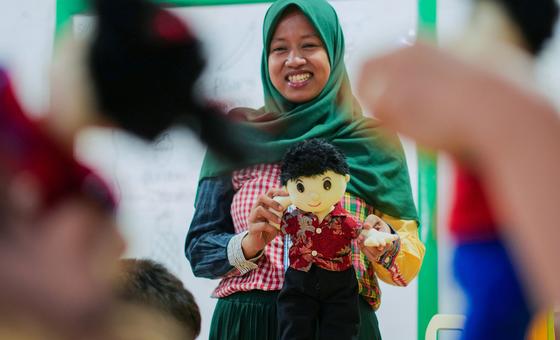
- The UN says declining fertility rates are not mainly due to young people rejecting marriage, partnership, or parenthood.
- The UN attributes fertility declines largely to economic constraints affecting young people’s stability.
- The UN cites housing constraints as another major barrier to starting or expanding families.
- The UN reports that many young people still value partnership and parenthood.
- The issue is described as a gap between young people’s preferences and their ability to act on them.
[UN News] Fertility rates are falling worldwide not because young people are rejecting marriage, children or family life but because many are facing economic and housing constraints.
1 month agoFertility rates are falling worldwide not because young people are rejecting marriage, children or family life but because many are facing economic and housing constraints.
1 month ago
Funke Akindele and JJC Skillz spotted together in Paris with twin sons
Funke Akindele and her ex-husband, entertainer JJC Skillz (Abdulrasheed Bello), are shown in a recently surfaced video a...

DOJ tells court Kennedy Center could be demolished if renovations are blocked
The Trump administration, through Department of Justice lawyers, tells a federal court that the Kennedy Center could fac...

Malik Nabers returns to Giants practice, with ACL recovery progressing amid limited contact
New York Giants wide receiver Malik Nabers is participating in training camp practices after recovering from a torn ACL,...