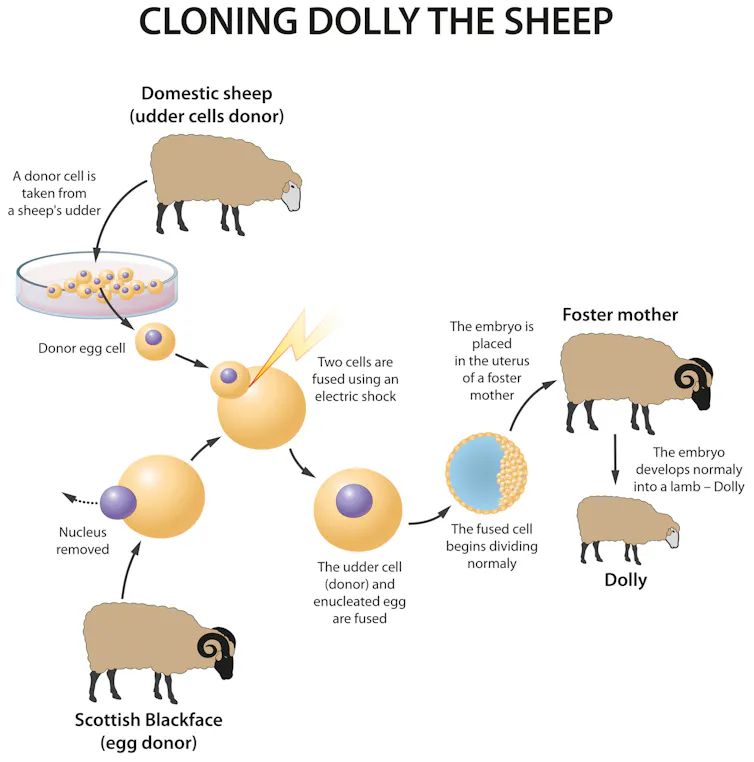
Thirty years after Dolly the sheep was born in 1996, sources describe how her landmark cloning achievement changed scientific thinking while also showing that cloning is not a simple “copy-and-paste” method. Dolly was the first mammal successfully cloned from an adult cell, and her existence was made public in 1997. The event sparked widespread public and scientific debate about the ethics and safety of reproductive cloning.
All outlets agree that cloning technology has progressed since then, but not in the direction of routine cloning for animals or humans. Efficiency remains low, and attempts to clone mammals face major biological hurdles, including incomplete or faulty reprogramming of cellular epigenetic states. Sources also note that Dolly’s legacy intersects with broader advances in biology, including work on induced pluripotent stem cells and related medical applications.
Nature’s reporting frames Dolly as a continuing reference point for present discussions of reproductive technologies, including how lessons from cloning inform debates around gene-editing. Overall, Dolly stands as an icon that helped drive advances and scrutiny, even as practical cloning remains difficult.