


US President Donald Trump says he will raise U.S. arms sales to Taiwan in discussions connected to his upcoming summit with Chinese President Xi Jinping. Trump said he plans to speak directly with Taiwanese President Lai Ching-te about a potential $14 billion weapons sale to the self-ruling island, while also saying he will discuss the same issue with Xi. Reporting ahead of the meetings indicates Taiwan and arms sales are expected to be a central point of tension, with China repeatedly warning against U.S. arms transfers to Taipei. China describes Taiwan as part of its territory and opposes foreign military support for the island. Sources also report that Trump’s comments frame the arms sales decision as leverage in negotiations with China, though he did not provide a direct commitment on whether the United States will proceed. Separately, coverage notes that US congressional support for Taiwan remains in place, including after Trump characterized the arms package as a “negotiating chip” with China. Together, the outlets describe a scenario in which Trump weighs the arms sale while signaling that the issue will be addressed in both Washington-Taipei and US-China contacts during the summit period.
Trump says he will discuss Taiwan arms sales with both Lai and Xi at summit
US President Donald Trump says he will raise U.S. arms sales to Taiwan in discussions connected to his upcoming summit with Chinese President Xi Jinping. Trump said he plans to speak directly with Tai...
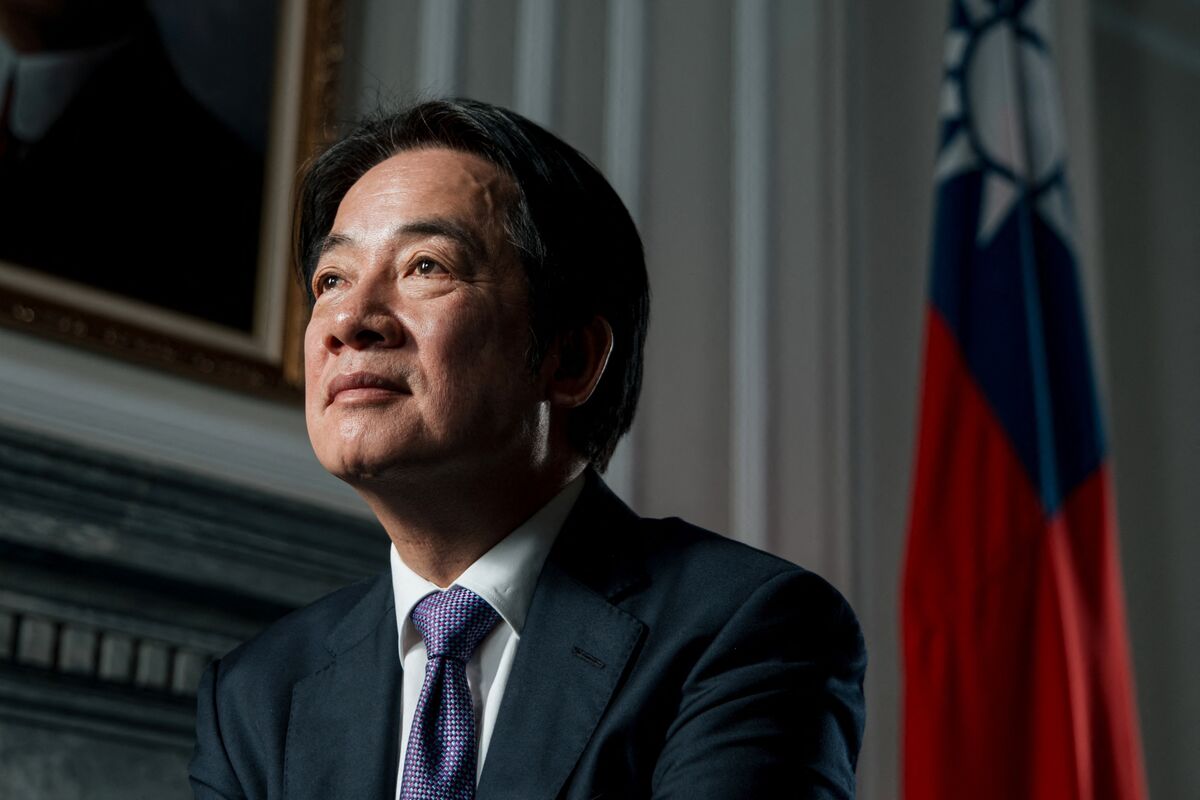
- Trump says he will discuss or raise U.S. arms sales to Taiwan with Chinese President Xi Jinping.
- Trump says he will speak with Taiwanese President Lai Ching-te about the arms sale.
- The proposed Taiwan weapons package is reported at about $14 billion.
- China opposes U.S. arms sales to Taiwan and reiterates its stance ahead of Trump–Xi meetings.
- US congressional support for Taiwan is described as continuing despite Trump’s remarks about the arms sales.
President Donald Trump has referred to $14 billion in arms sales to the island, which has been approved by Congress, as a "negotiating chip" with China.
2 months agoPresident Donald Trump indicated he would speak directly with Taiwanese President Lai Ching-te after pausing a $14 billion sale of arms to the country in a move that would risk disrupting newly stabilized ties between the US and China. Ambassador Alexander Yui, Taiwan's representative to the U.S. joined David Gura, Christina Ruffini on Bloomberg This Weekend to discuss. (Source: Bloomberg)
3 months agoUS President Donald Trump said he would speak to Taiwanese President Lai Ching-te as his administration considers whether to move ahead with a $14 billion weapons sale to the self-ruling island — a potential arms deal that has drawn criticism from China.
3 months agoDonald Trump’s meeting with Xi Jinping last week, where Taiwan was a key focus, has raised concerns in Taipei over the US commitment to helping the island defend itself.
3 months agoU.S. President Donald Trump’s suggestion that U.S. arms sales to Taiwan could become a bargaining chip in negotiations with China has sent a tremor through the strategic architecture of East Asia. Speaking after his summit with Chinese President Xi Jinping, Trump said they had discussed Taiwan “in great detail,” particularly the issue of weapons sales, and that he would “make a decision soon.” In doing so, he signaled that one of the most sensitive pillars of U.S. policy in Asia may no longer be governed by principle, but by transaction. For decades, the United States maintained a carefully calibrated approach toward Taiwan. After normalizing relations with Beijing in 1979, Washington terminated its formal defense treaty with Taipei but enacted the Taiwan Relations Act, committing itself to provide Taiwan with defensive capabilities. In 1982, the Reagan administration further reassured Taipei through the “Six Assurances,” including a pledge not to consult Beijing in advance regarding arms sales to Taiwan. Together with the longstanding policy of “strategic ambiguity,
3 months ago
Number of asylum seekers in UK hotels falls 50% to about 16,000
The number of asylum seekers housed in UK government hotels drops by about half year-on-year, reaching roughly 16,000 by...

Burnham withdraws support for donation cap after union concerns
Andy Burnham, the UK’s prime minister, withdraws support for a proposed cap on political donations, according to multipl...

UK Home Office reports 73,068 asylum seekers in non-hotel accommodation
The UK Home Office reports that 73,068 asylum seekers are living in “non-hotel” accommodation. The figure covers the yea...