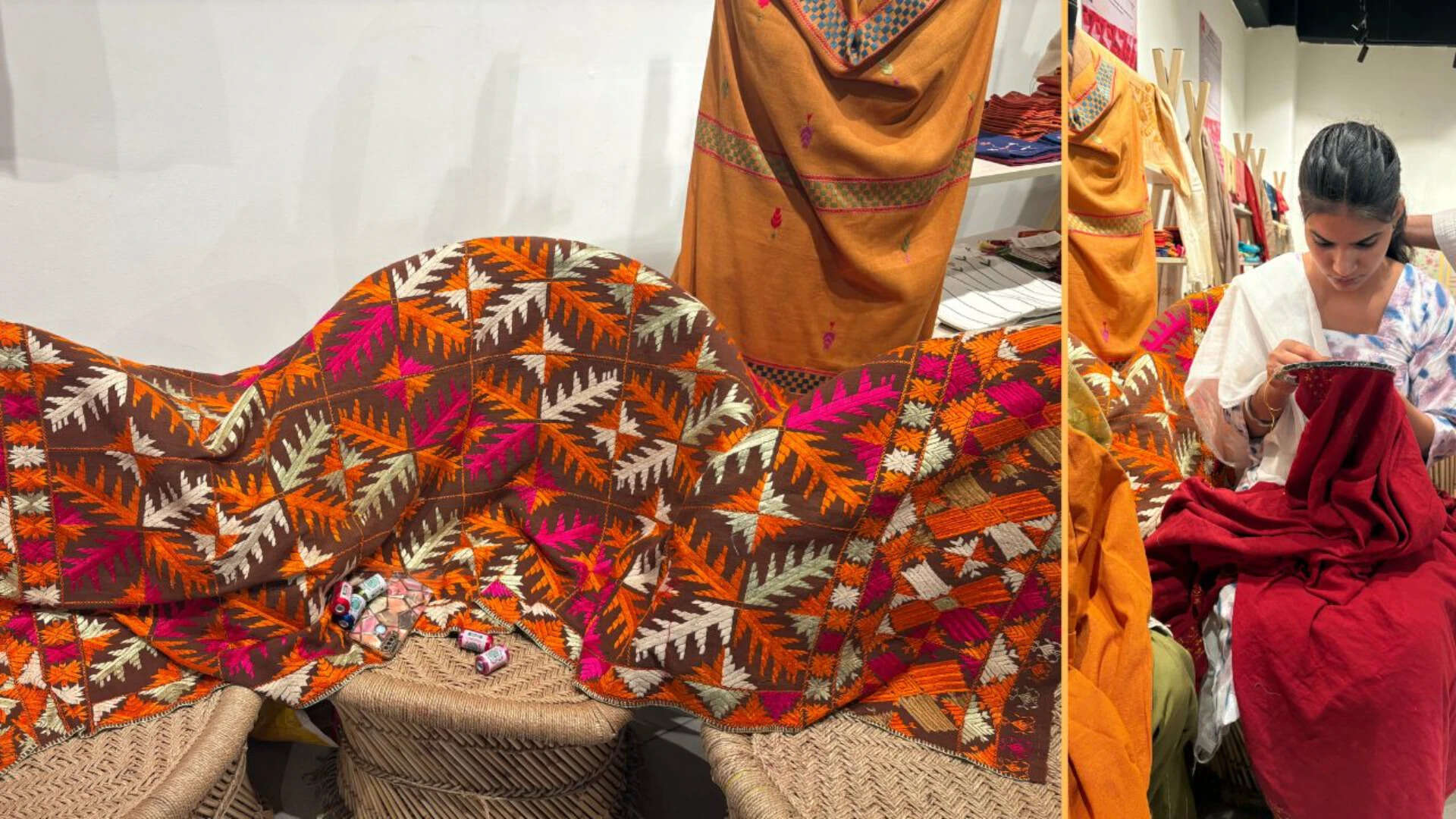
Multiple accounts describe phulkari as a traditional, densely embroidered textile practice that continues through artisans and designers working to sustain livelihoods. Gurmeet Kaur is cited as a designer who makes phulkari and uses her craft income to support her education. Her work is showcased at an exhibition in Delhi, where Nabha phulkari—associated with the region’s style—is presented to a wider audience.
The reports also describe traditional production of “antique baghs,” textiles that function as customary wedding gifts. These items are characterized as heavily embroidered works made primarily by older women within artisan communities. Across the coverage, phulkari is portrayed not only as a craft but also as a social activity that brings people together, with the design tradition incorporating irregularities rather than enforcing uniform perfection.
Overall, the sources present phulkari as an intergenerational practice that links heritage textiles, family and community participation, and ongoing economic support for makers.