


Multiple Bloomberg segments report that President Trump threatens additional strikes on Iran, with analysts assessing the move as potentially aimed at strengthening US negotiating leverage rather than signaling an immediate push for full-scale war. The coverage also emphasizes that the risk of escalation remains “dangerously high,” particularly given regional security concerns. Bloomberg’s reports connect the heightened rhetoric to market reactions, noting that oil prices rise as tensions increase and as attention focuses on the Strait of Hormuz, a key chokepoint for global energy flows. The segments also discuss broader diplomatic and alliance dynamics, describing how NATO is managing the implications of Trump’s approach and how Europe is adjusting its stance in response. In addition to the security and energy angle, Bloomberg notes that geopolitical pressures spill into technology markets, framing the situation as a fresh test for AI-related trade and investment assumptions. Overall, the reporting portrays an environment where US-Iran tensions escalate quickly across security, energy, economic forecasts, and technology-linked expectations, while policymakers and markets remain focused on the possibility of further escalation.
Trump Threatens More Strikes on Iran as Oil Jumps and Escalation Risk Rises
Multiple Bloomberg segments report that President Trump threatens additional strikes on Iran, with analysts assessing the move as potentially aimed at strengthening US negotiating leverage rather than...

- President Trump publicly threatens additional strikes on Iran.
- Analysts characterize the threats as potentially intended to gain negotiating leverage.
- The risk of escalation remains high.
- Oil prices rise amid increased tensions, including concern over the Strait of Hormuz.
- NATO and European approaches are described as adapting to Trump-related policy posture.
Get a jump start on the US trading day with Dani Burger on "Bloomberg Open Interest." President Trump threatens more strikes on Iran, oil jumps as tensions rise near the Strait of Hormuz, and the AI trade faces a fresh geopolitical test. Leslie Vinjamuri breaks down the risk of escalation, NATO’s Trump strategy, and the oil-market fallout. Plus, IMF’s Petya Koeva Brooks joins Open Interest on the new World Economic Outlook and how war and technology are reshaping global growth. (Source: Bloomberg)
1 month agoLeslie Vinjamuri, the President and CEO of the Chicago Council on Global Affairs joined Bloomberg Open Interest to explain why President Trump's latest Iran threats are aimed at gaining negotiating leverage rather than launching a full-scale war. She also breaks down NATO's strategy for managing Trump, why Europe is adapting its approach, and why the risk of escalation. and its impact on oil markets and the global economy, remains dangerously high. (Source: Bloomberg)
1 month ago
Hat maker in Canada ramps up orders after Trump’s Lake Ontario rename order
A husband-and-wife hat-making business in Canada begins marketing “Lake Ontario” caps shortly before President Donald Tr...

Judge temporarily blocks USPS mail-voting rules ahead of November midterms
A federal judge temporarily blocks the U.S. Postal Service from enforcing new requirements for mail voting ahead of the...
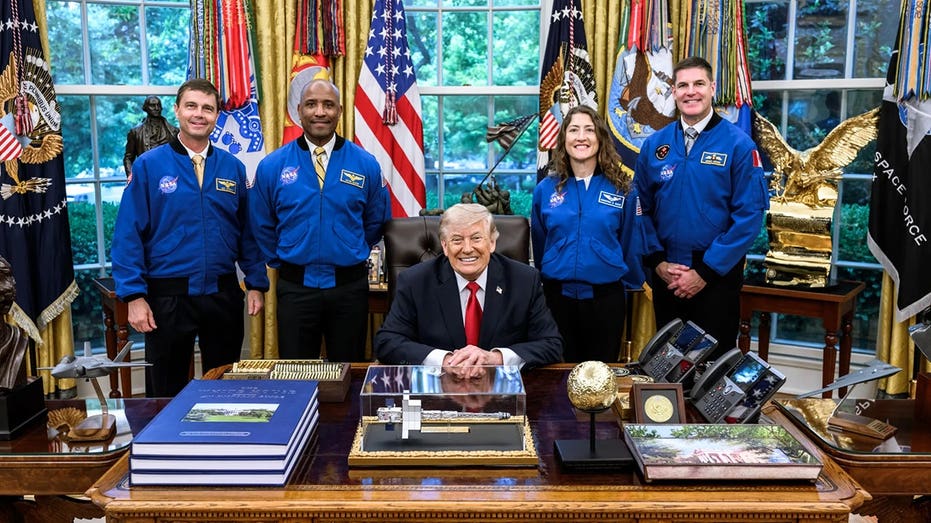
Trump to award Congressional Space Medal of Honor to Artemis II crew on Aug. 28
President Donald Trump will award the Congressional Space Medal of Honor to the Artemis II crew on August 28. The ceremo...