


A new analysis of 20 years of satellite observations links wildfire smoke to higher ground-level ozone across the United States. Researchers report that pollutants formed from wildfire emissions raise ozone levels at the surface, creating an additional health risk beyond direct smoke exposure. The study, led by Minghao Qiu of Stony Brook University and published in Science Advances, finds that wildfire-derived ozone is associated with about 2,045 excess deaths per year on average nationwide. The estimate reflects health impacts attributed to elevated ozone levels over the study period. Both outlets describe the work as identifying a “hidden” pathway in which wildfire smoke alters atmospheric chemistry and leads to increased ozone concentrations near the ground, rather than only affecting air quality temporarily during active fires. The results are based on satellite data and a modeling approach that evaluates how changes in ozone related to wildfire activity correspond to mortality. The study therefore concludes that wildfire events can contribute to additional year-to-year health burdens through ozone pollution, even when considering broader temporal patterns captured over two decades.
Study finds wildfire smoke increases ozone, contributing to thousands of excess deaths annually
A new analysis of 20 years of satellite observations links wildfire smoke to higher ground-level ozone across the United States. Researchers report that pollutants formed from wildfire emissions raise...
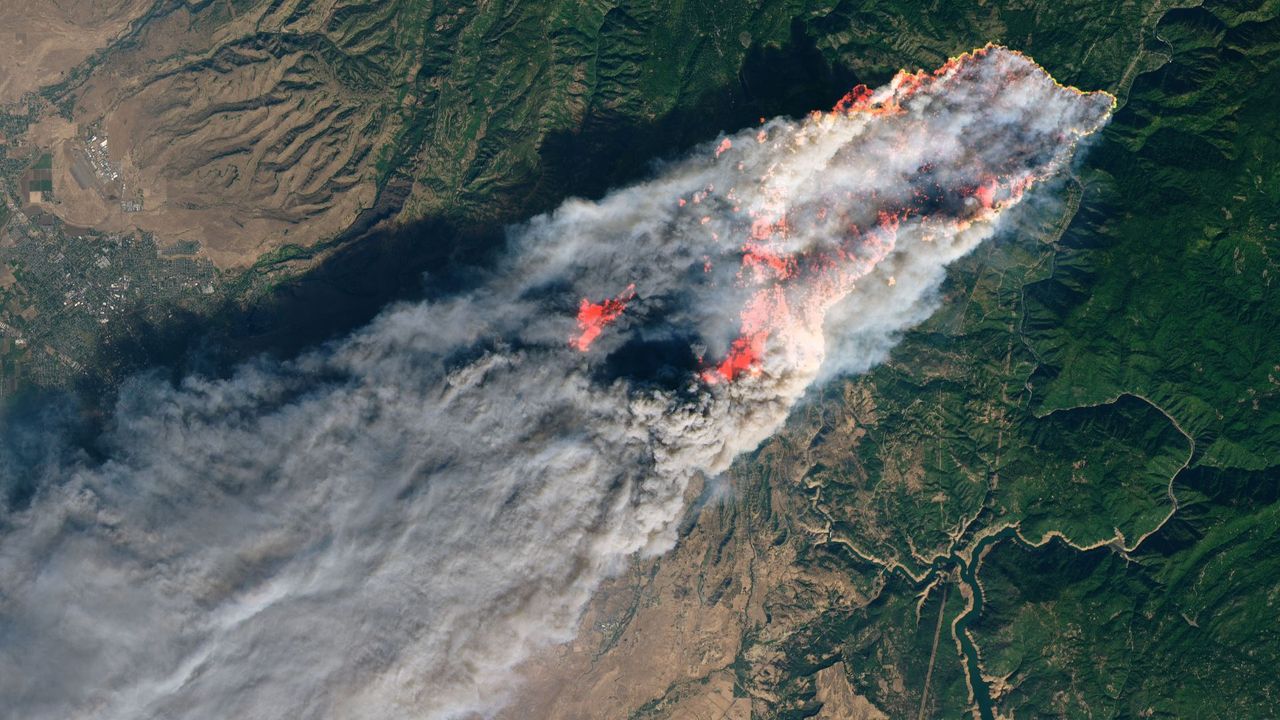
- Researchers analyze 20 years of satellite data on wildfire impacts on air quality.
- Wildfire smoke is associated with higher ground-level (surface) ozone in the United States.
- The study reports wildfire-derived ozone contributes to an average of about 2,045 excess deaths per year.
- The research is led by Minghao Qiu of Stony Brook University and published in Science Advances.
- The findings focus on a secondary “hidden” ozone pathway rather than only direct smoke exposure.
Wildfire-derived ozone appears responsible for 2,045 excess deaths, on average, per year across the U.S., 20 years of satellite data reveal.
3 months agoA study that assesses the effects of wildfires over two decades shows that wildfire smoke significantly raises ground-level ozone and contributes to excess deaths from wildfire smoke in the United States each year. The research, led by Minghao Qiu, Ph.D., of Stony Brook University, is published in Science Advances.
3 months ago
Vanity Fair drops journalist after viral courtroom video shows smiling and winking
A Vanity Fair journalist, Brittany Romano, is removed by the magazine after a viral video shows her smiling and winking...

Court filings say Chinese state-backed hackers targeted U.S. agencies and critical infrastructure
U.S. court documents and an FBI affidavit describe a Chinese state-sponsored hacking group that the filings say compromi...

Dolly Parton dies at 80 after brief battle with cancer, family and spokespeople say
Dolly Parton, the singer and philanthropist, dies aged 80 after what her family and representatives describe as a brief...