


Union Petroleum and Natural Gas Minister Hardeep Singh Puri responds to criticism around higher ethanol content in petrol, saying concerns about E20 have intensified only recently despite its phased rollout. He argues that E20 has been used safely for nearly two years and that ethanol-blended fuels have been available for longer in higher ethanol percentages, citing E15-plus availability from April 2023, E19-plus from April 2024, and E20 since April 2025. Puri links ethanol blending to India’s energy security goals, noting that India imports more than 85% of its crude oil and that increasing domestic fuel use can reduce dependence on imported crude, lower foreign-exchange pressure, and help manage risks from global price and supply disruptions. He also says ethanol blending supports farmers and can reduce air pollution. Puri states that a large number of vehicles, including over 200 million two-wheelers and around 2 million four-wheelers, operate on E20 without major reported problems. He further clarifies that E25 is not part of the current rollout and that it remains under testing, while E85 has been introduced for flex-fuel vehicles. The minister dismisses what he calls a “coordinated controversy” over E20.
Hardeep Puri defends E20 ethanol fuel amid renewed controversy
Union Petroleum and Natural Gas Minister Hardeep Singh Puri responds to criticism around higher ethanol content in petrol, saying concerns about E20 have intensified only recently despite its phased r...
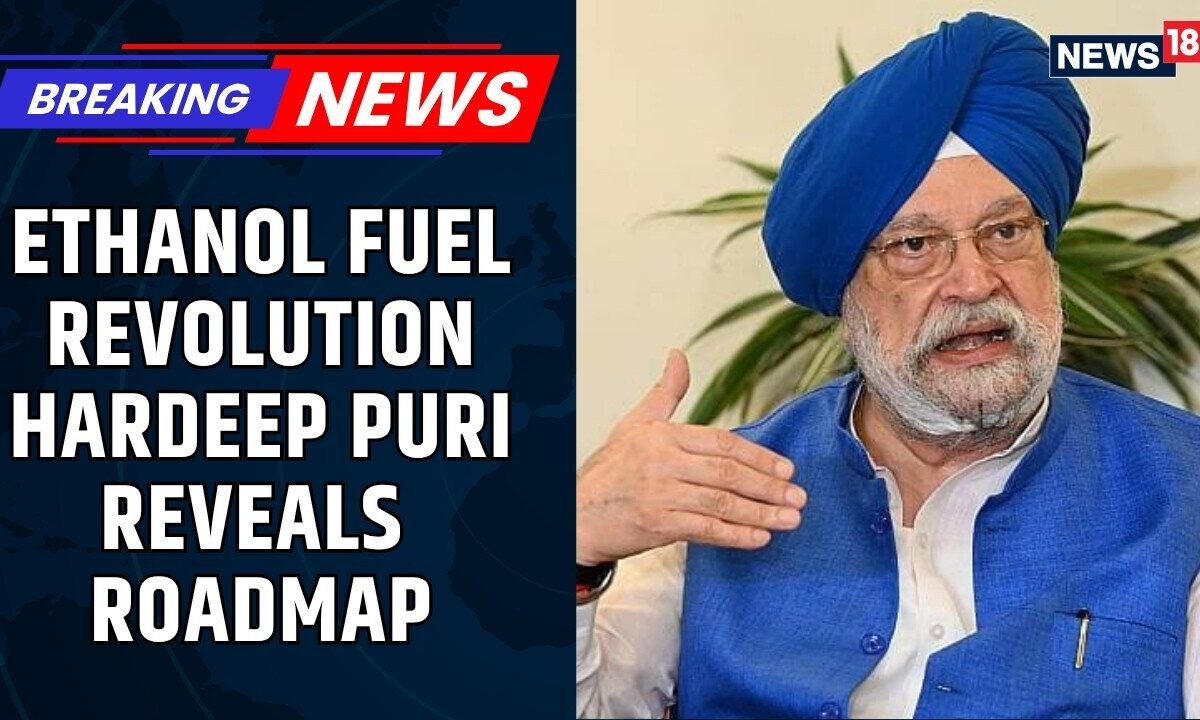
- Hardeep Singh Puri says E20 petrol has been used in India for nearly two years and that it is safe for vehicles when used as intended.
- The minister cites a phased ethanol program: E15-plus from April 2023, E19-plus from April 2024, and E20 from April 2025.
- Puri links ethanol blending to reduced dependence on imported crude oil, saying India imports more than 85% of its crude oil requirements.
- He claims large vehicle coverage on E20, including over 200 million two-wheelers and around 2 million four-wheelers, with no major reported problems.
- Puri distinguishes the current E20 rollout from higher blends, saying E25 is under testing and not the same as E20.
Puri argued that vehicle manufacturers do not recommend fuels that would harm performance or reliability when used as intended. The minister also clarified that while he is "entirely in favour of the EV programme," India's transition to cleaner mobility will involve multiple technologies, including ethanol blending. Addressing speculation about higher ethanol blends, he added that E25 is still under testing and cautioned against confusing it with the current E20 rollout. n18oc_exclusive-interviewn18oc_indiaNews18 Mobile App - https://onelink.to/desc-youtube
1 month agoCan E20 ethanol-blended fuel reduce India's dependence on imported crude oil? Union Minister for Petroleum and Natural Gas Hardeep Singh Puri says yes. The minister explains how India's ethanol blending programme is aimed at strengthening energy security, reducing the country's reliance on imported crude, and promoting cleaner fuels. n18oc_exclusive-interviewn18oc_indiaNews18 Mobile App - https://onelink.to/desc-youtube
1 month agoIn a Super Exclusive interview, Union Petroleum Minister Hardeep Singh Puri addresses key questions on E20 and E85 fuels, saying ethanol blending will support India's energy independence and reduce dependence on imported crude oil. He also highlights the potential cost benefits of E85 fuel for compatible vehicles. n18oc_india n18oc_breaking-news
1 month agoPetroleum and Natural Gas Minister Hardeep Singh Puri has defended India’s ethanol blending programme amid growing criticism over higher ethanol content in petrol, questioning the sudden rise of concerns around E20 fuel.He questioned the "coordinated controversy" around ethanol-blended fuels. Puri said E20 petrol has already been in use in India for nearly two years and argued that the debate around ethanol-blended fuels has intensified only recently despite its gradual rollout.Look closely at the timeline, and the pattern becomes difficult to ignore. India imports more than 85% of its crude oil and accounts for 30% of oil demand growth globally. On 5 June, India took a major step towards reducing that dependence by launching E85 fuel for flex-fuel… pic.twitter.com/P5WZyRE73f— Hardeep Singh Puri (@HardeepSPuri) July 8, 2026 Highlighting India’s dependence on imported crude oil, the minister said the country imports more than 85% of its crude requirements and contributes significantly to global oil demand growth. He said increasing ethanol blending is part of India’s broader effort to reduce dependence on fossil fuel imports and strengthen energy security.Puri pointed out that India recently introduced E85 fuel for flex-fuel vehicles, priced around Rs 20 per litre lower than regular E20 petrol, along with the launch of flex-fuel cars and motorcycles on June 5.जब कोई नीति भारत को आत्मनिर्भर बनाती है, किसानों की आय बढ़ाती है और विदेशी तेल पर निर्भरता कम करती है… तब कुछ लोगों की बेचैनी अचानक बढ़ जाती है।सच्चाई यह है कि भारत में अप्रैल 2023 से E15, अप्रैल 2024 से E19 और अप्रैल 2025 से E20 ईंधन का उपयोग हो रहा है।20 करोड़ दोपहिया… pic.twitter.com/ayvTRQ5AAS— Hardeep Singh Puri (@HardeepSPuri) July 8, 2026 He said ethanol-blended fuels have been used in the country for several years, with E15-plus fuel available for over three years, E19-plus for more than two years and E20 petrol since April 2025.According to Puri, more than 200 million two-wheelers and around 2 million four-wheelers are currently operating on E20 fuel without any major reported problems.The minister questioned the timing of the criticism, suggesting that opposition to ethanol blending increased as India moved towards greater energy self-reliance. Nitin Gadkari Defends E20 Fuel Policy, Challenges Critics To Show Vehicle DamageHe also asked who benefits if the country continues to remain dependent on imported crude oil or batteries.Puri said ethanol blending provides multiple benefits, including reducing crude oil imports, improving energy security, lowering air pollution, supporting farmers and saving foreign exchange.He added that greater adoption of domestically produced fuels would reduce India’s vulnerability to international supply disruptions and fluctuations in global energy prices.The minister described E20 as a tested, scientifically validated and internationally accepted fuel, stating that it is safe for vehicles and aligned with India’s long-term clean energy transition goals.The government has maintained that ethanol blending is a key component of its strategy to promote alternative fuels, reduce carbon emissions and strengthen domestic agricultural value chains.
1 month agoPetroleum minister says E20 has been used safely for nearly two years and argues higher ethanol blending will reduce crude imports, support farmers and strengthen India's energy security
1 month ago
Iceland votes in close referendum on resuming EU membership talks
Iceland holds a referendum on Saturday on whether to resume negotiations with the European Union about potential EU memb...

Reform UK council plans security patrols amid reports of daily asylum seeker gatherings
Reform UK has announced that a council led by the party plans to hire security and introduce patrols, citing concerns ab...

Sowore vows Nigeria will not miss FIFA World Cup for eight years if elected
Omoyele Sowore, a presidential candidate of the African Action Congress (AAC) for Nigeria’s 2027 elections, says Nigeria...