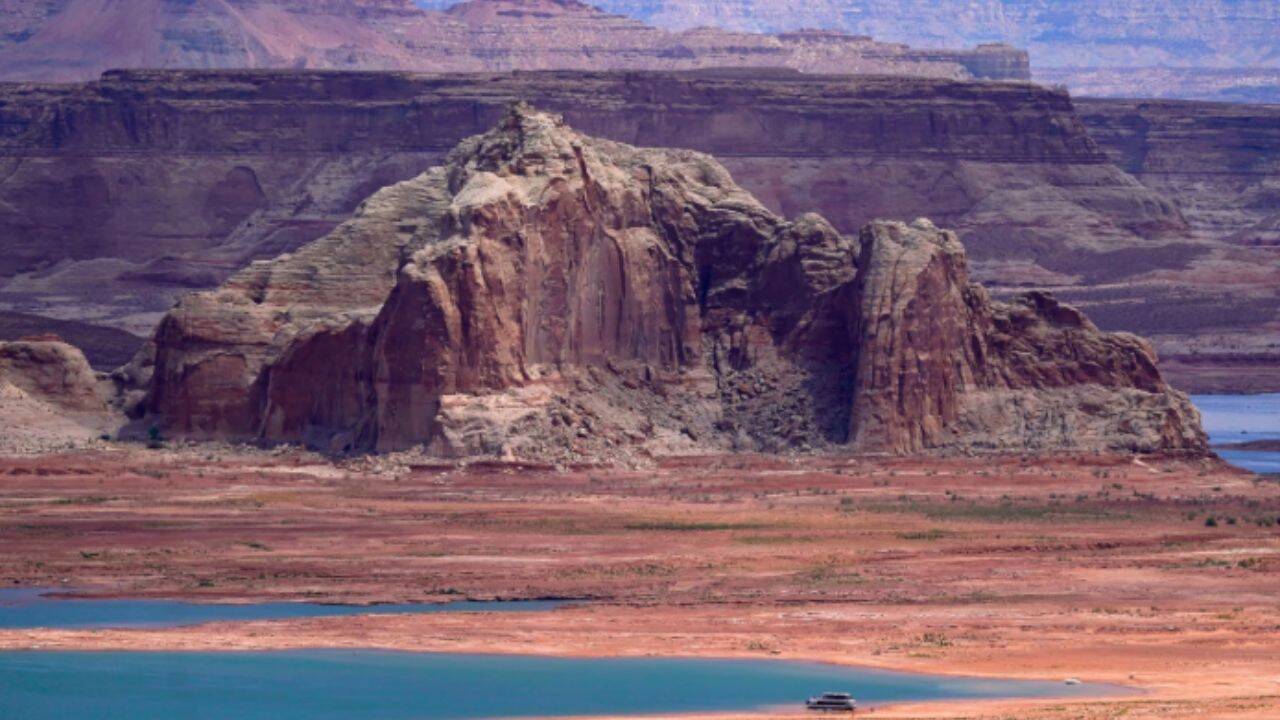
Scientists and water experts discussing the Colorado River’s worsening drought conditions say the current two-reservoir system—Lake Powell and Lake Mead—is increasingly difficult to sustain. One proposal, sometimes described as “Fill Mead First,” would shift more stored water from Lake Powell to Lake Mead, concentrating storage where capacity and losses may be lower. The idea is aimed at reducing water lost to evaporation and seepage and improving the river’s long-term reliability as the basin faces a drier climate.
Supporters argue that reallocating storage could strengthen water security and support ecological recovery in the Lower Basin. They also note that Lake Powell’s dam and operational constraints can limit usable storage relative to Lake Mead, making a gradual transfer potentially more efficient. Critics caution that moving water out of Lake Powell could eliminate a critical drought buffer, leaving less stored reserve for future emergencies. They also raise concerns about operational risks and environmental impacts associated with exposing parts of the Glen Canyon area if Lake Powell levels drop substantially.
The discussion highlights the need for new management approaches affecting millions of residents and water users across multiple states.