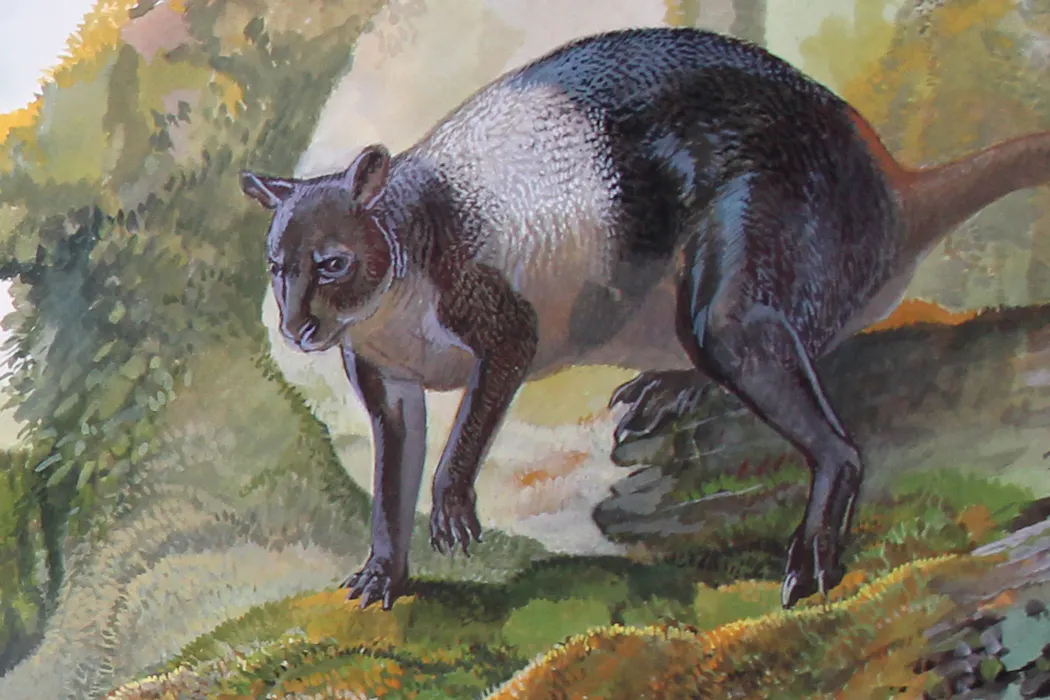
New research reports that a large, extinct kangaroo species lived in New Guinea’s mountain rainforests about 50,000 years ago and survived much later than previously thought, reaching the coastal region until around 6,500 years ago. The study challenges conventional explanations for the extinction of megafauna by suggesting that these animals persisted through a longer period than older timelines indicated. Rather than disappearing soon after earlier environmental or human-related changes, the evidence presented points to continued survival of the giant kangaroos into the late Holocene, closer to the time when many other megafaunal species were already in decline elsewhere.
The findings focus on New Guinea, where the relationship between climate shifts, habitat change, and human presence has been debated. By extending the known survival window for these animals, the research reframes how scientists interpret when and why megafauna declined. Overall, the report emphasizes that extinction processes were likely more complex and region-specific than a single, universal cause.