


China successfully recovers the first stage of a Long March 10B rocket after an orbital launch, marking what multiple outlets describe as the country’s first controlled booster recovery. The Long March-10B first stage separates from the second stage and returns to Earth, landing intact on a sea-based recovery platform in the South China Sea. Accounts differ slightly in phrasing, but all describe a net-based capture method: the booster deploys hooks during descent and is caught by a large net on a ship or floating platform waiting for the landing. Several reports frame the event as a major step toward reusable launch technology and note that China becomes only the second country, after the United States, to recover an orbital-class rocket booster. Other outlets compare the approach with SpaceX and Blue Origin, which have previously demonstrated booster recoveries, but emphasize that China’s method uses a different landing and capture mechanism than autonomous landings or other recovery concepts. While some coverage highlights ongoing debate among aerospace experts about whether the design can reduce costs versus alternatives, all sources agree on the core milestone: the Long March 10B booster is recovered intact following liftoff.
China recovers Long March 10B rocket booster using a sea-based net catch system
China successfully recovers the first stage of a Long March 10B rocket after an orbital launch, marking what multiple outlets describe as the country’s first controlled booster recovery. The Long Marc...
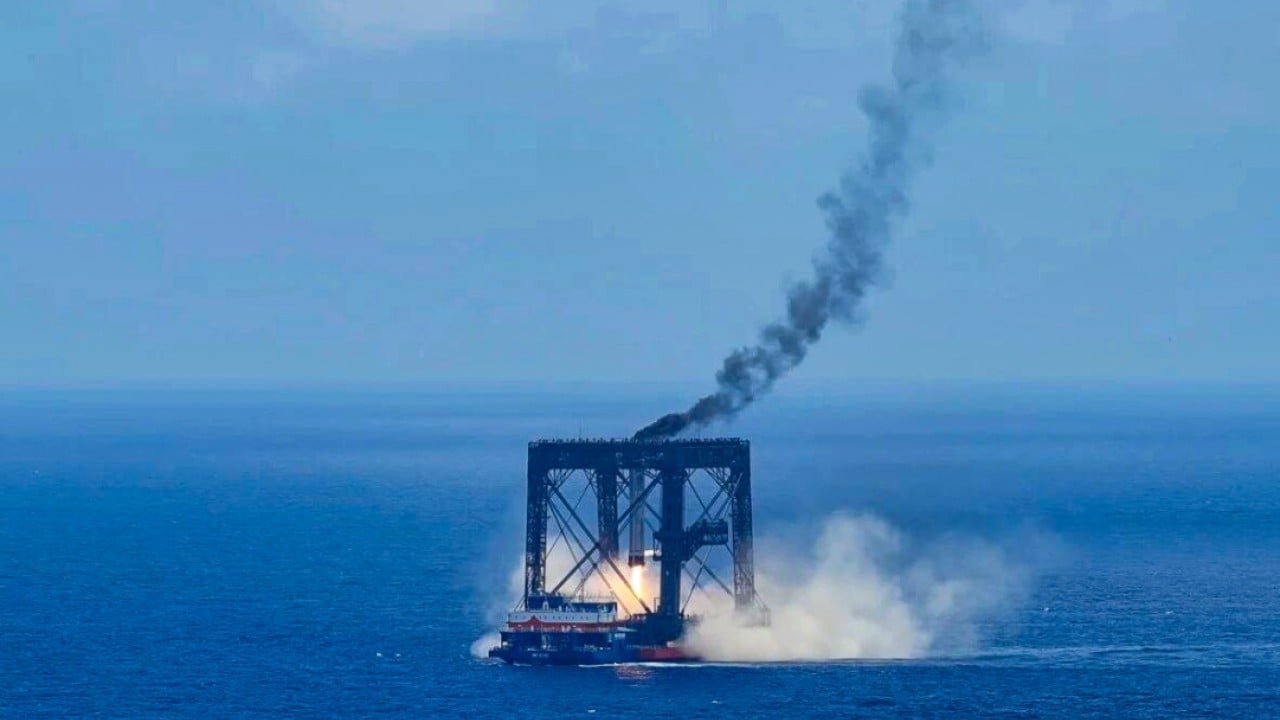
- China successfully recovers the first stage (booster) of a Long March 10B rocket after an orbital launch.
- The booster uses a net-capture approach from a sea-based platform: it deploys hooks during descent and is caught by a giant net.
- The recovery happens shortly after liftoff, with reports citing about six minutes after separation/launch.
- The Long March 10B first-stage recovery is described as China’s first controlled booster recovery of its kind.
- Outlets present the event as adding China to a small set of countries capable of recovering orbital-class rocket boosters, following earlier U.S. successes.
China’s successful recovery of a reusable rocket has sparked debate among aerospace experts over whether its unconventional approach could actually cut the cost of reaching space. On Friday, the country’s Long March-10B became the first orbital-class rocket outside the United States to return to Earth and be recovered intact. The rocket’s first-stage booster deployed four hooks as it descended and was then caught by a giant net on a ship waiting in the South China Sea. SpaceX and Blue Origin do...
2 months agoChina has become just the second country after the United States to achieve the controlled recovery of a reusable orbital space rocket. Friday’s successful capture at sea of the booster stage of a Long March-10B rocket after its maiden launch used a novel technique different from that of Elon Musk’s recently listed SpaceX and previous Chinese attempts. Instead of landing using extendable hydraulic legs, the rocket stage used its engines to position itself over a floating platform in the South...
2 months agoAfter China became only the second nation after the US to achieve the controlled recovery of an orbital-class rocket booster, the spotlight has fallen on the domestic shipbuilder behind the design of the recovery platform. Following the maiden launch of China’s reusable Long March-10B rocket on Friday, the vehicle’s first-stage booster returned vertically and was caught by the Linghangzhe recovery platform, China’s first sea-based rocket recovery vessel to use a net-capture system. The platform...
2 months agoOn Friday, July 10th, China achieved a major milestone as its Long March-10B completed a its maiden test flight, which included the retrieval of its first stage booster.
2 months agoChina achieved a significant aerospace milestone by successfully landing its Long March rocket's first stage. This historic event marked the world's first successful net-based recovery of a rocket booster. China now joins SpaceX and Blue Origin as the only entities to land orbital rocket boosters. The reusable rocket booster touched down on a sea barge approximately six minutes after liftoff.
2 months agoChina’s landmark recovery of a reusable rocket has ignited heated debate on social media, with reactions ranging from awe at the rapid pace of Chinese space development to speculation over a more intense space race with the United States. This comes at a time of renewed optimism around the satellite sector, as commercial demand for internet constellations skyrockets. China made history on Friday by becoming only the second nation to achieve the controlled recovery of an orbital-class rocket...
2 months agoChina successfully recovered an orbital rocket booster for the first time, landing the Long March 10B's first stage into a net-equipped sea platform after its maiden launch. "This mission marks my country's first successful controlled recovery of a launch vehicle and the world's first network-based recovery of a launch vehicle," the China Aerospace Science and Technology Corporation (CASC) announced via social media shortly after the launch. (Translation by Google.) "It signifies a historic breakthrough for my country in the field of reusable rocket technology and will lay a solid foundation for accelerating the improvement of my country's space access capabilities." Space.com reports: The Long March 10B is a two-stage rocket that stands about 207 feet (63 meters) tall, according to the state-owned CASC, the main contractor for China's space program. The vehicle's first stage burns kerosene and liquid oxygen (LOX) propellants, whereas the second stage uses LOX and liquid methane. In reusable mode, the Long March 10B can loft about 16 tons of payload to low Earth orbit. And the rocket flew with a payload on its debut liftoff -- a satellite that successfully reached "its predetermined orbit," according to the CASC update. That post did not provide any details about the spacecraft or its orbit. It did give a brief rundown of the first-stage recovery, however. "Approximately 6 minutes after the first and second stages separated, the first stage returned vertically and was successfully recovered at a sea-based recovery platform using a net system," CASC officials wrote, noting that launch occurred from the Hainan Commercial Space Launch Site on Friday at 12:15 a.m. EDT (0415 GMT; 12:15 p.m. Beijing time.) "The launch and first-stage recovery missions were a complete success." Read more of this story at Slashdot.
2 months agoThe inaugural launch and first-stage booster recovery of China’s Long March 10B rocket intensifies the nation’s spaceflight rivalry with the U.S.
2 months agoChina's state-owned space company recovered its first orbital rocket booster after launch.
2 months agoChina lands its first Long March-10B rocket booster, advancing reusable launch tech and intensifying the U.S.–China space race.
2 months agoChina successfully recaptured the first stage of a rocket after a launch on Friday in a breakthrough for the country's space program, state media said. The first stage of a Long March-10B rocket separated from the second stage after liftoff and returned to a platform in the sea.
2 months agoChina successfully recaptured the first stage of a rocket after a launch on Friday in a breakthrough for the country's space program, state media said. The first stage of a Long March-10B rocket separated from the second stage after liftoff and returned to a platform in the sea.
2 months agoChina has successfully landed a reusable rocket for the first time, marking a major step forward for its space programme, state media reported. The China Aerospace Science and Technology Corporation said the Long March 10B rocket lifted off from Hainan in southern China on Friday. Around six minutes after separating from the upper stage, the booster returned vertically to Earth and was recovered on a floating platform.PM Modi Receives Grand Welcome From Indian Diaspora During Historic New Zealand VisitThe development could help China challenge the dominance of the US in reusable rocket technology, following successful recoveries by SpaceX and Blue Origin. Reusable boosters are considered the most valuable part of rockets, and their use can significantly reduce the cost of satellite launches and space exploration.#China just made space history becoming the second country after the USA to launch reusable #rockets into #space. The Long March 10B aced its maiden orbital launch from Hainan, deploying a #satellite to its target orbit. Minutes later, its first stage executed a pinpoint… pic.twitter.com/U04vksaUFN— Africa Business Echo (@brice59955) July 10, 2026 Subhead: Aiming for cheaper space missionsChina’s Long March 10B has been compared with SpaceX’s Falcon 9 and can carry at least 16 metric tons to low-Earth orbit. Unlike Falcon 9, it does not land autonomously on a ground pad or drone ship. Instead, "landing hooks" on the rocket catch a net attached to a floating platform, BBC reports.SpaceX first landed a reusable Falcon 9 rocket from an orbital flight in December 2015, while Blue Origin followed with New Glenn in November 2025. The Falcon 9 now launches about 150 times a year, with boosters capable of being reused dozens of times. Shares of Chinese space firms China Spacesat and China Satellite Communications rose 10% after the news.
2 months agoChina has reached a major milestone in its space program by successfully carrying out the country's first controlled recovery of the first stage of a Long March-10B launch vehicle. The achievement represents an important advance in China's efforts to develop reusable rocket technology. Long March-10B Completes Successful Maiden Flight The Long March-10B lifted off from the Wenchang Space Launch Site in Hainan Province, southern China, on its maiden flight. During the mission, the rocket successfully delivered its payload into the planned orbit, meeting all primary launch objectives.
2 months agoChina made a breakthrough in its space program with the successful capture of a Long March 10B rocket booster.
2 months agoChina achieves first controlled recovery of Long MarchB rocket booster
2 months agoChina becomes second country to recover orbital booster with Long March 10B SpaceNewsWith a Successful Rocket Launch, China Clears a Key Hurdle in Race With SpaceX The New York TimesChina is catching up to Elon Musk’s reusable rockets TechCrunchMaking history! China lands rocket during an orbital launch for 1st time ever (video) SpaceChina successfully tests sea-based rocket booster recovery system Reuters
2 months agoHELSINKI — China launched its Long March 10B rocket early Friday and successfully recovered the first stage, marking a huge step for the country’s reusable rocket efforts. The first Long […] The post China becomes second country to recover orbital booster with Long March 10B appeared first on SpaceNews.
2 months agoChina succeeded in recovering the reusable rocket used in the maiden launch of the Long March 10B on Friday. The 70-metre (230-foot) tall, 5-metre wide medium-lift rocket lifted off from southern China’s Wenchang space launch site at 12.15pm. Soon after launch, the first stage of the rocket returned vertically and was recovered via a sea-based net platform, according to state news agency Xinhua. The two-stage Long March 10B’s first stage is powered by seven YF-100K engines that burn kerosene...
2 months ago
Aldabra giant tortoises in Seychelles surpass human population at nearly 183,000
Scientists report that the Aldabra giant tortoise population on Aldabra Atoll in the Seychelles has reached around 180,0...

James Webb pinpoints the host galaxy of the farthest observed fast radio burst
Astronomers report that NASA’s James Webb Space Telescope has identified the host galaxy associated with the farthest fa...

Scientists study Kīlauea’s swelling summit to improve forecasts of lava fountain eruptions
Kīlauea’s summit has been swelling, and researchers say this behavior is helping explain and potentially forecast episod...