


The government responds to questions about why E20 is not cheaper than E10 or pure petrol and why petrol pumps cannot offer all grades together. It says E20 petrol costs more to produce than pure petrol at current crude oil prices, which affects retail pricing. On performance, the government acknowledges that some vehicles may experience a small (about 3–5%) dip in fuel economy when using E20. It argues this is offset by factors including higher octane characteristics, cleaner combustion, and reduced reliance on crude oil imports. The government also addresses concerns about vehicle compatibility, stating that E20 is compatible with older vehicles. In addition, it says that providing multiple petrol grades—such as pure petrol, E10, and E20—at the same fuel station is not practical from an operational standpoint. Overall, the government’s position is that cost and infrastructure constraints shape how fuel grades are marketed and priced, while performance impacts are limited and benefits are expected from fuel quality and supply-chain considerations.
Government explains pricing and fuel-grade constraints for E10 and E20 in petrol pumps
The government responds to questions about why E20 is not cheaper than E10 or pure petrol and why petrol pumps cannot offer all grades together. It says E20 petrol costs more to produce than pure petr...
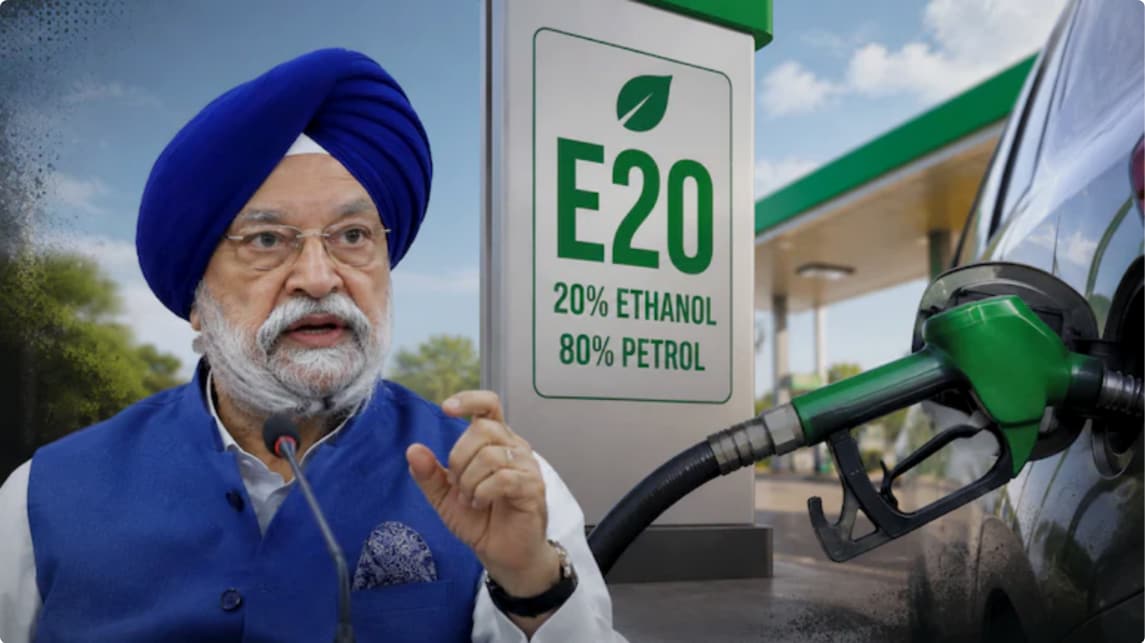
- The government says E20 costs more to produce than pure petrol under current crude oil prices.
- It acknowledges some vehicles may see a 3–5% reduction in fuel economy with E20.
- The government argues any economy dip is balanced by higher octane, cleaner combustion, and reduced crude oil imports.
- It states E20 is compatible with older vehicles.
- It says offering multiple petrol grades (pure, E10, E20) together at the same pump is not practical operationally.
The government acknowledged some vehicles could see a 3-5% dip in fuel economy on E20 but argued this is offset by higher octane, cleaner combustion and reduced crude oil imports.
1 month agoThe government said E20 petrol costs more to produce than pure petrol at current crude oil prices, defended the fuel's compatibility with older vehicles and said offering multiple petrol grades across fuel stations is not practical.
1 month agoThe government said E20 petrol costs more to produce than pure petrol at current crude oil prices, defended the fuel's compatibility with older vehicles and said offering multiple petrol grades across...
1 month ago
Sweden to send fighter jets and warships to support Finland’s air defense
Sweden announces it will deploy fighter jets and warships to Finland, responding to a request from Helsinki to strengthe...

Adeleke dissolves and reconstitutes UNIOSUN Governing Council
Osun State Governor Ademola Adeleke dissolves the Governing Council of Osun State University (UNIOSUN) and reconstitutes...

Ebola outbreak in eastern Congo expands to two new health zones
An Ebola outbreak in eastern Congo expands to two additional health zones, bringing the total affected to 60, according...