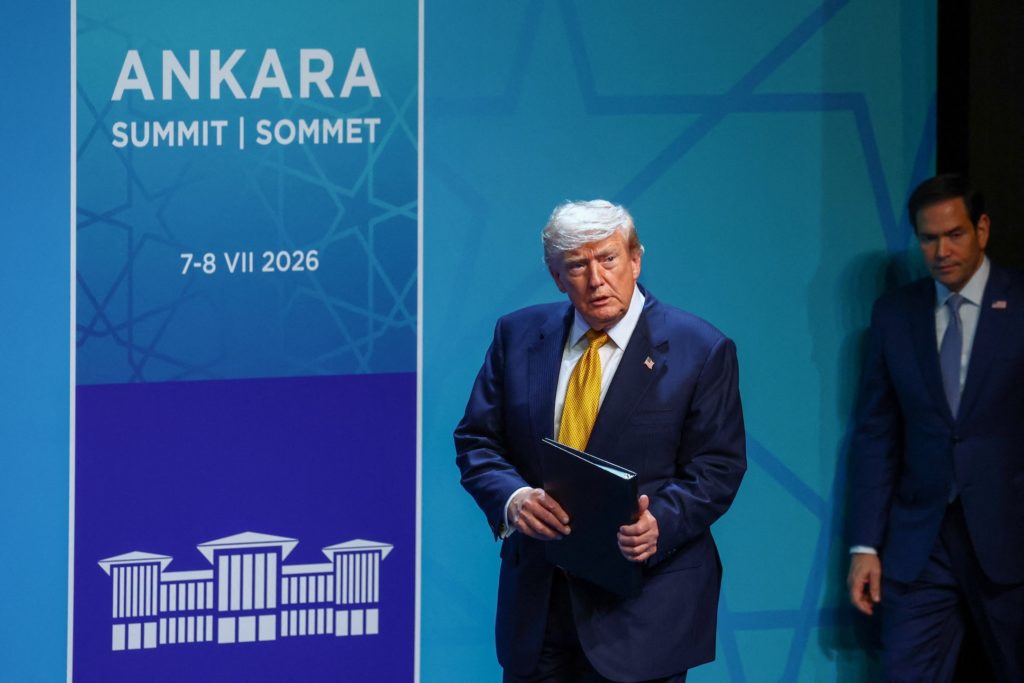
European officials say the United States’ shifting approach under President Donald Trump creates uncertainty for European governments at a time when NATO and European security priorities depend on close coordination. In discussions at a summit, Trump raises grievances about NATO allies and signals continued interest in Greenland. Officials also address how his remarks and policy direction affect planning for Europe’s defense posture and the role of U.S. military forces in the region.
Latvian Foreign Minister Baiba Braže, Belgian Defense Minister Theo Francken, and Kaja Kallas, the EU’s top diplomat, describe the practical difficulties of engaging with an American president whose decisions and statements can change quickly. They emphasize the need to manage relationships with Washington while maintaining European security capabilities and cohesion inside NATO and the European Union.
The officials’ comments focus on navigating an unpredictable U.S. policy environment, balancing alliance commitments, and preparing for potential adjustments to American engagement in Europe, including considerations tied to ongoing debates about NATO burden-sharing and strategic priorities.