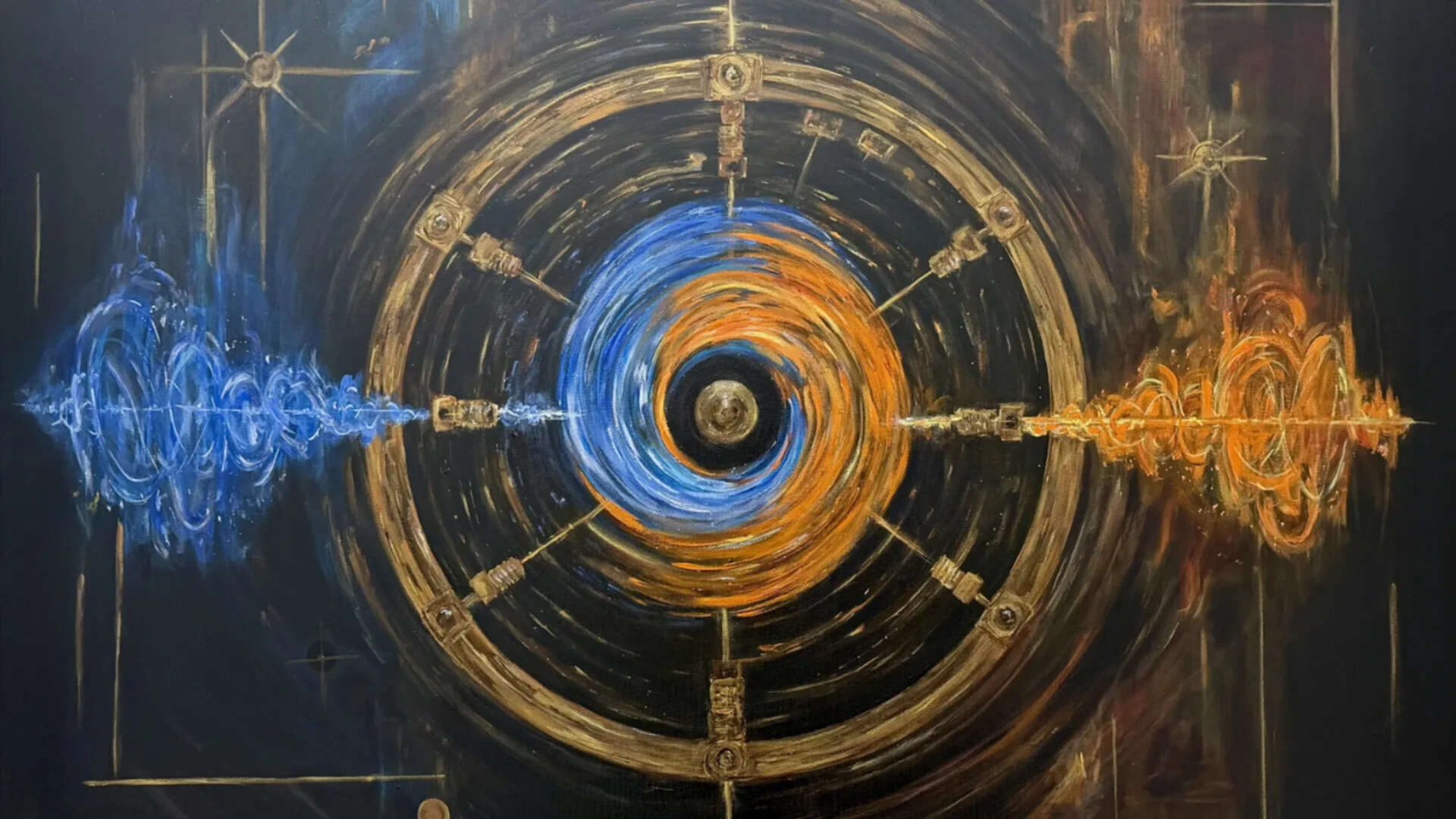
Physicists report an experiment that recreates a key physical process associated with energy extraction from a rotating black hole. Rather than moving parts or directly reproducing astrophysical conditions, the team uses a stationary laboratory device that generates synthetic, ultrafast rotation. This engineered rotation allows the setup to emulate the conditions and underlying physics of extracting energy from a spinning black hole, translating a previously theoretical idea into a controllable experimental system.
The researchers describe their work as a practical demonstration of how energy-harnessing mechanisms linked to rotating black holes can be tested in the laboratory. By validating the theory with an experimental analog, the study establishes a platform for investigating the process under repeatable conditions.
All accounts emphasize that the apparatus is fixed while rotation is produced through engineered effects, and that the result could influence future research and applications. Potential areas mentioned include optics, wireless communications, and quantum science, though the current findings are focused on demonstrating the black hole–like energy extraction physics rather than deploying it in real-world technologies.