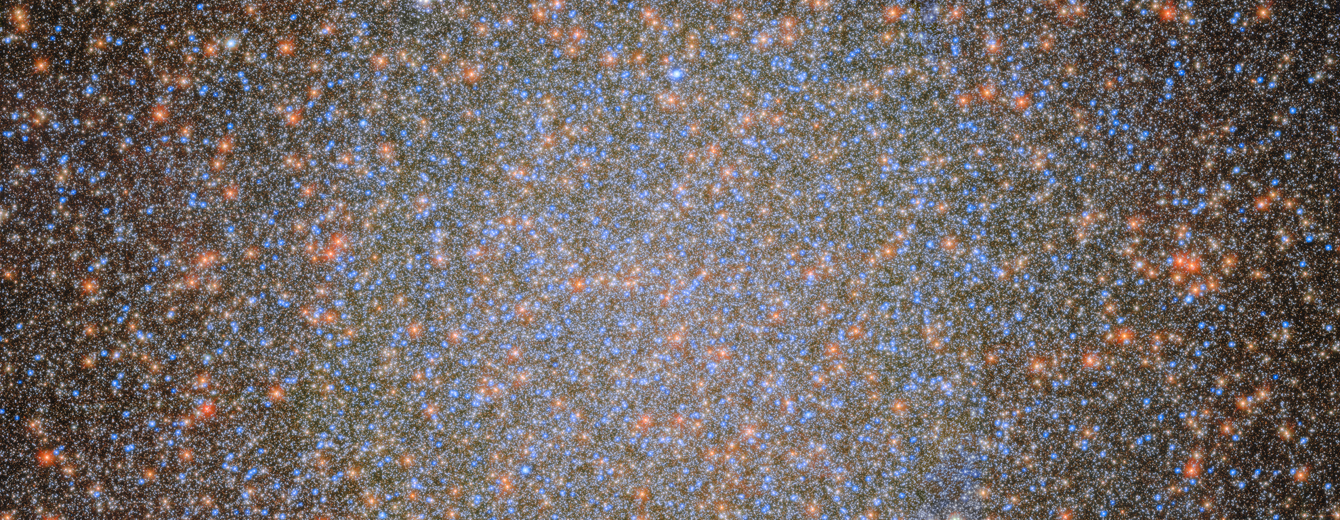
Astronomers report the first detection of a “missing” black hole in the globular star cluster Omega Centauri. For decades, scientists have expected such clusters to retain stellar-mass black holes left behind by massive stars, but observational evidence has been limited. Using archival observations from NASA’s Hubble Space Telescope and additional data from NASA’s James Webb Space Telescope, the researchers locate a candidate stellar-mass black hole within Omega Centauri. The result marks the first confirmed object in the putative black hole population that has been difficult to find with earlier measurements.
The work combines Hubble’s archival data with supportive observations from Webb to identify signatures consistent with a stellar-mass black hole. Researchers say finding the first member of this population will help refine models for how black holes form and evolve in dense stellar environments like Omega Centauri. The findings are published in The Astrophysical Journal Letters.