
India is no longer among the 10 countries with the highest number of measles “zero-dose” unvaccinated children, according to the latest WHO-UNICEF estimates released under the WUENIC programme. The report says India records 6,79,000 children who receive no routine vaccines in 2025, down from 9,09,000 in 2024 and 15,92,000 in 2023. Zero-dose children are those who do not receive any routine vaccine because they lack access to, or are not reached by, immunisation services. For the first time since WUENIC estimates began in 2001, India moves out of the top-10 list for measles unvaccinated children. The agencies attribute progress to sustained efforts under India’s Expanded Programme of Immunisation and targeted campaigns reaching zero-dose children in urban slums, among migratory populations, in hard-to-reach areas, and where vaccine hesitancy exists. The report also notes that global immunisation is improving but remains below pre-pandemic levels: in 2025, 90% of infants receive at least one DTP vaccine dose and 85% complete the three-dose course. However, an estimated 13.5 million children worldwide remain zero-dose, and measles coverage stays below the 95% threshold needed to prevent outbreaks.
India leaves top 10 for unvaccinated children as WHO-UNICEF report highlights global gaps
India is no longer among the 10 countries with the highest number of measles “zero-dose” unvaccinated children, according to the latest WHO-UNICEF estimates released under the WUENIC programme. The re...
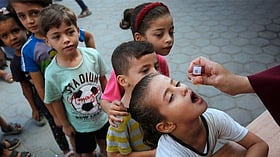
- WHO-UNICEF WUENIC estimates for 2025 report 6,79,000 zero-dose children in India, down from 9,09,000 (2024) and 15,92,000 (2023).
- For the first time since WUENIC began in 2001, India is no longer in the top 10 countries with the highest number of unvaccinated children for measles.
- Globally in 2025, 90% of infants receive at least one DTP dose and 85% complete the three-dose DTP schedule.
- The report estimates 13.5 million children worldwide are zero-dose in 2025, about 750,000 fewer than the previous year.
- Measles vaccination coverage in 2025 remains below outbreak-prevention targets: 84% for MCV1 and 77% for MCV2, contributing to large or disruptive measles outbreaks reported by 57 countries.
India recorded a sharp decline in the number of zero-dose children in 2025, with 6,79,000 children missing all routine vaccinations, according to the World Health Organization (WHO)-UNICEF estimates of National Immunisation Coverage (WUENIC) released on Wednesday.The figure marks a significant improvement from 9,09,000 in 2024 and 15,92,000 in 2023. Zero-dose children are those who have not received a single routine vaccine because they either lack access to or are not reached by immunisation services.For the first time since WUENIC estimates were introduced in 2001, India has also moved out of the list of the 10 countries with the highest number of unvaccinated children against measles. Officials said the achievement reflects the country's sustained efforts under the Expanded Programme of Immunisation (EPI) and its commitment to universal vaccination.To improve vaccine coverage, India has launched focused campaigns targeting zero-dose children in urban slums, migratory populations, hard-to-reach regions and communities affected by vaccine hesitancy. As a result, 95% of children in the country are now fully protected against diphtheria, tetanus and pertussis (DTP3) as well as the second dose of the measles vaccine (MCV2), officials told this paper.Read Also:KGMU's Ban On Non-Veg Food In Hostel Messes Sparks Political RowGlobal immunisation recovers, but challenges remainThe report said 90% of infants worldwide, or nearly 116 million children, received at least one dose of the diphtheria, tetanus and pertussis (DTP) vaccine in 2025, while 85%, or 110 million, completed the recommended three-dose schedule.Although both indicators improved by one percentage point compared with 2024, global vaccination coverage remains one percentage point below 2019 levels and has largely stagnated since 2009.Globally, an estimated 13.5 million children remained zero-dose in 2025, about 7,50,000 fewer than the previous year. However, progress has been offset by a growing number of children who begin vaccination but fail to complete the schedule.Dog Accidentally Starts House Fire, Causing $200K In Damage & Killing Three Family Pets In MarylandMeasles coverage below target despite progressThe report estimates that 7.3 million infants received the first DTP dose but dropped out before receiving their first measles vaccine dose. Consequently, global measles vaccination coverage remained at 84% for the first dose (MCV1) and 77% for the second dose (MCV2), well below the 95% coverage needed to prevent outbreaks.As a result, 57 countries reported large or disruptive measles outbreaks in 2025.“Governments and health workers have helped global vaccination rates bounce back after dropping significantly during the COVID-19 pandemic," said UNICEF Executive Director Catherine Russell."But millions of vulnerable children are still being left unprotected due to conflict, displacement, and poverty. We must reach every child, and we must rebuild trust where it is fraying. No child should suffer from a disease that a simple vaccine can prevent.”Data from 195 countries showed that 100 countries have maintained at least 90% coverage with three doses of the DTP vaccine since 2019. Among countries that were below the 90% mark in 2019, 30 have improved over the past six years, while 65 continue to stagnate or decline, including 13 fragile, conflict-affected or vulnerable countries.Compared with 2019, the Americas and South-East Asia have fully recovered and improved vaccination coverage, with South-East Asia emerging as the best-performing region. Africa, the Eastern Mediterranean and Europe recorded gains but remain below pre-Covid levels, while the Western Pacific experienced a further decline.Also Watch:Call for greater investment and stronger immunisation systems“Every child, whether born into wealth or poverty, peace or conflict, deserves the life-giving protection that vaccines provide. Immunization is one of the most cost-effective, most equitable, and most reliable interventions for protecting children’s health and well-being,” said Dr Tedros Adhanom Ghebreyesus, WHO Director-General.“Our greatest security begins with ensuring that everyone, wherever they may live, is protected from deadly diseases that vaccines have the power to prevent.”Over the past 25 years, sustained investments by governments and partners, stronger immunisation programmes, community support and public trust have reduced the annual number of zero-dose children by 40%.“The historic levels of immunisation that we are seeing across lower-income countries show what can be achieved when all stakeholders work together towards a shared objective,” said Dr Sania Nishtar, CEO of Gavi, the Vaccine Alliance.“As Gavi heads into a new five-year period, our great challenge now will be to maintain this momentum in the face of funding constraints, geopolitical uncertainty, and increasing outbreaks – while working harder to reach those children who still do not have access to immunisation.”WHO, UNICEF and Gavi said the world remains off track to achieve the Immunisation Agenda 2030 target of reducing the number of zero-dose children. They called on governments and partners to strengthen immunisation services in conflict-affected and fragile settings, counter false and misleading health information, increase domestic and global funding for vaccination programmes, and invest in stronger data and disease surveillance systems to improve immunisation coverage.
4 hours agoIn 2025, 90% of infants globally – or nearly 116 million – received at least one dose of a diphtheria, tetanus and pertussis (DTP) vaccine, and 85% – or 110 million – completed the full three-dose series, according to the annual WHO-UNICEF Estimates of National Immunization Coverage (WUENIC) released today. While both indicators rose by one percentage point from the previous year, global coverage remains one point below 2019 levels – hovering within the same narrow range since 2009. According to the data, an estimated 13.5 million “zero-dose” children did not receive a single vaccine in their first year during 2025. While these represent nearly 750 000 fewer children than the previous year, progress is offset by a rising number of children who start the schedule and do not complete it. Most of these children live in countries where national immunization programmes receive support from Gavi, the Vaccine Alliance. Globally, 7.3 million infants are estimated to have received their first DTP dose but dropped out before receiving their first measles dose. This drop-out rate contributed to stalled measles coverage with 84% of children receiving the first measles dose (MCV1) and 77% receiving the second dose (MCV2). Both figures fall far short of the 95% threshold required to prevent outbreaks of this highly contagious virus. Consequently, 57 countries reported large or disruptive measles outbreaks in 2025. “Governments and health workers have helped global vaccination rates bounce back after dropping significantly during the COVID-19 pandemic," said UNICEF Executive Director Catherine Russell. "But millions of vulnerable children are still being left unprotected due to conflict, displacement, and poverty. We must reach every child, and we must rebuild trust where it is fraying. No child should suffer from a disease that a simple vaccine can prevent.” Data from 195 countries show that 100 countries have maintained at least 90% coverage with three doses of DTP vaccine since 2019, with little progress in expanding this group. Of the countries below 90% coverage in 2019, 30 improved their rates over the past six years, but 65 countries are stagnating or falling behind, including 13 fragile, conflict-affected or vulnerable countries (FCV).Compared to their 2019 baselines, the Americas and South-East Asia have fully recovered and improved their performance, with the latter now the highest performing region. While Africa, the Eastern Mediterranean, and Europe regions saw gains last year, their coverage remains below pre-COVID-19 pandemic levels. By contrast, the Western Pacific experienced a decline, leaving it the region furthest below its 2019 baseline.Behind these global and regional averages are persistent threats that are driving variability and volatility in country-level vaccination coverage.More than half of all zero-dose children live in FCV settings, even though they account for only about a third of the world’s child population. In these settings, immunization programmes are often strained by political upheaval, insecurity, or chronic underfunding. For example, in a single year, Syria lost 6 percentage points on DTP1 coverage and 12 points on MCV1. However, Sudan recorded the largest single-country gain globally last year, increasing DTP1 coverage by 35 percentage points and lifting MCV1 coverage by 22 points, demonstrating what is possible when access to services improves even amid ongoing conflict.In middle- and high‑income countries, even where vaccines are fully accessible, coverage is slipping amid shifting political commitment, structural challenges or rising hesitancy. For example, South Africa's DTP1 coverage has fallen 20 percentage points since 2019 and continued to decline in 2025. After the largest increase in MCV1 coverage in the region in 2024, Bosnia and Herzegovina saw a 23-point drop in the past year.“Every child, whether born into wealth or poverty, peace or conflict, deserves the lifegiving protection that vaccines provide. Immunization is one of the most cost-effective, most equitable, and most reliable interventions for protecting children’s health and well-being,” said Dr Tedros Adhanom Ghebreyesus, WHO Director-General. “Our greatest security begins with ensuring that everyone, wherever they may live, is protected from deadly diseases that vaccines have the power to prevent.” Over the past 25 years, sustained investments from governments and partners, commitments from communities, strengthened programmes, and broad public trust have reduced the annual number of zero-dose children by 40%. For example, in countries supported by Gavi, children today are protected against more diseases than ever before, with 74% average coverage today across a full course of WHO-recommended vaccines. “The historic levels of immunization that we are seeing across lower income countries shows what can be achieved when all stakeholders work together towards a shared objective,” said Dr Sania Nishtar, CEO of Gavi, the Vaccine Alliance. “As Gavi heads into a new five-year period, our great challenge now will be to maintain this momentum in the face of funding constraints, geopolitical uncertainty, and increasing outbreaks – while working harder to reach those children that still do not have access to immunization.” However, the foundations that enabled progress are now under significant strain. The full impact of cuts to international health financing announced over the past two years is not yet reflected in these estimates, but the data systems needed to track that impact and protect against backsliding are themselves showing strain. According to the data, only 18 national immunization surveys were undertaken and submitted this round, down from 50 in 2024 and an average of 33 per year between 2015 and 2019. Weakening investments in the data systems needed to find and reach children who are missing out on vaccines will lead to outbreaks and deaths that could have been prevented, warn the agencies. WHO and UNICEF are working with Gavi, the Vaccine Alliance and other partners to deliver the global Immunization Agenda 2030 (IA2030) goal to ensure vaccines reach everyone, everywhere, at every age, yet the world is further off track to reach the global target of reducing zero-dose children.To make this sharp course correction and bridge the critical gap, WHO and UNICEF call on governments and relevant partners to: strengthen immunization in conflict and fragile settings to reach and retain children;counter false and misleading health information and fully support vaccine uptake acceleration; increase and sustain domestic and global funding for immunization programmes and partnerships, including Gavi; andinvest in stronger data and disease surveillance systems to drive and guide high-impact immunization programme strengthening efforts. Notes to editors: Download multimedia content here.Access the WHO dataset: Global dashboard, country profiles, and additional resources Access the UNICEF dataset: Overview page, Full datasets, Data visualisation, Regional data visualisation, Country profiles WUENIC estimates, including historical data, are revised annually as new country data become available. Figures in this release should not be compared against previous years' published reports. Based on country-reported data, the WHO and UNICEF estimates of national immunization coverage (WUENIC) provide the world’s largest and most comprehensive dataset on immunization trends for vaccinations against 13 diseases given through regular health systems – normally at clinics, community centres, outreach services, or health worker visits. For 2025 data were provided from 185 countries. WHO and UNICEF are working with Gavi, the Vaccine Alliance and other partners to deliver the global Immunization Agenda 2030 (IA2030), a strategy for all countries and relevant global partners to achieve set goals on preventing diseases through immunization and delivering vaccines to everyone, everywhere, at every age.About UNICEF UNICEF, the United Nations agency for children, works to protect the rights of every child, everywhere, especially the most disadvantaged children and in the toughest places to reach. Across more than 190 countries and territories, we do whatever it takes to help children survive, thrive, and fulfil their potential. For more information about UNICEF and its work, please visit: www.unicef.org About WHO Dedicated to the well-being of all people and guided by science, the World Health Organization leads and champions global efforts to give everyone, everywhere an equal chance at a safe and healthy life. We are the United Nations’ agency for health that connects nations, partners and people in 150+ locations – leading the world’s response to health emergencies, preventing disease, addressing the root causes of health issues and expanding access to medicines and health care. Our mission is to support all countries to promote, provide and protect health. “Together for health. Stand with science”, the theme of World Health Day 2026 marks a year-long campaign to highlight science as the foundation for protecting health and well-being worldwide.
21 hours ago
Two dead, three injured after two-car rear-end crash on Highway 401 in Mississauga
A two-car rear-end collision on Highway 401 in Mississauga, Ontario leaves two people dead and three others injured, acc...

Investors Urged to Participate in Planet Fitness Securities Class Actions
Multiple law firms announce a securities class action involving Planet Fitness, Inc. (NYSE: PLNT), and notify investors...

14-year-old boy charged with terrorism offence over alleged plan to target two London mosques
Police charge a 14-year-old boy with a terrorism-related offence connected to an alleged plan to target two mosques in L...