


SpaceX carries out the first-ever launch of its upgraded Starship V3 from Starbase, Texas, marking the 12th Starship test flight since 2023 and the first flight for the V3 version of both the upper-stage Starship and the Super Heavy booster. The rocket launches at about 5:30 p.m. CT (2230 GMT) and performs a suborbital cruise. During the flight, Starship releases a payload that includes dummy Starlink satellites, and it also carries two modified satellites that collect data on the heat shield during descent and transmit information back to ground teams. Reports say Starship reaches its planned re-entry and completes a controlled splashdown in the Indian Ocean, nose up as planned, after executing a return-landing burn and maneuvering to place the vehicle under maximum stress. Separately, the Super Heavy booster returns to land in the Gulf of Mexico about six minutes after liftoff, but TechCrunch reports that it is lost on return. Several sources note the mission proceeds despite the loss of one of Starship’s six upper-stage engines, with controllers choosing not to attempt an in-flight engine re-ignition before re-entry.
SpaceX launches upgraded Starship V3 on first flight test, loses booster on return
SpaceX carries out the first-ever launch of its upgraded Starship V3 from Starbase, Texas, marking the 12th Starship test flight since 2023 and the first flight for the V3 version of both the upper-st...
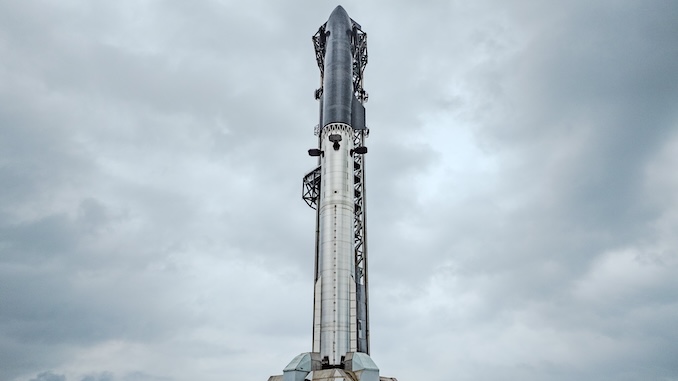
- SpaceX launches the first upgraded Starship V3 flight from Starbase in Texas.
- Starship releases mock Starlink satellites and two modified satellites that transmit heat-shield data.
- The flight reaches re-entry and ends with a planned Indian Ocean splashdown after a late return-landing burn and controlled descent maneuvers.
- One upper-stage Starship engine is lost during the mission; controllers do not attempt in-flight re-ignition before re-entry.
- The Super Heavy booster separates and returns to the Gulf of Mexico, but one report says it is lost on return.
SpaceX's "V3" Starship megarocket did pretty well on its debut flight last week. What's next for the powerful next-gen vehicle?
2 months agoStarship Version 3 flew for the first time this week in a mission of several… The post Following Starship V3 debut, SpaceX prepares for follow up appeared first on NASASpaceFlight.com.
3 months agoSpaceX launched the 12th test flight of its Starship rocket on Friday evening from Starbase, Texas, marking the debut of the upgraded Version 3 vehicle. The flight successfully deployed 20 mock Starlink satellites and beamed live video from space, but the Super Heavy booster was destroyed after separation, failing to achieve a controlled descent. The […] This story continues at The Next Web
3 months agoSpaceX launched the newest version of its Starship vehicle for the first time May 22, completing most of the test objectives planned for the suborbital flight. The post SpaceX launches first Starship V3 appeared first on SpaceNews.
3 months agoSpaceX's Starship V3, the most powerful rocket ever built, just roared off its launch pad in a spectacular show of power and technology.
3 months agoSpaceX's upgraded Starship V3 launched today from Starbase, Texas, for the first time, successfully deploying 22 dummy Starlink satellites and completing a planned fiery splashdown in the Indian Ocean. Reuters reports: The towering vehicle, consisting of the upper-stage Starship astronaut vessel stacked atop a Super Heavy booster rocket, blasted off at about 5:30 p.m. CT on Friday (2230 GMT) from SpaceX facilities in Starbase, Texas, on the Gulf of Mexico near Brownsville. A live SpaceX webcast of the liftoff showed the rocketship, more than 40 stories tall, climbing from the launch tower as the Super Heavy's cluster of Raptor engines thundered to life in a ball of flames and billowing clouds of vapor and exhaust. The test ended about an hour later when the Starship vehicle made it through a blazing re-entry through Earth's atmosphere and splashed down into the Indian Ocean, nose up as planned, as SpaceX employees who gathered to watch a live webcast of the flight cheered. The lower-stage Super Heavy came down separately in the Gulf of Mexico about six minutes after blast-off. The launch marked SpaceX's 12th Starship test flight since 2023 and the first ever for the V3 iteration of both the cruise vessel and its Super Heavy booster, as well as the first blast-off from a new launch pad designed for the more powerful rocket. During its suborbital cruise phase, Starship successfully released its payload of 20 mock Starlink satellites one by one, plus two actual modified satellites that scanned the spacecraft's heat shield and transmitted data back to operators on the ground during the vehicle's descent. Starship made it to its cruise phase despite the loss of one of its six upper-stage engines, and mission controllers opted not to attempt an inflight re-ignition of the engines before re-entry. But the vehicle did execute a return-landing burn at the very end of its flight, along with several aerodynamic maneuvers deliberately intended to place the spacecraft under maximum stress, and Starship completed those moves intact for its controlled final descent. You can watch a recorded livestream of the launch on YouTube. Read more of this story at Slashdot.
3 months ago
Developers cut LLM costs and reduce outages by routing tasks across compatible model providers
Multiple Dev.to posts describe a shift in how teams use large language models in production: instead of paying for a sin...

Nigeria Police invite VeryDarkMan to provide evidence of checkpoint collusion claims
The Nigeria Police Force invites social media activist Martins Otse, known as VeryDarkMan, to provide evidence supportin...

Study finds some Earth microbes may survive at the Moon’s south pole, raising contamination concerns
Researchers report that certain Earth microorganisms could survive conditions near the Moon’s south pole, where permanen...