


Across the three outlets, the articles reference Singapore’s founding father, Lee Kuan Yew, and his association of widespread air-conditioning with improved productivity. The pieces argue that in a warm climate, cooling is treated as an essential part of how people and workplaces function, rather than a luxury. The reporting highlights Lee Kuan Yew’s role in promoting broad adoption of air-conditioning as a policy linked to economic performance, positioning cooling as a practical infrastructure need in Singapore’s heat. While the quoted framing differs slightly by outlet title and wording, all sources centre on the same historical premise: that Singapore’s approach to air-conditioning was introduced and scaled with the goal of boosting workers’ and industries’ productivity. Taken together, the articles present a consistent account that the country’s widespread reliance on air-conditioning traces back to Lee Kuan Yew’s early policy thinking, and that the level of cooling is portrayed as proportional to local climatic realities.
Lee Kuan Yew linked widespread air-conditioning in Singapore to productivity gains
Across the three outlets, the articles reference Singapore’s founding father, Lee Kuan Yew, and his association of widespread air-conditioning with improved productivity. The pieces argue that in a wa...
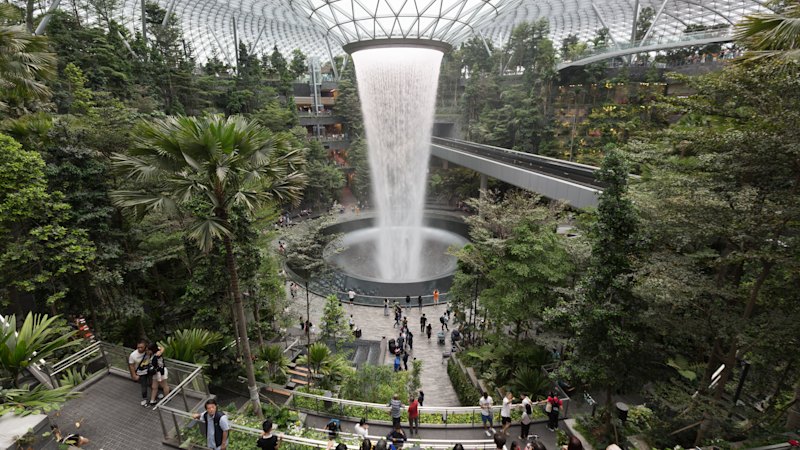
- The articles refer to Lee Kuan Yew as Singapore’s founding father.
- They state that Lee Kuan Yew promotes widespread air-conditioning in Singapore.
- Air-conditioning is described as being introduced to improve productivity.
- The coverage frames cooling as linked to operating in a warm climate.
Singapore’s founding father, Lee Kuan Yew, introduced widespread air-conditioning as a way of improving Singapore’s productivity.
3 hours agoSingapore’s founding father, Lee Kuan Yew, introduced widespread air-conditioning as a way of improving Singapore’s productivity.
3 hours agoSingapore’s founding father, Lee Kuan Yew, introduced widespread air-conditioning as a way of improving Singapore’s productivity.
3 hours ago
Police search for missing baby after mother and toddler found dead off Port Macdonnell
Police in South Australia are searching for a missing baby after the bodies of a woman and her toddler are recovered fro...

UNC places football GM Michael Lombardi on paid administrative leave
North Carolina places football general manager Michael Lombardi on paid administrative leave, according to multiple repo...

El Niño officially begins, forecasted to become one of the strongest on record
Multiple outlets report that El Niño has started and is strengthening, with forecasts pointing to an unusually strong ev...