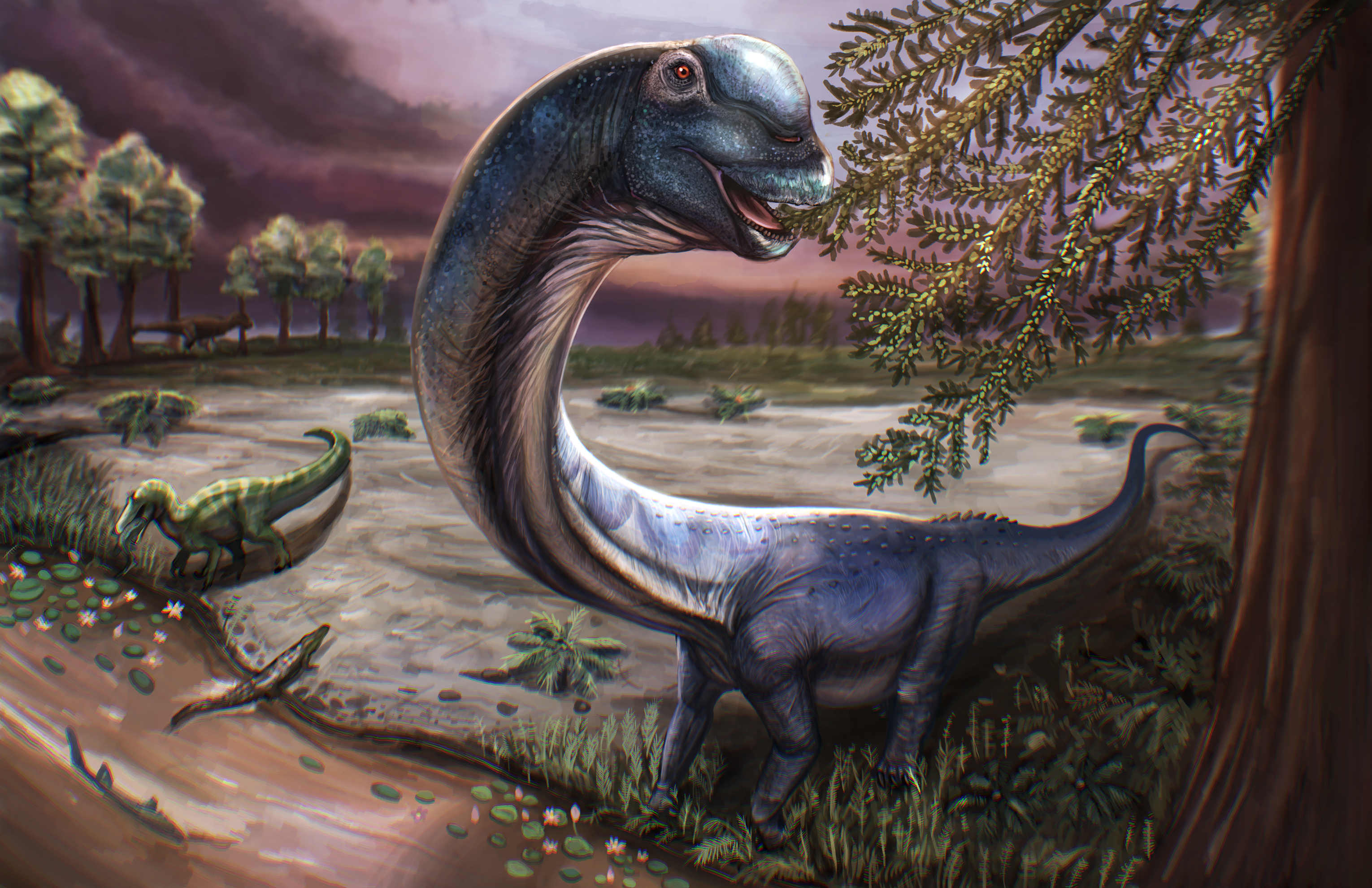
Researchers report the discovery and description of a new long-necked, plant-eating dinosaur from Thailand that they say is the largest dinosaur known from Southeast Asia. The study, led by teams from University College London (UCL) and Thai institutions including Mahasarakham University, Suranaree University of Technology, and the Sirindhorn Museum, identifies the animal as a sauropod—an herbivore characterized by a long neck and tail.
The dinosaur comes from rocks dating to the late Early Cretaceous period, about 100 to 120 million years ago, according to NPR. Phys.org describes it as the biggest dinosaur found in the region and presents it as a newly recognized species uncovered through the researchers’ analysis. The researchers’ findings position the dinosaur within a broader understanding of Cretaceous-era ecosystems in Southeast Asia, while emphasizing its size and regional significance.
Both outlets characterize the discovery as a major addition to Southeast Asia’s dinosaur record and highlight that the work is based on the scientific study published by the multi-institution research team.