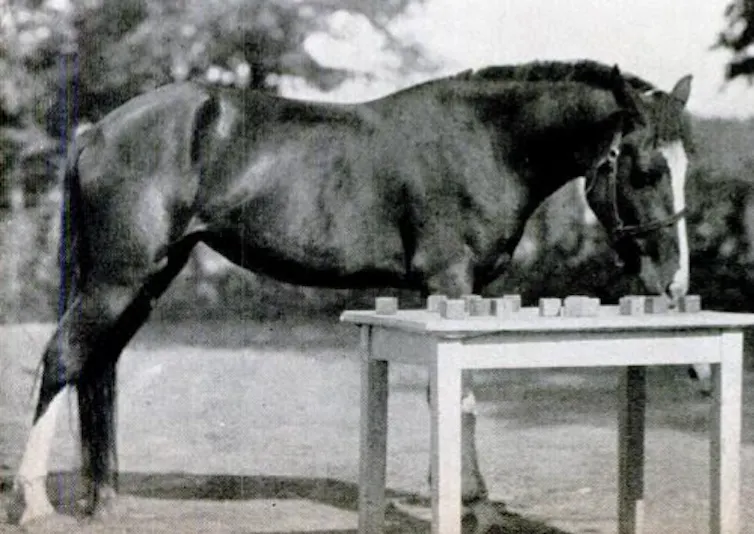
Around a century ago, “Clever Hans,” a horse credited with seemingly reading human cues, becomes the focus of a controversy over whether animals can have telepathic or other supernormal abilities. Several prominent thinkers at the time entertain the possibility that such powers could explain the horse’s performance.
Over time, researchers increasingly scrutinize the claim and examine how observers and experiment design might influence apparent results. Contemporary commentary from multiple outlets emphasizes that the episode shapes later approaches to testing animal cognition and other claims involving extraordinary abilities, including careful control of information available to both animals and experimenters.
While Phys.org and The Conversation both describe how the idea of psychic animals enters mainstream scientific thinking, they place the emphasis differently: one highlights the broader historical belief in supernormal powers, while the other focuses more on how researchers who later made major scientific contributions reassess the topic and treat telepathy as a question of method and evidence rather than as a given.