


Spaceflight affects the way astronauts swallow, eat, and drink, largely through changes in sensation, muscle control, and bodily fluids in microgravity. Research discussed by The Conversation and Phys.org highlights that swallowing is a complex process involving coordinated movement of the mouth, throat, and airway, plus accurate sensory input such as taste and feel of food and liquid. In orbit, astronauts report conditions that can interfere with normal swallowing, including altered head and facial sensations, dulled taste, and the effects of floating body posture. Phys.org describes the challenge of swallowing in a floating environment, using the analogy of trying to drink while face sensations and taste are reduced. The Conversation frames these issues through the lens of speech-language pathology, explaining that even small physiological shifts from gravity can complicate swallowing mechanics. Together, the sources emphasize that these effects may be subtle rather than immediately obvious, but they can influence how safe and comfortable eating and drinking are during missions, potentially requiring monitoring and adaptation.
Spaceflight alters astronauts’ swallowing, eating and drinking through subtle bodily changes
Spaceflight affects the way astronauts swallow, eat, and drink, largely through changes in sensation, muscle control, and bodily fluids in microgravity. Research discussed by The Conversation and Phys...
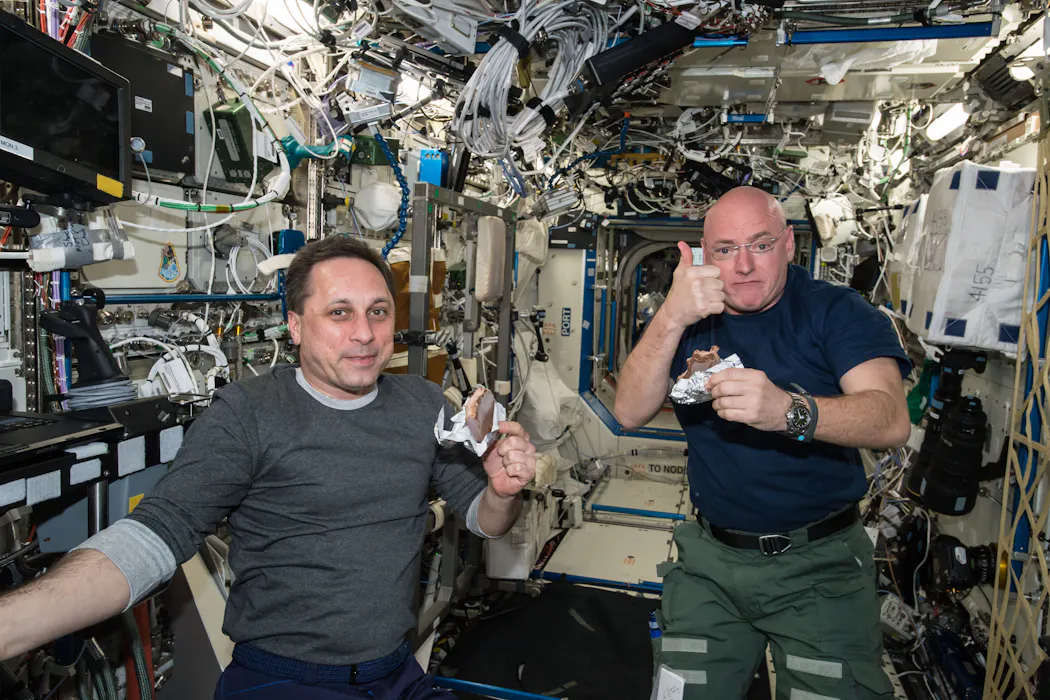
- Swallowing is a coordinated, complex process that depends on both movement and sensory input.
- Microgravity can change sensations and body coordination in ways that affect swallowing.
- Taste and other sensory experiences may be dulled during spaceflight.
- Astronauts may find drinking and eating more difficult due to altered conditions while floating in microgravity.
- The reported effects are described as subtle changes that can complicate swallowing safety and comfort.
Imagine trying to swallow a sip of water while your face feels stuffed with congestion, your sense of taste is dulled and your body is floating 250 miles (400 kilometers) above Earth.
4 hours agoA speech-language pathologist on how complex swallowing is – and how small changes from gravity can complicate the process.
10 hours ago
2027 Genesis GV60 Magma announced with up to 641 hp and U.S. pricing near $72,000
Genesis announces U.S. pricing for the 2027 GV60 Magma, its first high-performance “Magma” model. Multiple outlets repor...

Wildfires spread across Greece near Athens as strong winds hamper firefighting and evacuation orders
Wildfires continue across Greece, with officials describing a worsening emergency driven by strong winds. Multiple blaze...

NSE closing auction turnover reaches Rs 1,276 crore as SEBI’s framework begins Phase 1
On Monday, the National Stock Exchange (NSE) records a turnover of Rs 1,276 crore in its newly introduced Closing Auctio...