


Kazakhstan releases its first Amur tigers into the wild in more than 70 years, aiming to support the recovery of tiger populations linked to the Caspian or Turanian tiger that is widely regarded as extinct. The reintroduction involves adult Amur tigers placed after preparation work that includes habitat readiness and efforts to rebuild prey populations. Several reports say scientists identify genetic similarities between the historically present Turanian tigers and the current Amur tiger population, providing a basis for the conservation approach. Alongside the release, Kazakhstan implements measures intended to reduce conflict between tigers and people, including a conflict-prevention system for human-tiger coexistence. The stated goal is to re-establish tigers in parts of their former Central Asian range. The reports describe the release as a conservation initiative designed to restore an extinct tiger lineage using a genetically comparable wild population and improved ecological conditions to support survival and breeding.
Kazakhstan releases Amur tigers to restart tiger presence after over 70 years
Kazakhstan releases its first Amur tigers into the wild in more than 70 years, aiming to support the recovery of tiger populations linked to the Caspian or Turanian tiger that is widely regarded as ex...
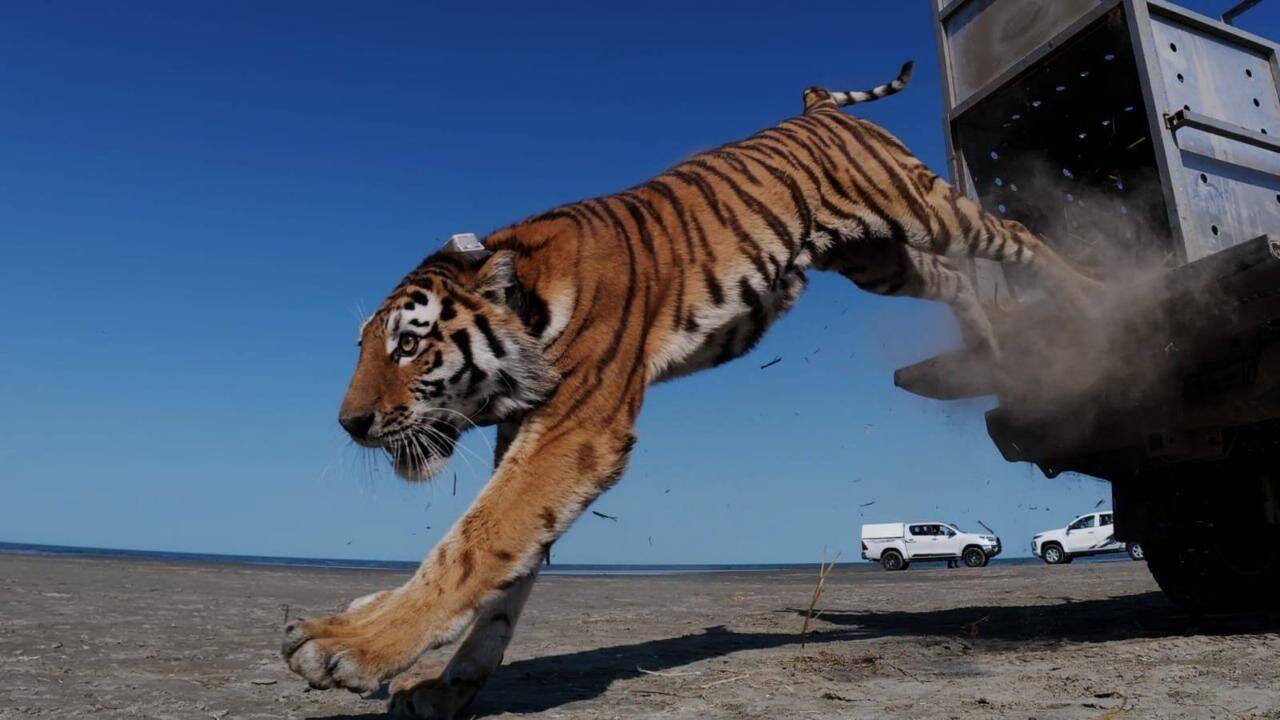
- Kazakhstan releases adult Amur tigers into the wild after an absence of more than 70 years.
- The effort is intended to help restore tiger populations associated with the extinct Caspian/Turanian tiger.
- Authorities carry out habitat preparation and work to restore prey populations before the release.
- Scientists report genetic similarity between historically present Turanian tigers and current Amur tigers.
- Kazakhstan includes measures to prevent or reduce human-tiger conflict as part of the program.
Kazakhstan has released adult Amur tigers into the wild after a 70-year absence. This reintroduction follows extensive habitat preparation and prey population restoration efforts. Scientists confirmed the genetic similarity between extinct Turanian and current Amur tiger populations. The country has implemented a comprehensive conflict-prevention system for human-tiger coexistence. This significant conservation initiative aims to re-establish tigers in their historic Central Asian range.
3 hours agoKazakhstan has released adult Amur tigers into the wild after a 70-year absence. This reintroduction follows extensive habitat preparation and prey population restoration efforts. Scientists confirmed the genetic similarity between extinct Turanian and current Amur tiger populations. The country has implemented a comprehensive conflict-prevention system for human-tiger coexistence. This significant conservation initiative aims to re-establish tigers in their historic Central Asian range.
3 hours agoKazakhstan has released the first Amur tiger in the wild in more than 70 years to help restore the extinct Caspian tiger
15 hours ago
NiMet forecasts three days of cloudiness and thunderstorms nationwide
Nigeria’s weather agency, NiMet, forecasts three days of cloudiness and thunderstorms across the country. Multiple outle...

Afghan man accused in Greece suitcase murder appears in Athens court
An Afghan man accused in Greece of murdering a Scottish aid worker and disposing of her body in a suitcase appears in co...

India’s services PMI falls to over four-year low in July as new business growth slows
India’s services sector growth slows further in July, with the Purchasing Managers’ Index (PMI) showing a four-year low...