


A new review synthesizes what is known about crocodilians in Australasia over deep time, describing a long history in which diverse crocodylian species occupy roles as apex predators across Australia and surrounding regions. The work highlights that today’s crocodile fauna is comparatively limited relative to the variety that existed in the past, shaped by changing climates and landscapes over millions of years. The review emphasizes that the crocodiles now seen in northern Australia—such as saltwater crocodiles—are survivors from a broader, “lost world” of distinct species. It also places human arrival within the broader narrative of environmental change, noting that humans coincide with major shifts that contribute to the decline or disappearance of some species and the survival of others. Overall, the sources present crocodiles as a persistent ecological presence in the region, while also underscoring that modern populations reflect a subset of much older diversity. The summary draws on comparative knowledge from paleontology and contemporary crocodilian biology to outline what researchers understand about species persistence, turnover, and the factors behind present-day distributions.
Research reviews Australasia’s ancient crocodiles and their survival into modern times
A new review synthesizes what is known about crocodilians in Australasia over deep time, describing a long history in which diverse crocodylian species occupy roles as apex predators across Australia...
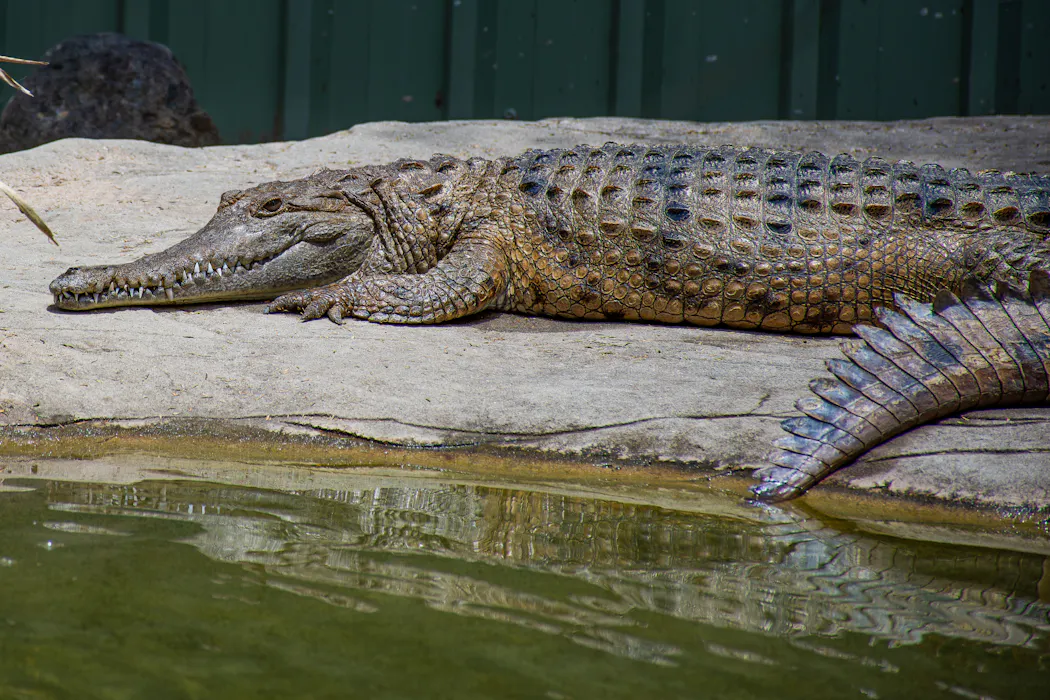
- Multiple crocodylian species have lived in Australia and surrounding areas for millions of years.
- Modern northern Australian crocodiles, including saltwater crocodiles, are described as survivors from a more diverse past.
- Changes in climate and habitats over time are presented as factors shaping past crocodilian diversity.
- The arrival of humans is framed as occurring alongside major environmental changes that affect crocodile species.
- Researchers use a combination of contemporary crocodile biology and paleontological evidence to summarize what is known about these ancient predators.
The sight of a saltwater crocodile basking on a mudbank is one of the most iconic and intimidating images of northern Australia. Yet the crocodiles that inhabit the region today are just the survivors of a much richer and stranger lost world.
3 months agoA host of unique crocodylian species ruled the roost in Australia and surrounds for millions of years – until humans came along.
3 months ago
Kano State forms special committee to contain reported diphtheria cases
Kano State Government sets up a special committee to help contain a reported diphtheria outbreak. The move follows repor...

Tampa Bay Rays get approvals for $2.3B new ballpark financing
Tampa officials approve a $2.3 billion deal to build a new ballpark for the Tampa Bay Rays, with the project funded thro...

Public transport fare evasion penalties draw criticism over fine level
Multiple outlets report public concern about how public transport fare evasion is handled, focusing on the stress and fi...