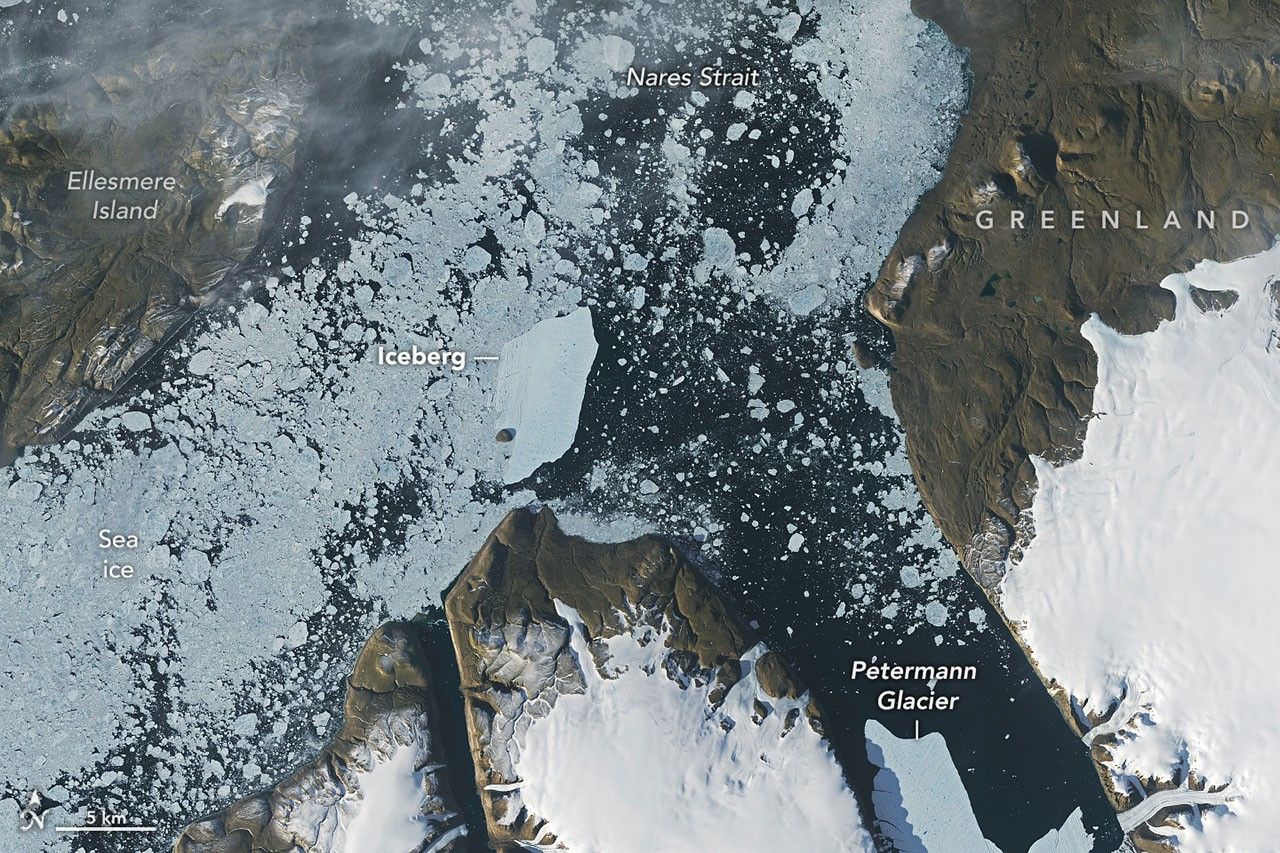
A large iceberg that calves from Greenland’s Petermann Glacier in 2026 collides with an island in Nares Strait and survives the “run-in” with a place referred to as “Joe Island.” NASA reports that, in summer 2026, the iceberg rapidly drifts into the strait after breaking free and makes contact with an island during its movement.
The incident fits the wider seasonal pattern of iceberg activity in Greenland’s glacier-fed fjords. Phys.org notes that summer is a prime period for calving and that the 2026 event is especially notable. It describes the berg as breaking away along Greenland’s northwest coast in August and identifies it as roughly the size of St. Thomas in the U.S. Virgin Islands. Phys.org also characterizes the calving as the largest Arctic glacier calving event since 2020. While NASA focuses on the collision and the iceberg’s ability to withstand it, Phys.org emphasizes the scale and broader significance of the calving event.
Overall, the sources agree on the origin of the iceberg, the timing in summer 2026, its movement toward Nares Strait, and the fact that it strikes the island named “Joe Island” but remains intact enough to be described as surviving the encounter.