


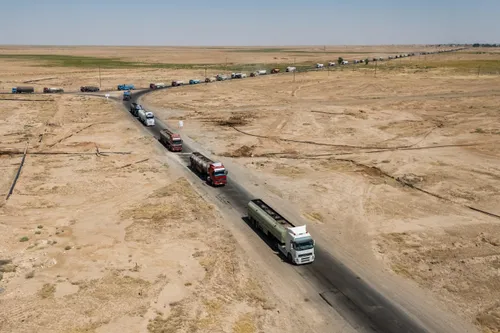
Syria is seeking to benefit from renewed interest in alternative routes for transporting oil after disruption affecting shipping through the Strait of Hormuz. Reporting describes a steady flow of tanker and truck movements tied to oil moving from the Persian Gulf toward the Mediterranean, underscoring the demand for bypass options.
Both outlets link the potential to a broader strategic shift in regional logistics. They describe Syria as positioning itself as a potential Middle East hub by offering or enabling transit routes that could reduce reliance on the Hormuz corridor when it faces blockage or heightened risk. The coverage frames the wartime and security-related constraints on cargo traffic as creating incentives for shippers to diversify transport pathways. While the sources differ in emphasis—one focuses more on the on-the-ground movement of cargo and the scale of overland logistics, the other emphasizes Syria’s strategic opportunity and the supply-chain need for alternatives—they converge on the same theme: disruptions to Hormuz create openings for other transit routes involving Syria and neighboring channels.


