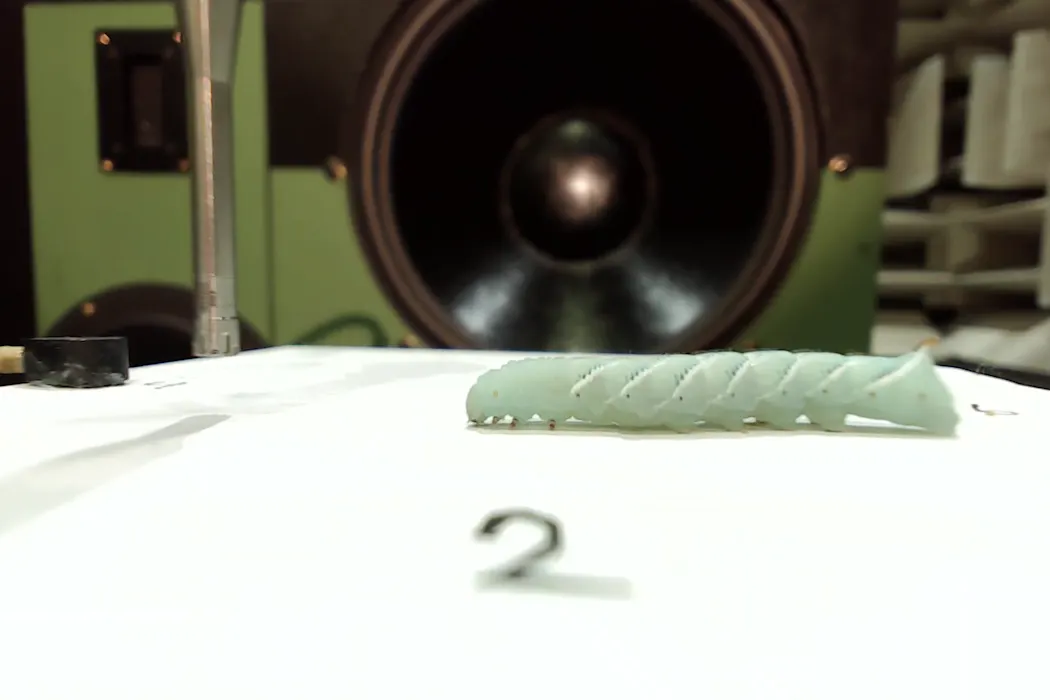
Researchers study how caterpillars detect sounds despite lacking ears by using ultra-quiet, sound-isolated chambers. In these experiments, caterpillars are placed in an environment designed to minimize external noise, and their responses are observed when potential sound cues are introduced.
The work builds on behavioral observations in natural settings, where caterpillars can react to nearby threats. The studies include preparing the insects so that researchers can test the role of body structures in sensing vibrations or pressure changes. The Conversation describes using interventions such as trimming caterpillars’ body structures, then monitoring their twitching and other movements in the controlled environment. Phys.org likewise frames the inquiry around how caterpillars respond to approaching predators, such as wasps, and links those reactions to the insects’ ability to sense without conventional ears.
Across outlets, the common angle is that caterpillars’ hearing-like abilities are investigated through controlled, near-silent laboratory conditions combined with careful manipulation and observation of their behavior, aiming to clarify what sensory mechanisms drive their twitch responses.