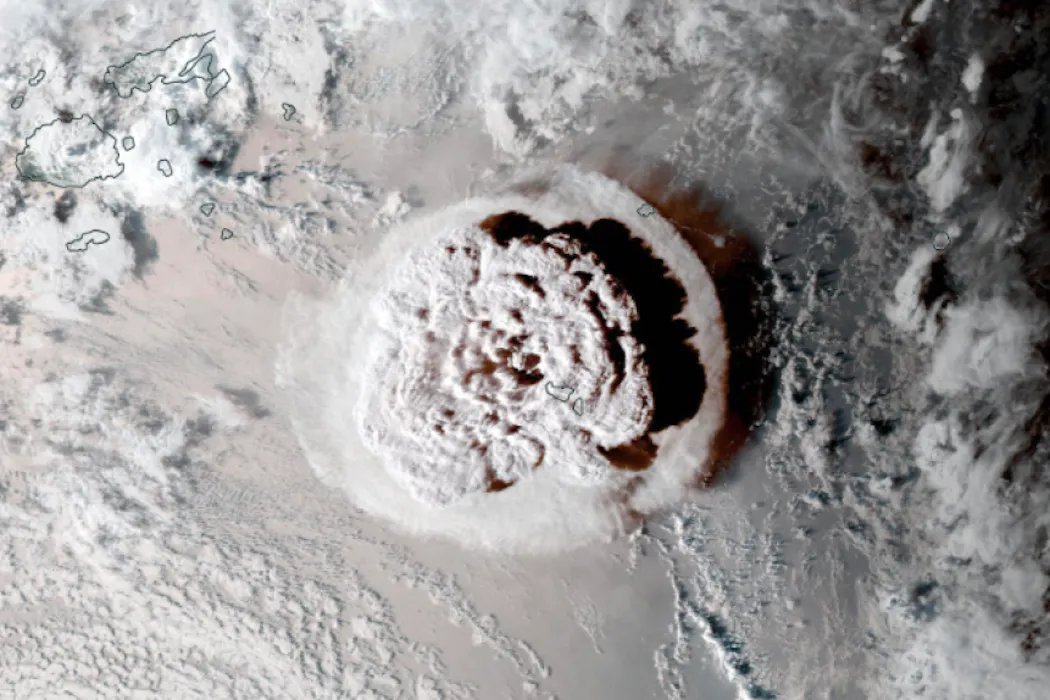
In January 2022, the Hunga volcano eruption in Tonga releases an extraordinary amount of energy, producing underwater “booms” that travel through the ocean. Researchers use those signals as evidence that volcanic activity generates distinctive sound patterns that could be detected before tsunami impacts occur.
Both outlets describe how the Hunga eruption surprised scientists and highlighted the limits of existing monitoring for highly unpredictable volcanic tsunamis. The Conversation emphasizes that underwater acoustic signals from such eruptions can provide an additional warning channel, potentially improving lead times for coastal communities. Phys.org similarly focuses on how these underwater booms could be used to identify and track events linked to tsunami risk.
While the articles agree on the central finding that the Hunga eruption produced detectable underwater sound, they differ in emphasis: one presents the concept as a pathway toward practical warning systems, while the other frames it more around the scientific mechanism and how the signals might inform future detection. Both point to the need for further study to translate observations into reliable, real-world alerts.